
For skincare brands formulating with high-performance actives like Retinol, Vitamin C, or Essential Oils, packaging isn't just a container—it's a shield. Photochemical degradation can render a potent serum useless in weeks, leading to customer complaints and recalls.
So, which type of cosmetic jar offers the best UV protection?
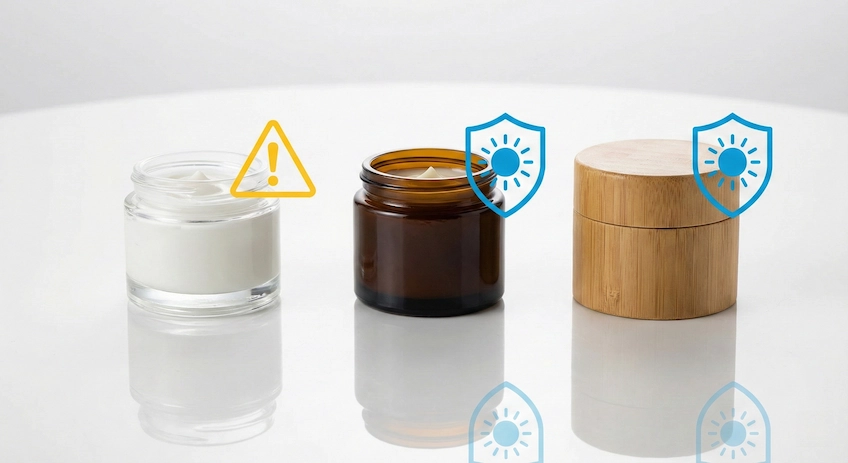
While Amber Glass is the industry gold standard for filtration, Bamboo-Clad Hybrid Jars are emerging as a superior solution by offering a 100% physical light barrier.
At ECO-BAMBOO, we help brands choose the right UV-protective packaging1 to extend shelf life and preserve potency.
1. The Science: Why "Blue Light" is the Enemy
It's not just UV rays (200-400nm) that damage formulas. High-energy visible (HEV) blue light (400-500nm) can also accelerate oxidation in lipids and fragrances.
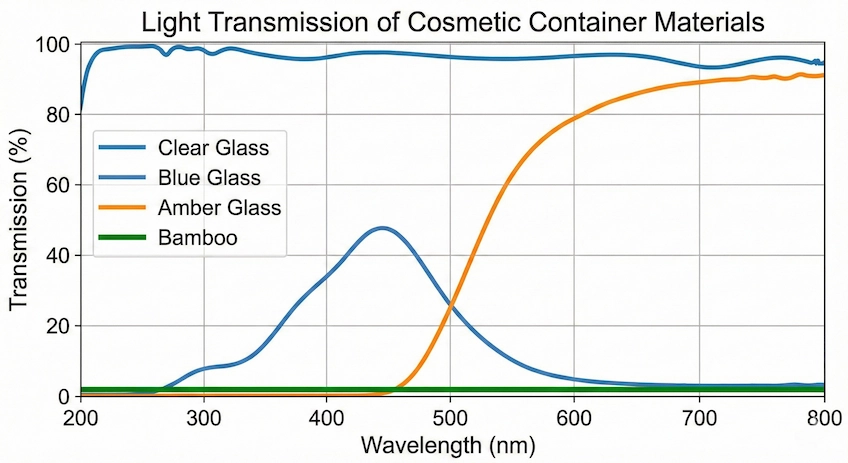
According to USP <661> Light Transmission Standards2, a container is considered "light-resistant" only if it transmits less than 10% of incident light in the 290–450 nm range.
2. Material Showdown: Glass vs. Bamboo Hybrid
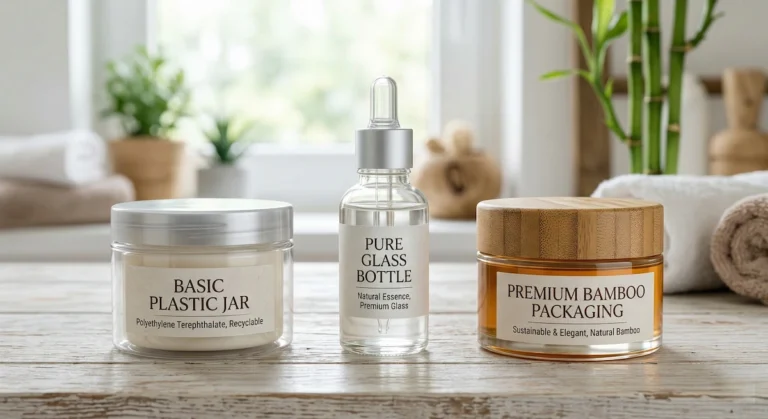
When sourcing packaging for light-sensitive formulas, you generally have three tiers of protection:
Tier 1: Amber Glass (The Standard)
Amber glass is formulated with iron, sulfur, and carbon, which naturally filters out 99% of UV rays and most blue light. It is the go-to choice for apothecaries and pharmaceutical brands.
- Best For: Facial oils, serums, light-sensitive toners.
- Product Link: Wholesale Amber Glass Bamboo Dropper Bottles1
Tier 2: Cobalt Blue & Green Glass (The Aesthetic Choice)
While beautiful, blue and green glass allow significantly more blue/violet light to pass through than amber. They offer moderate protection but are often chosen for branding over pure performance.
Tier 3: Opaque Bamboo Shells (The Ultimate Block)
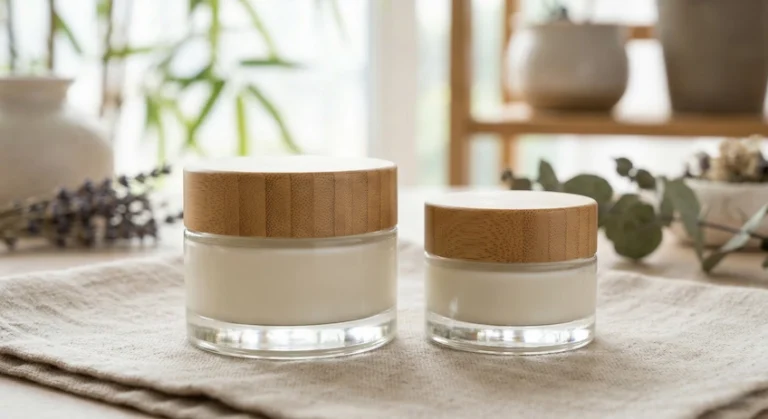
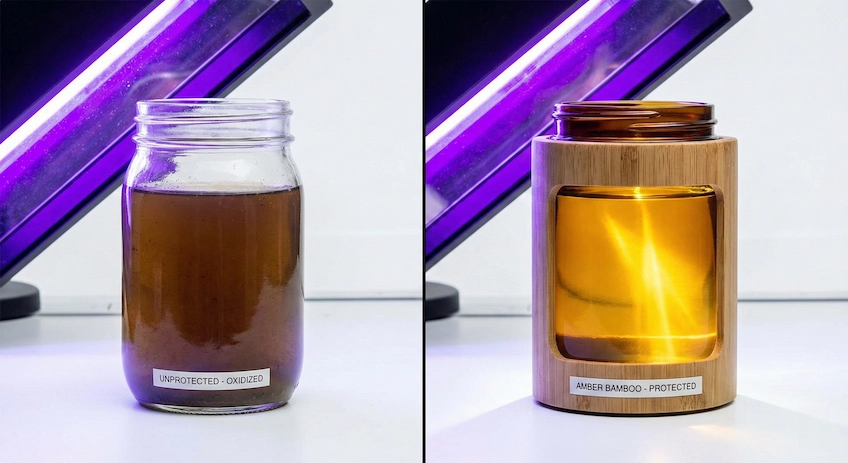
This is the "Hidden Champion." A clear or frosted glass jar encased in a real bamboo shell offers 100% UV blocking because the wood is opaque.
- Mechanism: The bamboo acts as a blackout curtain. As long as the lid is on, zero light hits the formula.
- Best For: Thick creams, masks, and balms that need total darkness.
- Product Link: Wholesale Bamboo Glass Jars3
3. Comparative Data: Light Transmission Rates
We compared the protective qualities of common packaging materials based on spectral analysis.
| Material Type | UV Blocking (290-400nm) | Blue Light Blocking (400-450nm) | Recommended For |
|---|---|---|---|
| Clear Glass | < 10% | 0% | Stable Cleansers, Hydrators |
| Frosted Glass | ~20% (Scatters light) | < 10% | Standard Creams |
| Cobalt Blue Glass | ~60% | ~30% | Mid-range Actives |
| Amber Glass | > 99% | > 90% | Retinol, Vitamin C, Oils |
| Bamboo Shell | 100% (Physical Barrier) | 100% | High-Potency Organics |
4. The "Hybrid" Advantage for Brands
Why choose between protection and aesthetics? ECO-BAMBOO's hybrid design allows you to use a Frosted Glass Inner (for luxury weight and compatibility) protected by a Bamboo Outer.
This gives you the "Clean Beauty" look of wood, with the chemical stability of glass, and the UV protection of a vault.
Pro Tip: For extreme UV sensitivity, combine an Amber Glass Inner with a Bamboo Outer Shell4. This provides double-layer defense.
Conclusion
For light-sensitive formulas, Amber Glass is the scientific winner for transparent packaging. However, for a premium, eco-friendly look that offers total light blocking, Bamboo-Encased Glass is the modern innovation.
Don't let UV rays compromise your product's efficacy. Choose packaging that works as hard as your formula does.
🛡️ Protect Your Formula
Request a sample kit of our UV-blocking Amber and Bamboo Hybrid packaging today. 👉 Get UV-Safe Samples