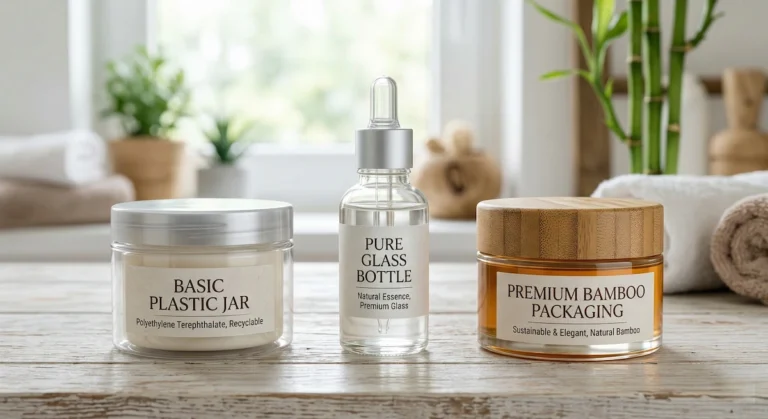
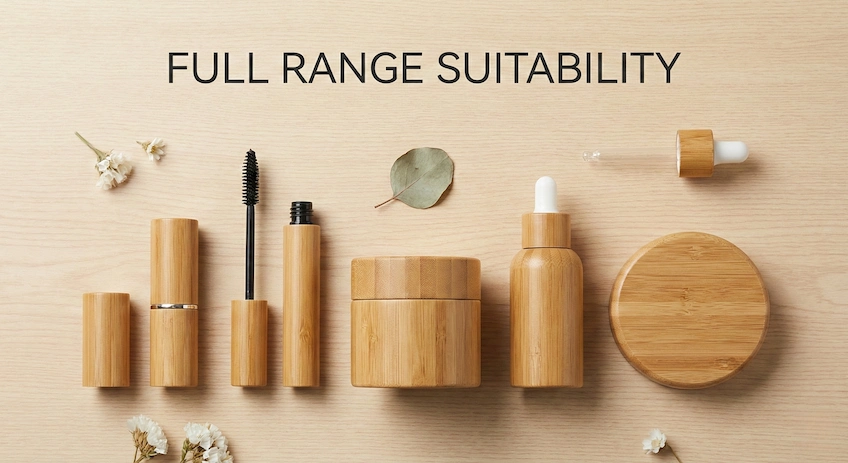
Bamboo packaging1 looks beautiful and sustainable, but which types of cosmetics are actually a good fit for this material?
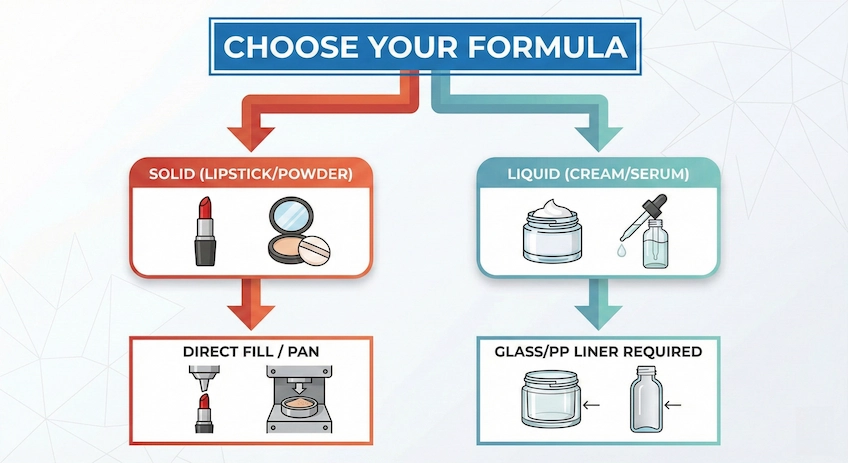
Solid and powdered cosmetics2—such as lipsticks3, compact powders4, and bar soaps5—work best in bamboo packaging. These formulas avoid direct contact with bamboo’s porous surface, ensuring shelf life and product integrity.

Every brand eager to impress with bamboo needs to balance design with formula requirements. From my experience at ECO-BAMBOO, dry and solid products thrive in bamboo, letting brands tell an eco-friendly story while staying practical. The match becomes less straightforward with creams and liquids6, so technical design7 and inner linings play a key role.
Is bamboo packaging suitable for all types of cosmetic products?
Adopting bamboo packaging is not a one-size-fits-all solution for every cosmetic product.
Bamboo packaging1 is not naturally suitable for all cosmetics. It is ideal for dry or solid formulations, while most liquids need additional inner protection to prevent contamination or leakage.

Brands often want to show off their eco values and choose bamboo for everything. But I’ve seen firsthand that unlined bamboo containers let moisture and oils8 seep in, causing warping or product deterioration. Powdered products and solid formats are safe because they don’t interact much with the container. For lotions and serums, however, problems arise without food-grade inserts9 or seals. The successful bamboo packaging projects I’ve led always begin by matching the formula type with the technical requirements of the pack.
| Cosmetic Type | Bamboo Suitability | Caveats |
|---|---|---|
| Solid (lipstick, balm) | Excellent | No inner liner needed |
| Powdered (compact) | Very good | Protective coating advised |
| Liquid (serum, lotion) | Limited, needs liner | PP/glass insert required |
| Cream/oil | Moderate, needs liner | Enhanced seal recommended |
What cosmetic product categories are most commonly found in bamboo packaging?
Certain categories stand out as leaders when it comes to using bamboo for product packaging.
Bamboo is most commonly used for lipstick tubes, compact cases, eyeshadow palettes, solid perfume containers, balms, and bar soap packs. These categories leverage both sustainability10 and tactile luxury.

The tactile feel and elegant finish of bamboo suit boutique brands and high-value products best. I have worked with cosmetic teams to design compact cases that merge function and story, letting the natural wood grain be part of the brand experience. Lipstick tubes and solid perfume jars often rely on bamboo because the formula inside is stable and sealed, with little moisture risk. Larger bamboo boxes or sleeves for bar soaps5 and balms are increasingly popular, giving an eco-luxury11 touch that appeals to conscious consumers. The most successful launches always involve secondary packaging—an extra bamboo box or case—where direct formula contact isn’t a concern.
| Product Category | Bamboo Use Case | Typical Application |
|---|---|---|
| Lipsticks/Balms | Tubes, jars, sleeves | Primary packaging |
| Compact powders | Cases, palettes | Primary packaging |
| Solid perfumes | Small containers | Secondary packaging |
| Bar soaps | Sleeves, boxes | Secondary packaging |
| Eyeshadow | Palettes, compacts | Primary packaging |
What specific cosmetic formulations are compatible with bamboo packaging materials?
Understanding formulation compatibility is key to keeping products safe and fresh in bamboo packs.
Solid, powder, and oil-based cosmetic formulas are most compatible with bamboo packaging. Water-based and highly reactive formulas require engineered liners for protection and safety.

During collaborations at ECO-BAMBOO, I learned that pure bamboo containers keep things safe only if the formula is stable and non-reactive. Lip balms, pressed powders, and bar soaps5 fit this description—they are dry, dense, and don’t “move” inside the package. Moisture-rich creams and gels, on the other hand, can transfer water into the bamboo, leading to mold or warping. Oil-based formulas do a little better, but still need quality sealing. Adding a food-grade PP or glass liner inside the bamboo housing allows safe use for liquid serums, lotions, or thick creams. The key is early communication between formula developers and packaging designers12, making sure compatibility is guaranteed from design stage onward—not just after production starts.
| Formula Type | Compatibility with Bamboo | Protective Measures |
|---|---|---|
| Solid/dry | High | None or minimal coating |
| Powder | High | Optional surface finish |
| Oil-based | Moderate | Inner liner recommended |
| Water-based | Low | Must use full liner (PP, glass) |
| Volatile/alcohol | Low | Airtight inner shell necessary |
Can bamboo packaging effectively accommodate both liquid and dry cosmetic formulations?
Bamboo packaging1 has a split personality—the way it handles dry products is very different from the demands of liquid ones.
Bamboo effectively houses dry and solid formulations with minimal adjustment. For liquids, specialized inner liners or shells are mandatory to prevent leakage, contamination, or breakdown.

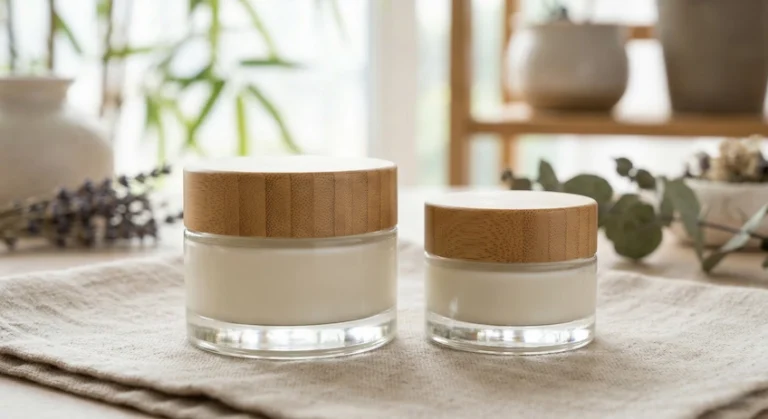
While dry products are a straightforward fit for bamboo, liquids bring technical complexity. Dry compacts, solid perfumes, and balms simply need an elegant shell and a secure closure. When a project involves serums or lotions, every package design meeting starts with lining and sealing specifications. Each bamboo pack for liquid formulas at ECO-BAMBOO uses inner PP or glass, paired with air-tight closure systems13. Without these, shelf life drops and safety certification is impossible. Strong branding is built on reliability, not just appearance, so even eco-luxury11 clients choose tested and certified inner solutions for their liquid lines. This dual-layer approach—natural bamboo outside, protective liner inside—balances aesthetics, sustainability10, and function.
| Formulation Type | Bamboo Alone Suitable | Liner/Insert Needed | Certification Required |
|---|---|---|---|
| Dry/Solid | Yes | Optional | Optional |
| Liquid/Cream | No | Essential | Required (SGS, ROSH) |
Conclusion
Bamboo packaging1 works best for solid and powdered cosmetics but can suit liquids with engineered inner lining. Smart design and formula compatibility are essential for reliable results.
Explore the advantages of bamboo packaging, including sustainability and aesthetic appeal, for cosmetic products. ↩
Learn about solid and powdered cosmetics that are ideal for bamboo packaging, ensuring product integrity. ↩
Discover why lipsticks are a perfect match for bamboo packaging, combining sustainability with style. ↩
Find out how bamboo enhances the packaging of compact powders, offering both protection and eco-friendliness. ↩
Understand the advantages of using bamboo packaging for bar soaps, promoting sustainability and luxury. ↩
Explore the complexities of using bamboo packaging for creams and liquids and how to overcome them. ↩
Learn how technical design plays a crucial role in ensuring the effectiveness of bamboo packaging. ↩
Discover the impact of moisture and oils on bamboo packaging and how to mitigate risks. ↩
Find out how food-grade inserts enhance the safety and usability of bamboo packaging for cosmetics. ↩
Explore the significance of sustainability in cosmetic packaging and how bamboo contributes to eco-friendly practices. ↩
Explore the concept of eco-luxury in cosmetic packaging and how bamboo fits into this trend. ↩
Understand the vital role of packaging designers in creating effective and appealing cosmetic packaging. ↩
Discover how air-tight closure systems enhance the reliability and shelf life of bamboo-packaged products. ↩