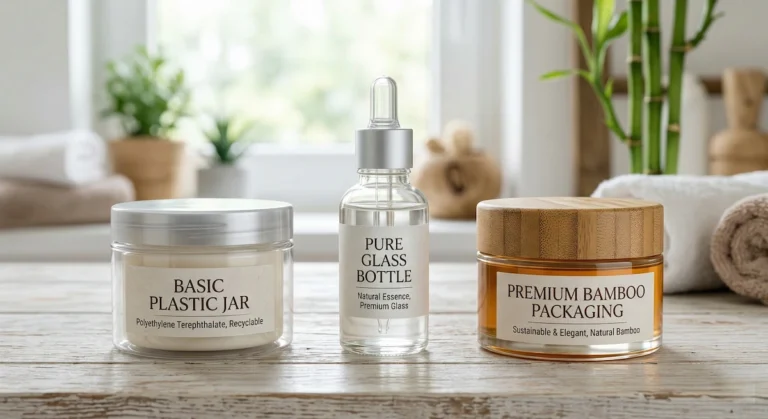

For brands navigating the "Green Revolution," choosing the right material is a high-stakes decision. Is it Recycled Plastic (PCR)? Glass? Or Plant-Based Fibers? The answer lies in "Regenerative Capability."
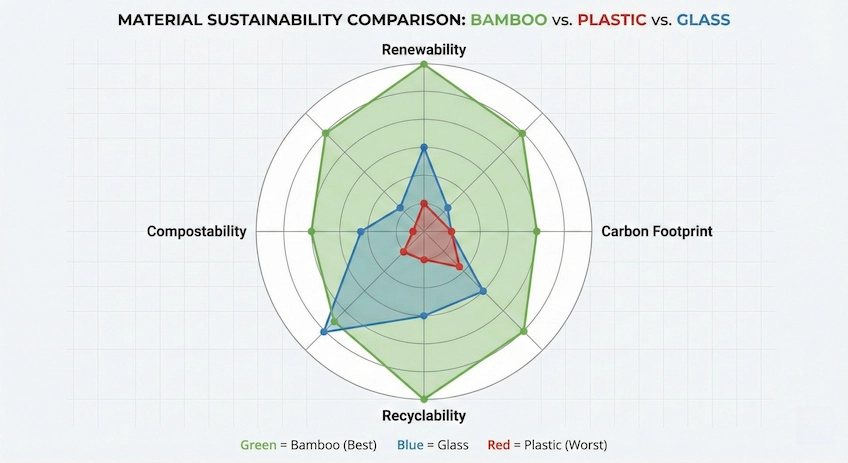
While recycled plastic reduces waste, it still relies on finite fossil fuels. Bamboo Packaging is currently the most environmentally friendly option because it is Rapidly Renewable, Carbon Negative, and Fully Compostable. At ECO-BAMBOO, we help brands transition from "Less Harm" to "Active Good."
1. The Hierarchy of Eco-Friendly Materials
Not all green packaging is created equal. Here is the B2B hierarchy based on environmental impact.
Tier 1: Regenerative & Compostable (Best)
- Material: Bamboo, Mushroom Mycelium, Agricultural Waste.
- Why: Grown without pesticides, captures carbon, returns nutrients to the soil.
- ECO-BAMBOO Solution: Our Raw Bamboo Jars1 are 100% biodegradable and FSC-certified.
Tier 2: Circular & Recyclable (Good)
- Material: Glass, Aluminum.
- Why: Infinitely recyclable but energy-intensive to produce and heavy to ship (high carbon footprint).
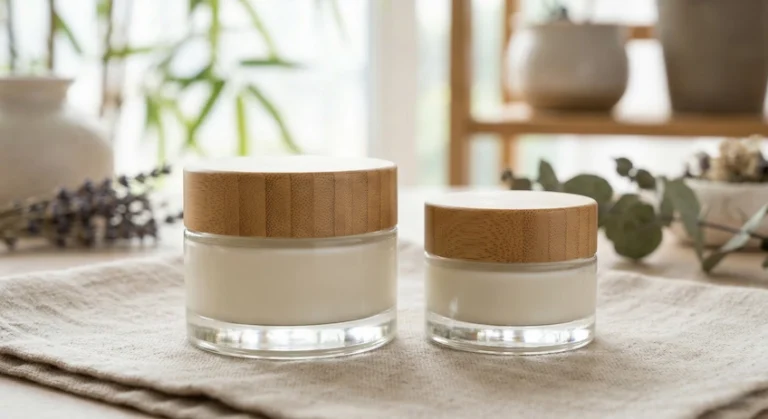
- ECO-BAMBOO Solution: Bamboo-Clad Glass2 combines the inertness of glass with the low carbon footprint of a bamboo shell.
Tier 3: Recycled & Down-cyclable (Better than Virgin)
- Material: PCR Plastic (Post-Consumer Recycled).
- Why: Reduces virgin plastic use but degrades with each cycle and eventually becomes waste.
- ECO-BAMBOO Solution: We use PCR plastic for the inner pumps of our Lotion Bottles3.
2. Why Bamboo Wins the "Most Friendly" Title
Bamboo outperforms competitors in three critical Life Cycle Assessment (LCA) metrics:
- Growth Speed: Moso bamboo matures in 3-5 years (vs. 50+ years for trees), providing a constant, renewable supply without deforestation.
- Carbon Sequestration: Bamboo absorbs 5x more CO2 than pine trees, actively combatting climate change during its growth phase.
- Soil Health: Its root system prevents erosion and requires zero chemical fertilizers, protecting local water tables.
3. The "Compostable" Advantage
True eco-friendliness means leaving no trace.
- Plastic: Persists for 450+ years.
- Bioplastic (PLA): Requires industrial composting facilities (high heat).
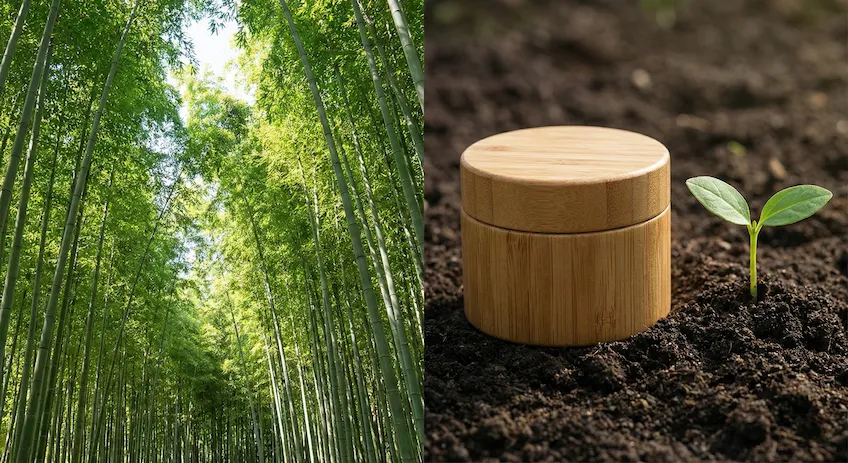
- Bamboo: Decomposes in a home compost or landfill in 6-12 months, returning potassium and nutrients to the earth.
4. Strategic Sourcing: Moving Beyond "Greenwashing"
Consumers are savvy. They demand proof.
- Certification Matters: We provide FSC (Forest Stewardship Council) certification to prove our bamboo comes from responsibly managed forests.
- Transparency: Our supply chain is traceable from the bamboo grove to the finished jar.
Conclusion
What packaging is most environmentally friendly? The kind that grows back.
Bamboo is not just a material; it's a regenerative resource. By choosing ECO-BAMBOO, brands don't just reduce their negative impact—they contribute to a positive cycle of growth and renewal.
🌍 Lead the Change
Ready to adopt the most sustainable packaging on the market? Request our sustainability report and sample kit. 👉 Get Your Eco-Friendly Sample Kit