
"It looks like bamboo, but what's inside?" This is the first question professional formulators ask us.
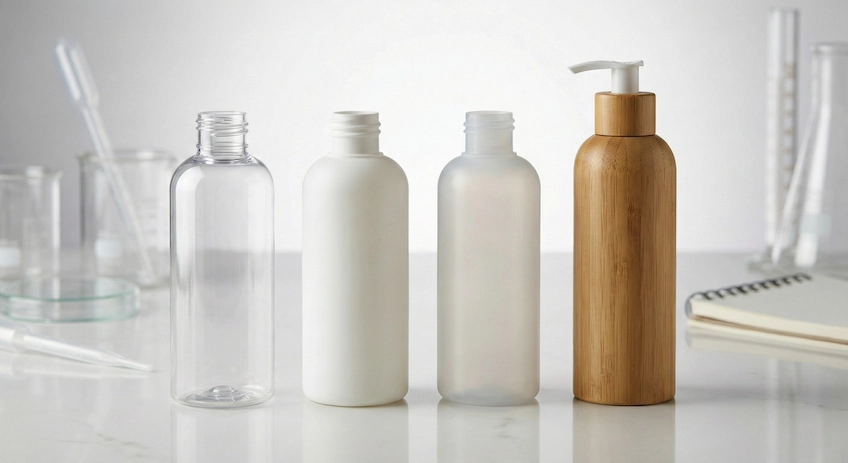
While the outer shell of our packaging is 100% sustainable bamboo, the inner bottle (the tank) must be compatible with your specific formulation. Choosing the wrong plastic inner can lead to leaching, collapsing bottles, or product instability.
For B2B buyers, the choice usually comes down to three materials: PET, HDPE, and PP.
This guide compares these plastics to help you select the perfect inner tank for your wholesale bamboo lotion bottles1.
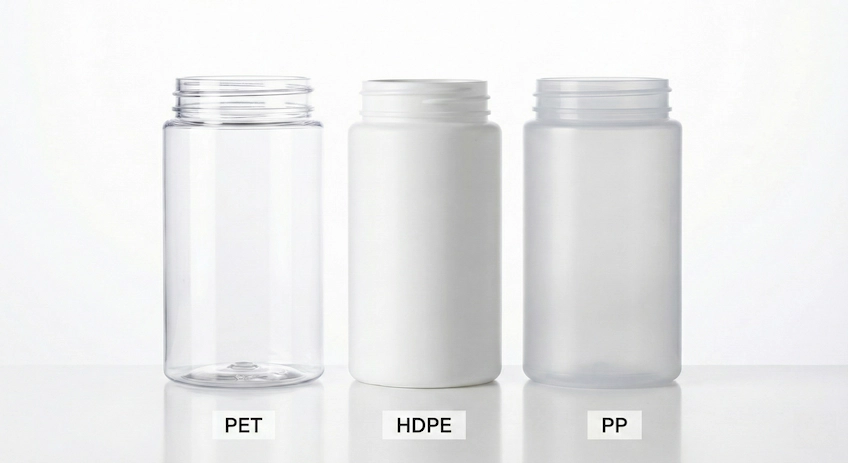
1. PET (Polyethylene Terephthalate): The "Clear" Choice
Best For: Serums, Toners, Lightweight Lotions, Essential Oil blends.
PET is the most popular choice for "glass-like" clarity without the weight. Even inside a bamboo shell, PET is favored because it is:
- High Clarity: Excellent for transparent formulas if using a "windowed" bamboo design.
- Gas Barrier: Great at keeping oxygen out, preserving active ingredients.
- Limitation: Low heat resistance (warps above 40°C). Do not hot-pour!
Our Recommendation: Choose PET inner tanks for our bamboo spray bottles2 where formula clarity and oxidation protection are key.
2. HDPE (High-Density Polyethylene): The "Tough" Tank
Best For: Thick Body Lotions, Shampoos, Acidic/Alkaline Formulas.
HDPE is the workhorse of the industry. It is translucent (milky) and structurally semi-rigid.
- Chemical Resistance: Highly resistant to strong acids and bases. If your formula has a high/low pH, use HDPE.
- Moisture Barrier: Excellent at preventing water loss.
- Durability: It doesn't crack; it flexes.
According to the Association of Plastic Recyclers3, HDPE and PET are the two most recyclable plastics globally, making them a safe choice for eco-conscious brands.
3. PP (Polypropylene): The "Heat & Airless" King
Best For: Hot-Pour Balms, Airless Systems, High-Viscosity Creams.
PP is stiffer than HDPE and has a higher melting point.
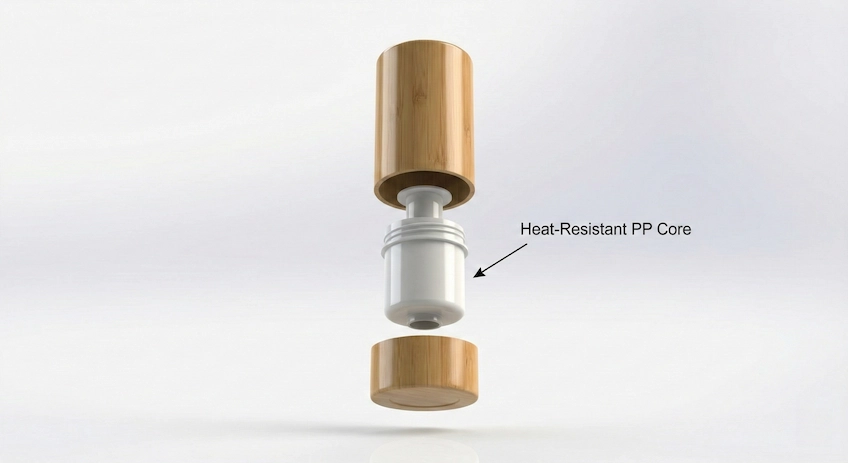
- Heat Resistance: Can withstand temperatures up to 80°C. This is the ONLY choice for hot-pouring balms or waxes.
- Airless Standard: Almost all bamboo airless bottles4 use a PP inner piston system because of its low friction and chemical stability.
Summary Comparison Table for Buyers
| Feature | PET (The Clear One) | HDPE (The Tough One) | PP (The Heat One) |
|---|---|---|---|
| Clarity | ⭐⭐⭐⭐⭐ (Glass-like) | ⭐⭐ (Milky) | ⭐⭐⭐ (Hazy) |
| Heat Limit | Low (<40°C) | Medium (<60°C) | High (<80°C) |
| Chemical Resistance | Good (Oils/Alcohol) | Excellent (Acids) | Excellent (Solvents) |
| Best Use | Sprays / Serums | Body Lotions | Airless Bottles4 |
| Recyclability | Code #1 (High) | Code #2 (High) | Code #5 (Medium) |
Why the "Inner + Outer" Strategy Works
Why not just use 100% plastic? Or 100% bamboo?
- 100% Plastic: Looks cheap, lowers brand value.
- 100% Bamboo: Can degrade if in contact with liquid.
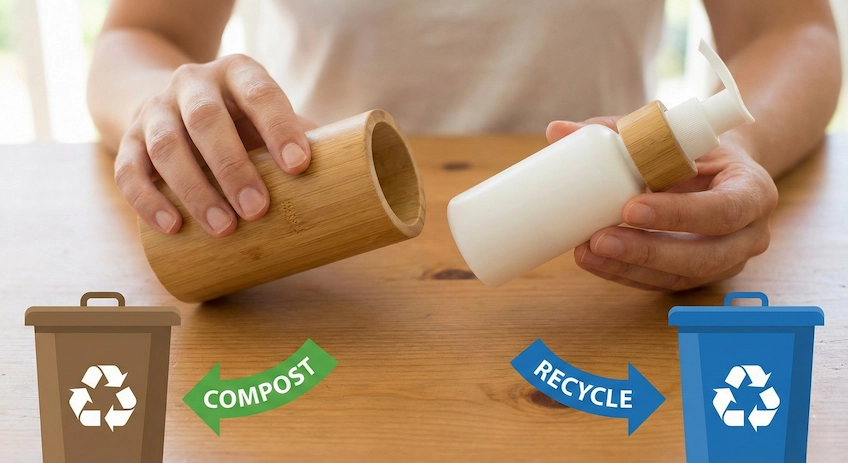
The Hybrid Solution: By using a bamboo lotion bottle1 with a specific plastic inner (PET/PP), you get the best of both worlds: The chemical stability of lab-grade plastic + the premium, sustainable aesthetic of wood.
Furthermore, many of our inner tanks are available in PCR (Post-Consumer Recycled) plastic, reducing your virgin plastic footprint to near zero.
Conclusion
Your formula dictates the plastic; your brand dictates the bamboo.
- Hot Pour? Choose PP.
- Acidic/Active? Choose HDPE.
- Standard Serum? Choose PET.
At ECO-BAMBOO, we customize the inner tank to match your formulation needs while keeping the exterior uniformly luxurious.
🧪 Test Your Formula Compatibility
Not sure which plastic fits your product? Request a mixed material sample kit. 👉 Get Compatibility Samples