
As the global ban on single-use plastics tightens, "Bamboo Packaging" has emerged as the leading alternative for the cosmetic industry. But for a procurement manager or brand owner, understanding what it actually is—and how it's made—is crucial for making the right sourcing decision.
Bamboo packaging is not just wood; it is a highly engineered, renewable material derived from fast-growing bamboo grass (typically Phyllostachys edulis), processed into durable shells for cosmetic jars1, bottles, and tubes.
At ECO-BAMBOO, we define it as the intersection of nature's speed (renewability) and modern engineering (durability).
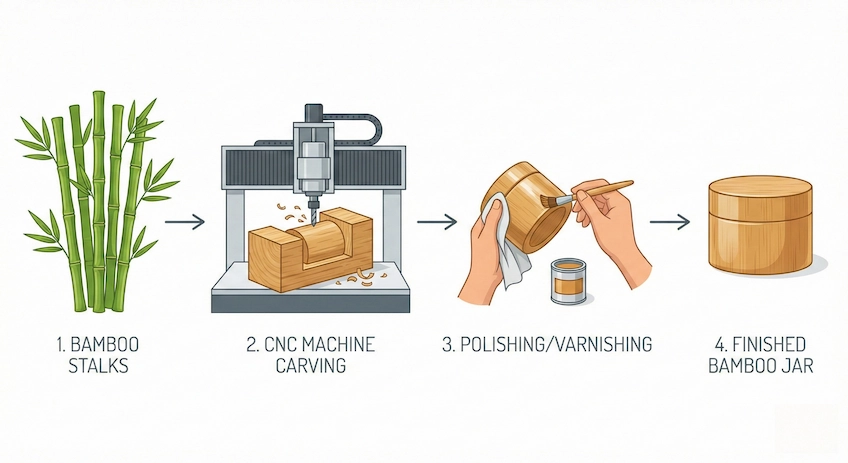
1. How is Bamboo Packaging Made? (The Process)
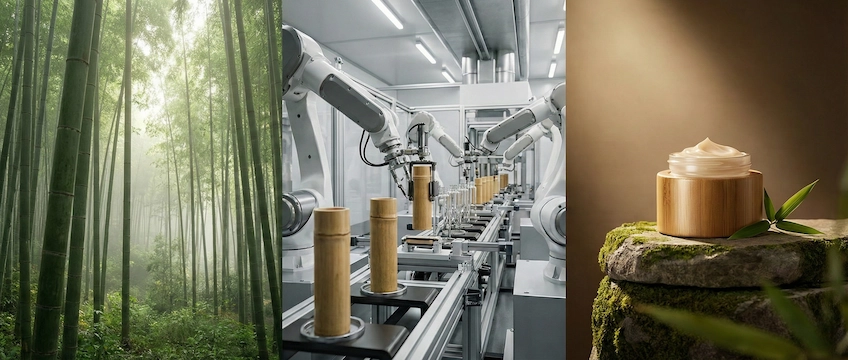
Unlike timber which takes 30-50 years to mature, our bamboo is harvested every 3-5 years. The manufacturing process ensures stability and aesthetics:
- Harvesting: Mature bamboo stalks are cut, leaving the root system intact to prevent soil erosion.
- Carbonization: The raw bamboo is boiled and heat-treated to remove sugars (preventing mold) and achieve the desired color (Natural or Carbonized).
- CNC Machining: Precision machines carve the bamboo into specific shapes, such as lipstick tubes2 or jar lids.
- Finishing: A food-grade varnish is applied to make the surface water-resistant and smooth.
2. Why Choose Bamboo Over Plastic or Glass?
For B2B buyers, the decision often comes down to Cost vs. Impact. Bamboo offers a unique middle ground.
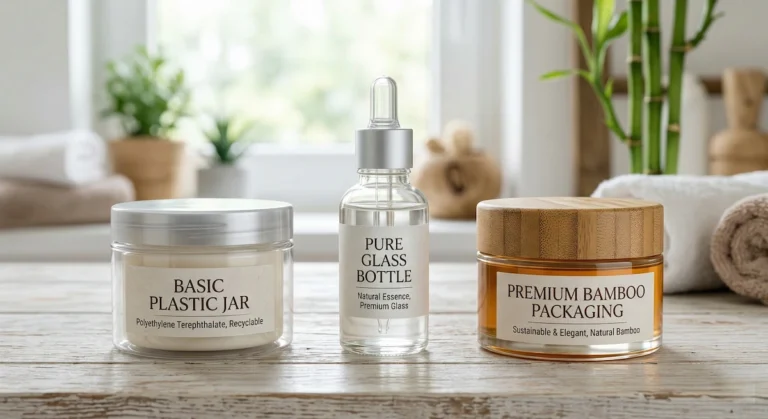
| Feature | Bamboo Packaging | Plastic (PET/PP) | Glass |
|---|---|---|---|
| Sustainability | High (Renewable & Biodegradable) | Low (Fossil Fuel Based) | Medium (Recyclable but High Energy) |
| Aesthetic | Premium, Organic, Unique Grain | Standard, Mass Market | Premium, Heavy |
| Customization | Laser Engraving (No Ink Needed) | Silk Screen / Label | Silk Screen / Label |
| Durability | High (Shatterproof Shell) | High | Low (Fragile) |
3. Types of Bamboo Cosmetic Packaging
"Bamboo Packaging" is a broad term. In the cosmetic sector, it typically refers to a Hybrid Structure—a bamboo outer shell with a functional inner liner.
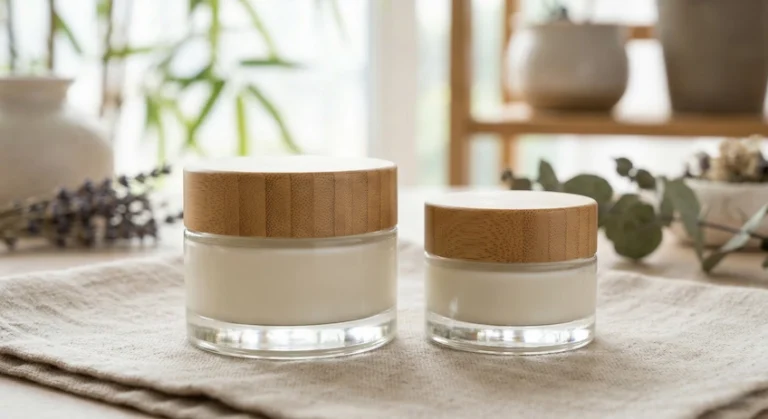
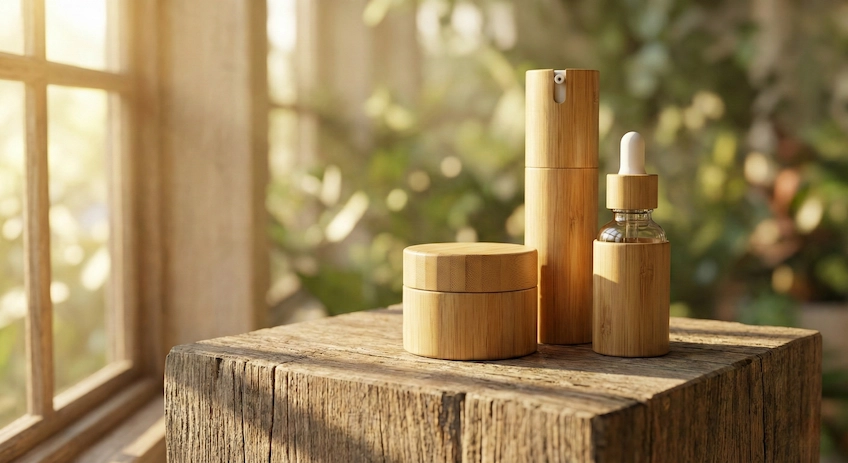
- Bamboo Jars: Used for creams and scrubs. We offer Glass Inner Bamboo Jars3 for premium compatibility and Aluminum Inner Jars4 for plastic-free solutions.
- Bamboo Bottles: Ideal for lotions and serums. Our Bamboo Airless Bottles5 protect active ingredients from oxidation.
- Bamboo Droppers: A fusion of a glass pipette and a bamboo collar, perfect for oils. See our Amber Glass Bamboo Droppers6.
4. The Environmental Impact: Verified Data
Bamboo is a "Carbon Sink." According to the International Bamboo and Rattan Organization (INBAR)7, bamboo absorbs 35% more carbon dioxide than an equivalent stand of trees.
By switching to bamboo packaging, brands can:
- Reduce plastic usage by up to 85% (in hybrid designs).
- Support FSC Certified8 forestry practices.
- Eliminate secondary packaging (boxes) because the bamboo shell itself is visually stunning.
Conclusion
So, what is bamboo packaging? It is the most viable, scalable solution for brands looking to exit the "Plastic Age." It offers the luxury tactile feel that paper cannot provide, with the renewability that plastic can never achieve.
🌿 Switch to Nature
Ready to replace your plastic packaging? Request a consultation with our engineering team. 👉 Get Your Bamboo Starter Kit
Shop Wholesale Frosted Glass Bamboo Jars. ↩
View Sustainable Bamboo Lip Gloss Tubes. ↩
Explore Bamboo Glass Hybrid Jars. ↩
Discover Plastic-Free Bamboo Aluminum Jars. ↩
Check out Bamboo Airless Bottles for Lotions. ↩
Shop Amber Glass Bamboo Dropper Bottles. ↩
INBAR - Climate Change & Bamboo Carbon Sequestration. ↩
FSC - Forest Stewardship Council Certification. ↩