
In the crowded skincare market, your lotion bottle's material does three jobs: it protects the formula, defines the user experience, and communicates your brand's values.
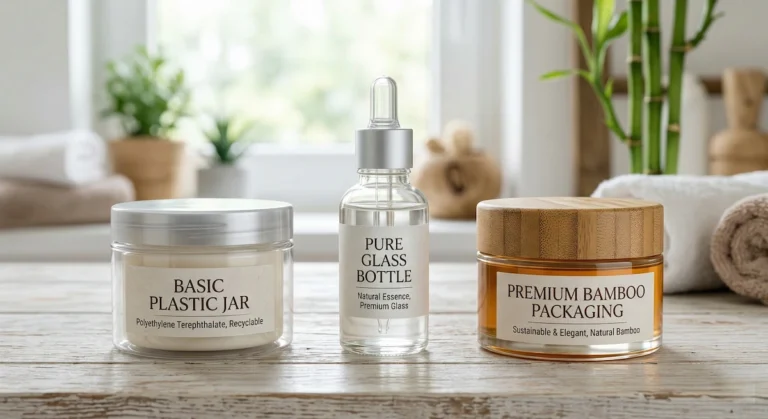
While PET Plastic and Glass are the industry standards, the rise of Eco-Conscious Consumers has pushed Bamboo Hybrid Packaging to the forefront.
So, which material is best for your product? As a sustainable packaging manufacturer, ECO-BAMBOO helps you navigate the pros and cons of each material to find the perfect match for your lotion.
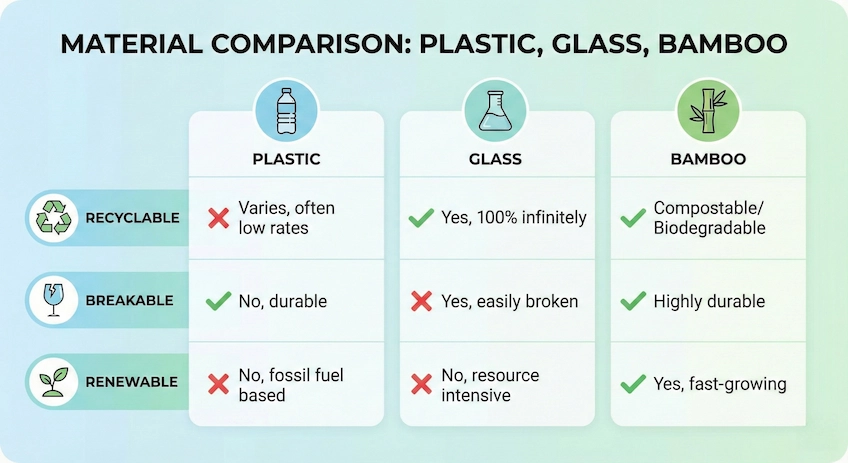
1. Plastic (PET / PP): The Industry Workhorse
Plastic remains the most common material due to its low cost and durability.
- PET (Polyethylene Terephthalate): Clear, lightweight, and shatterproof. Ideal for body lotions and shower gels.
- PP (Polypropylene): High heat resistance and chemical barrier. Used for airless pumps.
- The Downside: Environmental impact. Even "recyclable" plastics often end up in landfills.
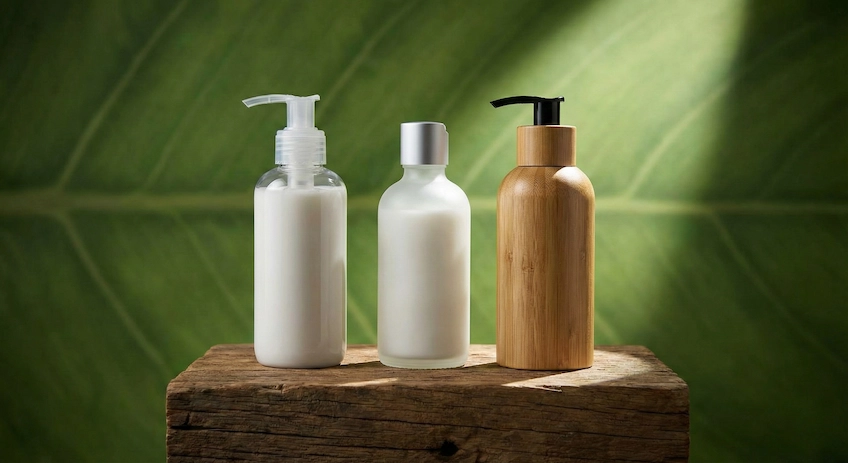
- Our Solution: We offer Bamboo PET Bottles1, which reduce plastic use by covering the inner bottle with a biodegradable bamboo shell.
2. Glass: The Premium Standard
Glass is synonymous with luxury and purity.
- Pros: Chemically inert (no leaching), impermeable to oxygen, infinitely recyclable.
- Cons: Heavy (high shipping cost) and fragile.
- Best For: Face serums, active-rich creams (Retinol/Vitamin C).
- Our Solution: Bamboo-Clad Glass Bottles2 combine the inertness of glass with the shock-absorption and UV protection of bamboo.
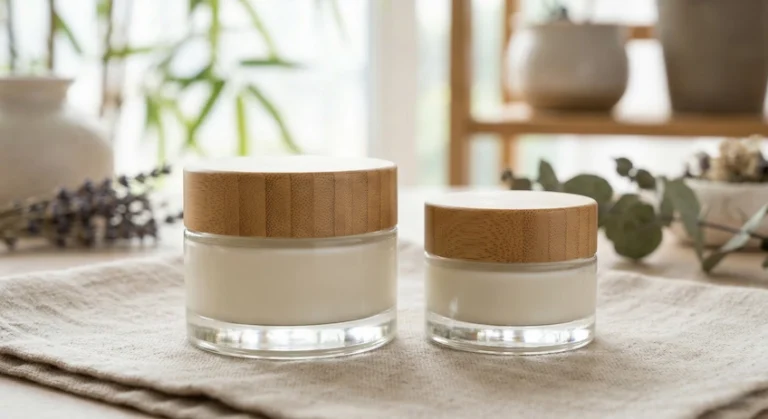
3. Bamboo Hybrid: The Sustainable Innovator
Bamboo is not just a trend; it's a renewable alternative to fossil fuels.
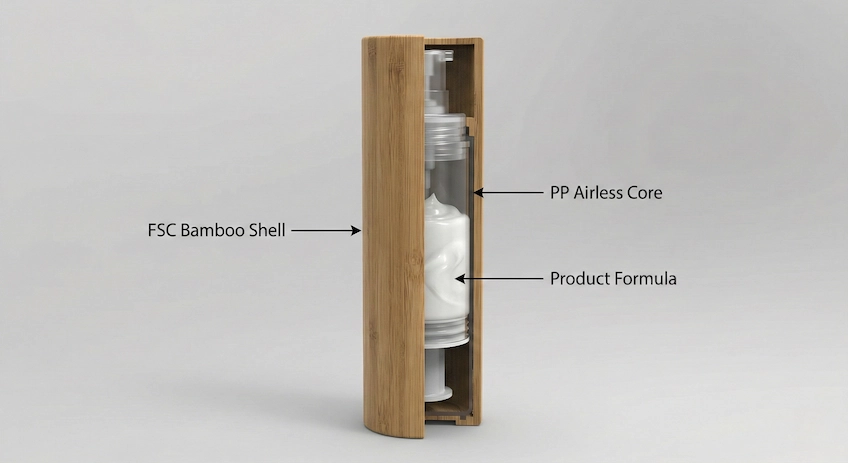
- Structure: A real bamboo outer shell encasing a thin inner liner (Glass/PP/PET).
- Pros: Reduces plastic usage by up to 70%, unique tactile experience, FSC-certified sustainability story.
- Best For: Organic, Natural, and "Clean Beauty" brands.
4. Comparison Matrix: Choosing the Right Material
Use this table to align your packaging with your product needs.
| Feature | Plastic (PET) | Glass | Bamboo Hybrid |
|---|---|---|---|
| Cost | Low ($) | Medium ($$) | Medium-High ($$$) |
| Durability | High (Unbreakable) | Low (Fragile) | High (Protected) |
| Chemical Inertness | Good | Excellent | Excellent (Glass Inner) |
| Sustainability | Low | High (Recyclable) | Very High (Renewable) |
| Brand Image | Mass Market | Premium | Eco-Luxury |
5. Which Material is "Best"?
The "best" material depends on your specific product category:
- For Body Lotion (High Volume): Choose Bamboo PET1. It's lightweight for shipping and safe for bathroom use.
- For Face Serum (High Value): Choose Bamboo Glass2. It protects potent ingredients.
- For Organic Preservative-Free Formulas: Choose Bamboo Airless (PP)3. It prevents oxidation.
Conclusion
Don't settle for generic plastic. In 2026, the best material is one that balances Performance with Planet. ECO-BAMBOO's Hybrid Bottles offer the perfect middle ground: the reliability of traditional materials wrapped in the sustainability of bamboo.
🌿 Upgrade Your Material
Touch the difference. Request a sample kit including Glass, PET, and Airless Bamboo bottles. 👉 Get Your Material Sample Kit