What are the key considerations when choosing materials for skincare packaging?

Fendi

Updated:

Even the best formula can be wasted if the packaging fails to protect, comply, or tell your brand’s story—material choice1 makes all the difference.

Choosing skincare packaging2 means balancing three priorities: safety and compliance3, brand messaging4, and sustainability5. You must use certified, non-reactive materials, create a look that fits your brand, and meet eco-standards6.

skincare packaging material selection

I’ve seen plenty of brands miss out on market entry or shelf appeal by overlooking material basics. The smartest solutions check every box: regulatory compliance7, a fit with your brand philosophy, and real sustainability5. At ECO-BAMBOO, clients win loyalty and approval by embracing certified bamboo and clear labeling. Every project must start by asking, “Does this material keep the product safe, help us stand out, and prove our eco-commitment?”

What are the three most important factors for packaging materials8?

Safety and compliance, brand positioning, and sustainability5 are the three most important factors when picking skincare packaging2. Ignore one, and the whole product experience suffers.

top packaging material factors

In my daily work, material safety always comes first. If your jar or lid isn’t certified—SGS or ROSH, for example—you risk reactions, leaching, or failing legal checks. Next comes branding: the feel of bamboo, metal, or glass must match what you want to say. Last but essential, sustainability5 is non-negotiable. Modern buyers and retailers both watch for eco-seals and lifecycle claims. Every successful brand I’ve worked with gets these three priorities right, never trading one for another.

Key Factor Table

Factor Description Why It Matters
Safety/Compliance Must be chemically safe, regulatory approved Prevents product recalls, harm
Brand Positioning Material reflects your style, story, value Influences consumer perception
Sustainability Renewable, recyclable, responsibly sourced Meets buyer, retailer demand

What is the best material for cosmetic packaging?

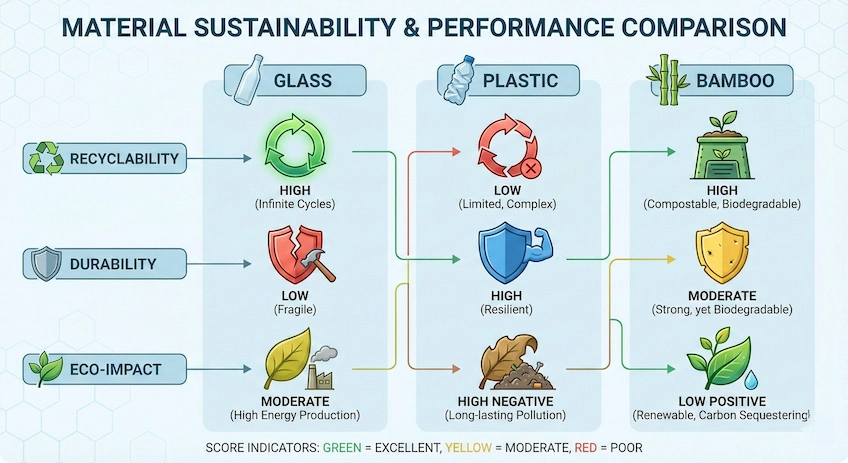
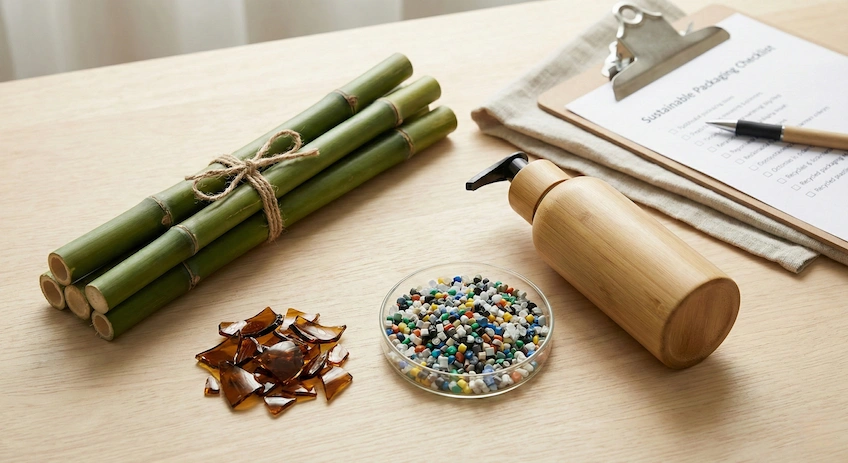
There’s no single “best”—bamboo, glass, and premium recyclable plastics each offer strengths. Bamboo leads for eco-luxury brands, glass for purity and recyclability9, plastics for lightness and durability.

best cosmetic packaging material

Clients often ask, “Which material is best?” I answer with more questions: What’s in your formula? Who’s your ideal buyer? How important is eco-credibility? Bamboo stands out for high-end natural skincare—certified, renewable, a perfect fit for today’s green-minded shoppers. Glass is unbeatable for serums, oils, or anything sensitive to air or strong scents, offering an immediate hint of quality and safety. Plastic remains the norm for many mass and travel lines given its strength and cost—but requires proof of recyclability9 and minimum additives to win regulatory approval, especially in the EU. The ideal choice aligns not just with product needs, but also with buyer expectations and future trends.

Material Comparison Table

Material Best For Key Pros Main Cons
Bamboo Eco-premium skincare Renewable, unique look Needs liners for liquids
Glass Serums, oils Inert, recyclable Heavy, breakable
Recycled Plastic Travel/mass market Light, robust, cheap Fossil resource required
Metal (Aluminum) Balms, solids Recyclable, tough Condensation, can dent

How do you choose packaging for a product?

Choosing packaging means matching product needs, legal standards, and brand image—by testing for compatibility, reviewing certifications, and mapping the full user journey10, from display to disposal.

how to choose packaging

My advice always starts with a checklist. First, lab-test every formula with your target packaging—look for leaks, staining, or breakdown. Then, verify certificates like SGS or ROSH for all material batches. Combine technical results and regulatory paperwork with design samples to confirm color, feel, and logo placement. Examine the packaging as a shopper or influencer would—does it feel premium, easy to open, and worth sharing? Last: check how it holds up in climate and transit, and whether every part is truly recyclable or compostable. Our team once found a slight liner mismatch that would have ruined shelf life—early testing caught it before production.

Packaging Selection Table

Step Task Result Needed
Compatibility Lab test with actual skincare formula No reaction, safe storage
Certification SGS/ROSH/safety checks Passes all key markets
Branding Matches logo, color, and feel Reinforces prestige/values
Usability Test open/close with target users No leaks, easy handling
Sustainability Confirm end-of-life recyclability9/reuse Meets market and eco demand

What are the legal requirements for skincare packaging2?

Packaging must be tamper-evident11, non-leaching, robust for transport, and labeled with contents, batch code, country, directions, and ingredients—plus recycling/disposal and safety marks as needed for the selling region.

skincare packaging legal compliance

I’ve walked clients through this process, flagging common misses like missing batch numbers or unclear PAO icons that can halt approval. Legally, every jar or bottle must be secure (tamper-evident11 by seal, shrink band, or breakable cap), cannot leach chemicals, and should stay intact when dropped or stacked in normal shipping. The label must match the laws for each territory. For the EU and US, expect mandatory country of origin, complete INCI ingredients, batch numbers, “period after opening,” usage instructions, and a way to contact the responsible party. Visible recycling or disposal symbols, as well as allergen/highly regulated ingredient flags, are best practice if not strictly required.

Skincare Packaging Legal Table

Requirement US Market EU Market
Tamper evidence Yes (seal/cap/band) Yes (per Reg. No 1223/2009)
Non-leaching material Yes Yes
Ingredient list INCI names, full INCI names, full
Country of origin Required Required
Batch code Required Required
PAO Optional, recommended Mandatory
Responsible party US/EU contact EU address
Recycling marks Good practice Good practice, some required

Conclusion

The right skincare packaging2 material protects the formula, meets tight rules, and elevates your brand—all three are musts for success in today’s conscious, global market.


  1. Learn about the significance of material selection in enhancing product safety and brand image.

  2. Explore this resource to understand how to effectively package skincare products for safety and appeal.

  3. This link provides essential guidelines to ensure your packaging meets legal standards.

  4. Discover how effective brand messaging can enhance consumer perception and loyalty.

  5. Find out how to implement sustainable practices in your packaging to attract eco-conscious consumers.

  6. Learn about the eco-standards that can help your brand appeal to environmentally aware customers.

  7. Understand the regulatory compliance requirements to avoid legal issues with your products.

  8. Find out which materials are best suited for skincare packaging to enhance product safety and appeal.

  9. Learn how to design packaging that meets recyclability standards to appeal to eco-conscious consumers.

  10. Explore how understanding the user journey can improve your packaging design and customer satisfaction.

  11. Learn about the importance of tamper-evident packaging in ensuring product safety and consumer trust.

Ready to switch to Bamboo?

Get a competitive quote for your cosmetic packaging needs today.

Request Quote

About Fendi

Sustainable packaging expert at ECO-BAMBOO. Dedicated to providing eco-friendly solutions for the cosmetic industry.

View All Insights