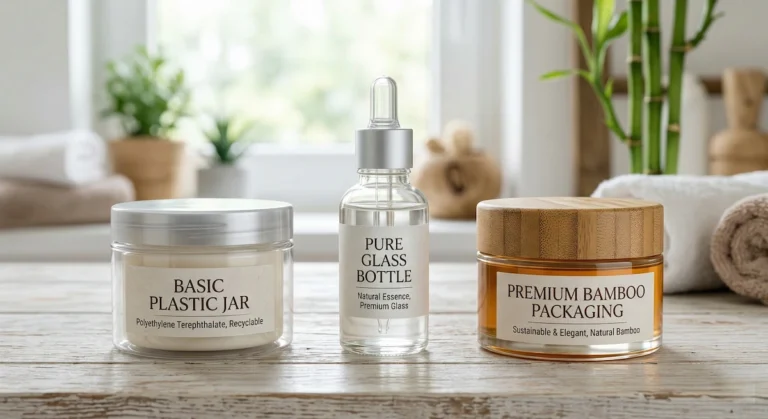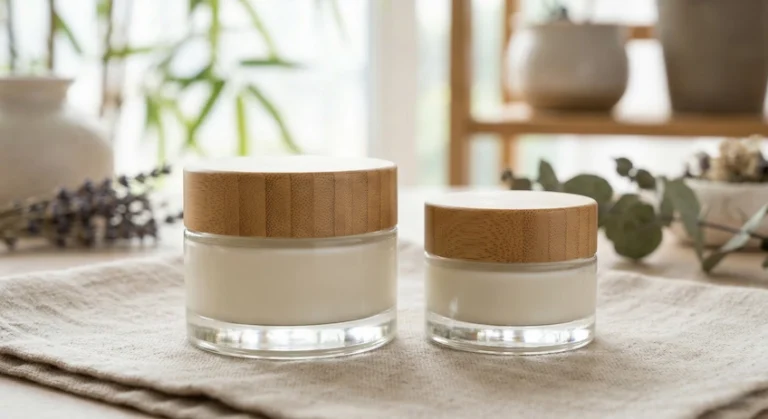

In the competitive beauty market, packaging defines your brand. While plastic is the cheap standard and aluminum/steel offers an industrial look, bamboo cosmetic bottles offer a unique competitive edge: Eco-Luxury.
For B2B cosmetic formulators and brands, the question isn't just "Is it recyclable?"—it's "Does this packaging elevate our product value while reducing our footprint?"
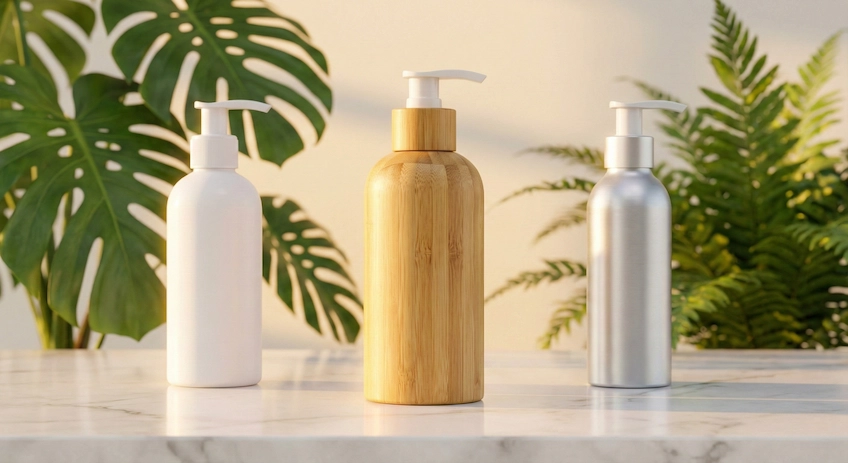
This guide compares the environmental and aesthetic impact of Bamboo vs. Metal (Steel/Aluminum) vs. Plastic, helping you choose the right packaging for your lotions and serums.
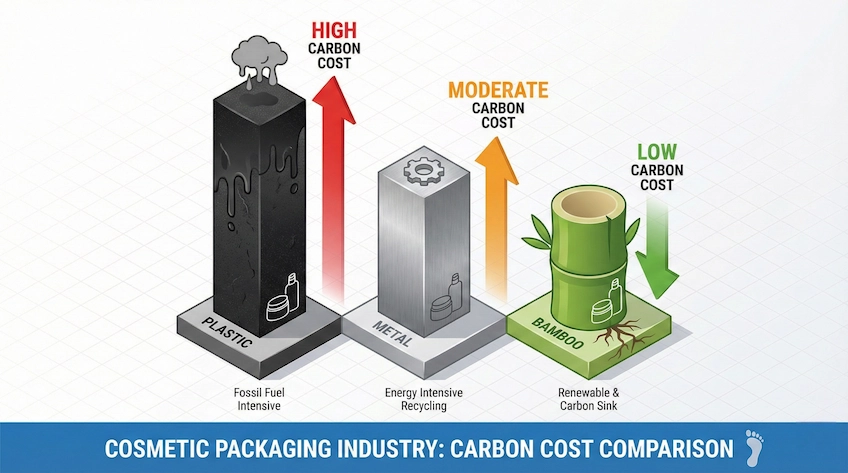
The Carbon Equation: Why Bamboo Wins
Manufacturing impacts the planet long before a bottle reaches the shelf.
- Plastic (PET/PP): Derived from fossil fuels. High carbon emissions during extraction and refining.
- Metal (Steel/Aluminum): Energy-intensive mining and smelting processes. While recyclable, the initial carbon footprint is extremely high.
- Bamboo: A regenerative grass that absorbs CO₂ as it grows. Harvesting requires minimal energy, making it a low-carbon champion for your supply chain.
According to the World Wildlife Fund (WWF)1, choosing renewable materials like bamboo helps brands meet global carbon reduction targets.
Bamboo vs. Plastic: The "End-of-Life" Reality
B2B brands are increasingly held accountable for the "afterlife" of their products.
Plastic bottles often end up as microplastics, persisting for 450+ years. Even "recyclable" plastics have low actual recycling rates.
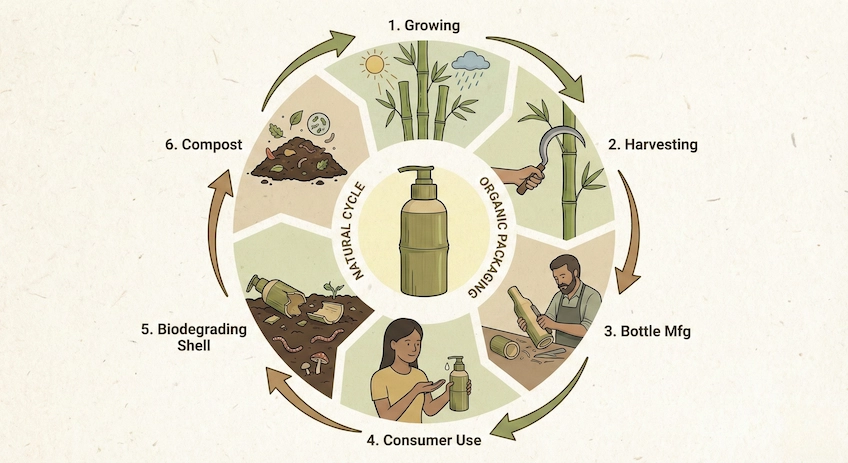
In contrast, our bamboo lotion bottles2 feature a biodegradable outer shell. This allows brands to market a "less plastic" initiative, significantly reducing the non-degradable waste mass compared to 100% plastic containers.
📊 Packaging Material Comparison for Brands
| Feature | Bamboo Bottle | Metal (Aluminum/Steel) | Plastic (PET) |
|---|---|---|---|
| Raw Material | Renewable Plant (Fast Regrowth) | Mined Ore (Non-renewable) | Petroleum (Fossil Fuel) |
| Mfg. Energy | ⭐⭐⭐ (Low) | ⭐ (High Heat Smelting) | ⭐⭐ (Refining) |
| Brand Perception | Premium / Organic / Natural | Clinical / Industrial | Cheap / Mass Market |
| Aesthetics | Warm, Unique Grain | Cold, Uniform | Generic |
Formula Protection: The Best of Both Worlds
Beyond sustainability, functionality is key.
Pure metal bottles can react with certain acidic ingredients (like Vitamin C serums). Pure plastic looks cheap.
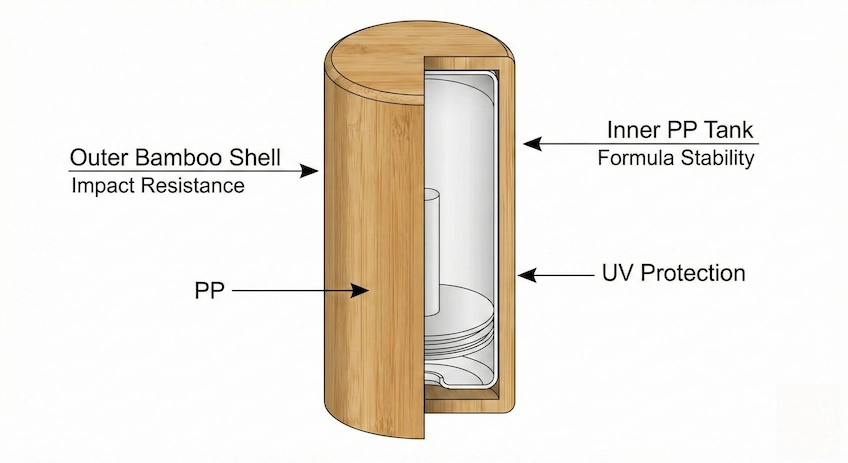
Our bamboo airless bottles3 solve this by combining a protective inner tank (PP/Glass) with a durable bamboo shell. This ensures:
- Formula Stability: No chemical reaction with ingredients.
- UV Protection: The bamboo shell naturally blocks light, preserving photosensitive active ingredients better than clear plastic.
- Vacuum Preservation: Airless technology keeps bacteria out without preservatives.
Why Bamboo is the "Premium" B2B Choice
In the skincare sector, perception is price.
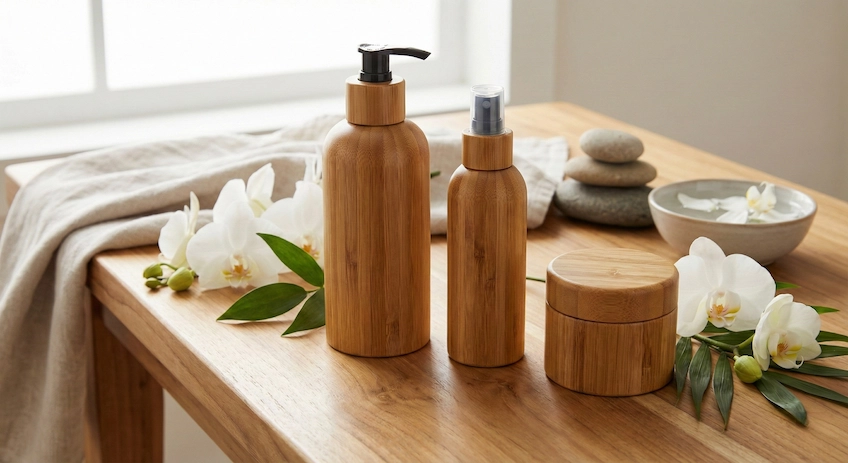
A plastic bottle says "drugstore." A metal bottle says "medical." But a bamboo spray bottle4 says "clean beauty" and "luxury."
- Tactile Warmth: The natural grain feels high-end in the consumer's hand.
- Unique Aesthetics: No two bottles look exactly alike, adding bespoke value to your product line.
- Storytelling: It gives your marketing team a powerful story—rapid regrowth, FSC-certified sourcing, and eco-conscious design.
"Switching to bamboo packaging isn't just an eco-move; it's a branding upgrade. It aligns your product with the values of the modern, conscious beauty consumer."
Conclusion
When you weigh the factors—Carbon Footprint, Formula Safety, and Brand Image—bamboo emerges as the superior choice for forward-thinking beauty brands.
It bridges the gap between the durability of industrial materials and the aesthetics of nature.
🌿 Elevate Your Cosmetic Line
Ready to switch to sustainable packaging? 👉 Request a Sample Kit