
In the world of cosmetic packaging, precision is everything. When sourcing Glass Dropper Bottles, using the correct terminology prevents costly manufacturing errors and ensures your components fit perfectly.
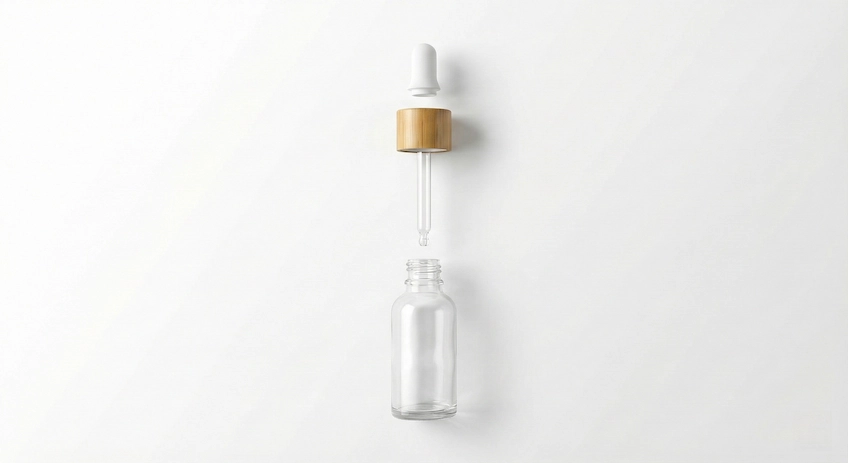
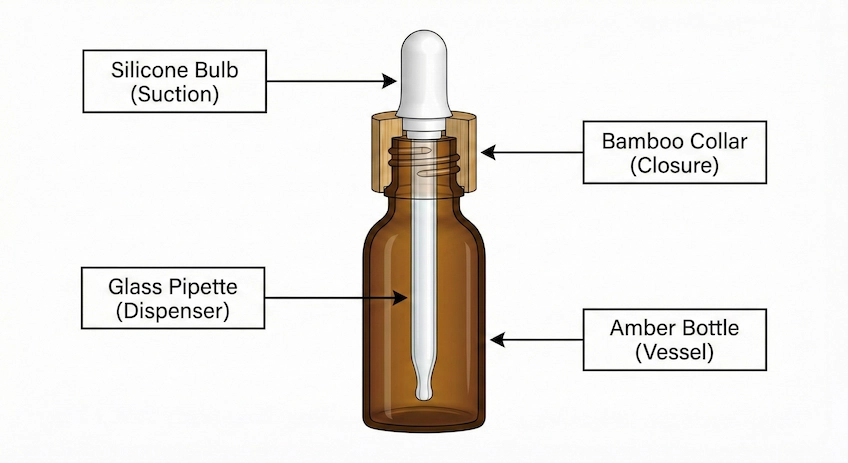
A standard dropper assembly consists of four critical parts. At ECO-BAMBOO, we allow brands to customize each of these elements to create a unique, sustainable packaging solution. Here is the definitive breakdown of the anatomy of a dropper bottle.
1. The Bottle (The Vessel)
The foundation of the assembly.
- Material: Usually Type III Soda-Lime Glass (Standard) or High Borosilicate Glass (Premium, higher heat resistance).
- Neck Finish: The industry standard is DIN18 (common in Europe for essential oils) or 18/410 and 20/400 (common in the US for serums).
- ECO-BAMBOO Option: Our Amber Glass Bottles1 provide UV protection, while our Frosted Glass offers a luxury tactile feel.
2. The Pipette (The Tube)
The glass tube that draws the liquid.
- Tip Styles:
- Straight Tip: Standard for most liquids.
- Ball Tip (Bulbous): Prevents scratching the skin; ideal for facial serums.
- Bent Tip: Helps reach the bottom edge of the bottle.
- Material: Low-borosilicate glass is standard because it is clearer and stronger than plastic tubes.
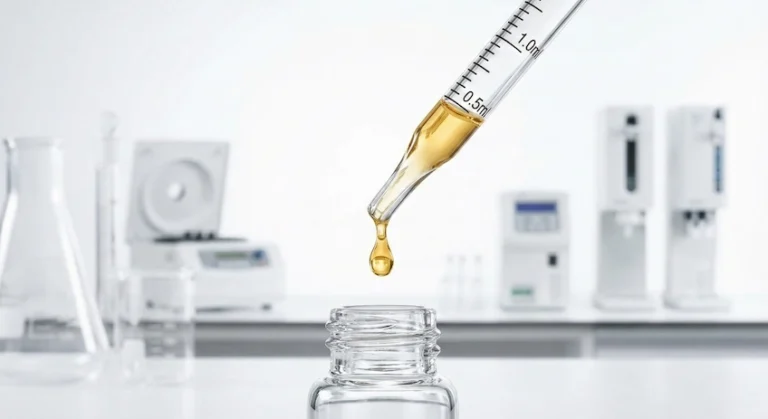
- Calibration: Printed graduation marks (0.25ml, 0.5ml) can be added for medical-grade precision.
3. The Collar (The Cap)
The screw cap that holds the assembly together.
- Standard: Smooth or ribbed plastic (PP).
- Premium: Aluminum sheath over plastic (Gold/Silver).
- Sustainable: Bamboo-Clad Collar2. This is our signature component. We wrap a functional plastic thread in a real, FSC-certified bamboo shell, reducing plastic visibility and elevating the eco-credentials.
4. The Bulb (The Teat)
The rubber part you squeeze.
- Material Matters:
- Natural Rubber: Soft, matte finish. Good for general use but can degrade with strong oils.
- Nitrile (NBR): Stiffer, shiny. Excellent chemical resistance for essential oils.
- Silicone: Premium, silky feel. High heat resistance and inertness. Best for luxury skincare.
- Design: Standard round bulbs vs. flat-top or button-press designs.
5. Assembly Specification Table: Building Your BOM
Use this table to create your Bill of Materials (BOM) for suppliers.
| Component | Standard Option | Premium / Custom Option | ECO-BAMBOO Recommendation |
|---|---|---|---|
| Bottle | Clear / Amber Glass | Frosted / Painted / Gradient | Amber Glass1 (UV Protection) |
| Pipette | Straight Glass | Ball Tip / Calibrated | High-Clarity Glass |
| Collar | Black Plastic | Aluminum / Bamboo | Real Bamboo Shell3 |
| Bulb | Natural Rubber | Silicone / Nitrile | Silicone (Durability) |
Conclusion
A "dropper bottle" is not just one part; it is a system. The Bottle, Pipette, Collar, and Bulb must work in harmony to ensure seal integrity and a premium user experience.
By specifying ECO-BAMBOO components, you ensure that every part of this assembly communicates quality and sustainability to your customer.
🛠️ Build Your Custom Assembly
Ready to spec your perfect dropper? Request a sample kit with various bulb materials, pipette tips, and bamboo collars to find your ideal combination. 👉 Get Your Component Sample Kit