Are you struggling to keep up with the rapid developments in eco-friendly packaging1—especially bamboo cosmetic packaging2? The landscape is changing fast, and brands must adapt or risk falling behind.
Bamboo cosmetic packaging is now embracing multi-material blends3, advanced technical features, and smart technology4 for better performance, sustainability5, and consumer engagement.

Brands and designers alike are seeking ways to balance beauty, sustainability5, and practicality in their packaging choices. My recent collaborations have shown me how hybrid designs6 and new material engineering unite the tactile comfort of bamboo with modern needs. Let me walk you through the key innovations driving change in this field, and how they’re shaping the future for designers like Mary—a cosmetic packaging expert who is constantly adapting her designs to reflect these trends.
What are the latest innovations in bamboo cosmetic packaging2 design?
Eco-friendly packaging expectations are rising, but so is the desire for luxurious and high-performing products. Both brands and consumers seek packaging solutions that offer more than just green claims.
The latest innovations include hybrid packages featuring bamboo shells and advanced inserts, smart technology4, and compostable bamboo-derived biopolymers7 offering elegant looks with technical durability.

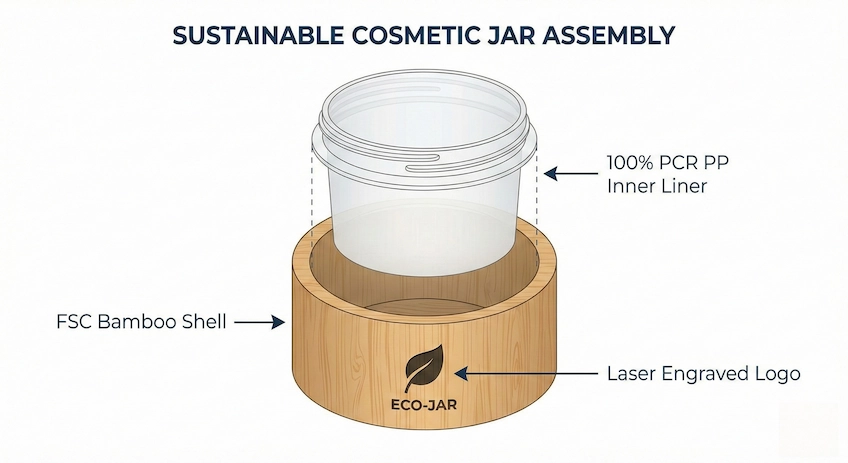
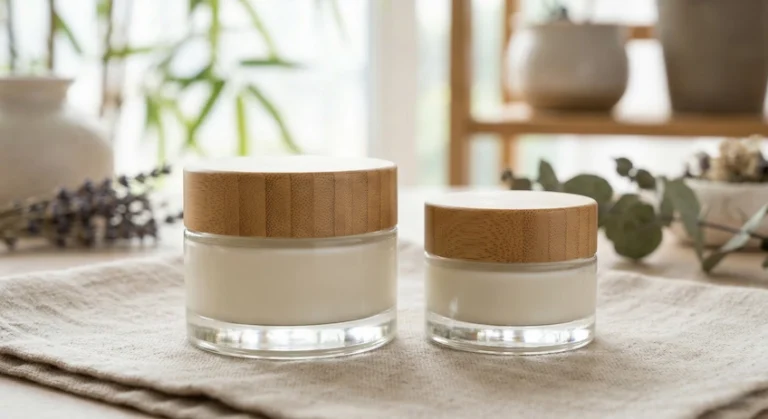
Today, bamboo packaging is shifting beyond simple containers. Designers are constructing packs with bamboo exteriors holding glass or PCR plastic8 inserts, so beauty items remain fresh and protected. When Mary, a seasoned Canadian packaging designer, receives design briefs for luxury skincare9, she often searches for ways to maintain airtightness and shelf-life without sacrificing the natural appeal10. Table 1 highlights some of the combinations used today:
| Bamboo Packaging Feature | Material Integration | Benefits |
|---|---|---|
| Bamboo Shell | PCR Plastic / Glass | Product safety, compatibility, shelf-life |
| Bamboo-Derived Biopolymer | Inner lining | Compostability, plastic-free, eco storytelling11 |
| Surface Treatments | Antimicrobial coatings | Hygeine, added protection |
Clients want eco-friendly packaging1 but also expect performance. These hybrid designs6 solve the need by using bamboo for aesthetic, glass or PCR plastic8 for technical support, and new biopolymers to remove plastics altogether. It’s all about blending tradition with innovation. Mary’s experience confirms that attractive, earthy finishes combined with robust materials attract more consumers without trade-offs.
How are hybrid packaging solutions integrating bamboo with other materials?
As demands for both sustainability5 and technical reliability rise, packaging designers12 must find novel solutions. Many brands are unsure which material blends3 strike the right balance.
Hybrid packaging mixes bamboo’s natural beauty and tactile sensation with high-function barriers such as glass or PCR plastic8, enhancing both aesthetics and product performance.

When I work with global brands, the first challenge is merging eco-materials like bamboo with protective liners. Liquid products and sensitive formulas need airtight seals13. That’s why hybrid packages—with bamboo shells and glass or PCR inner layers—are becoming the norm. Table 2 lists some main material combinations and why they’re selected:
| Shell Material | Insert Material | Application | Key Benefit |
|---|---|---|---|
| Bamboo | Glass | Serums, Oils | Unmatched barrier, sustainability5 |
| Bamboo | PCR plastic8 | Creams, Lotions | Lightweight, recycled content |
| Bamboo | Biopolymer liner | All cosmetics types | Compostable, plastic-free |
These hybrids reduce plastic dependency, improve user experience, and deliver higher protection. Mary’s approach often involves prototyping several material blends3 before a final decision. She tests how bamboo integrates with glass for premium feel, or with PCR plastic8 for lightweight options. This hybrid design mindset is not just a passing trend—it is an answer to long-standing industry problems of compatibility and durability.
What smart packaging technologies are being incorporated into bamboo cosmetic packaging2?
Customers today want packaging that is more than a container; they expect interaction, transparency, and proof of eco-credentials. Some wonder how technology can play a role in bamboo cosmetic packaging2.
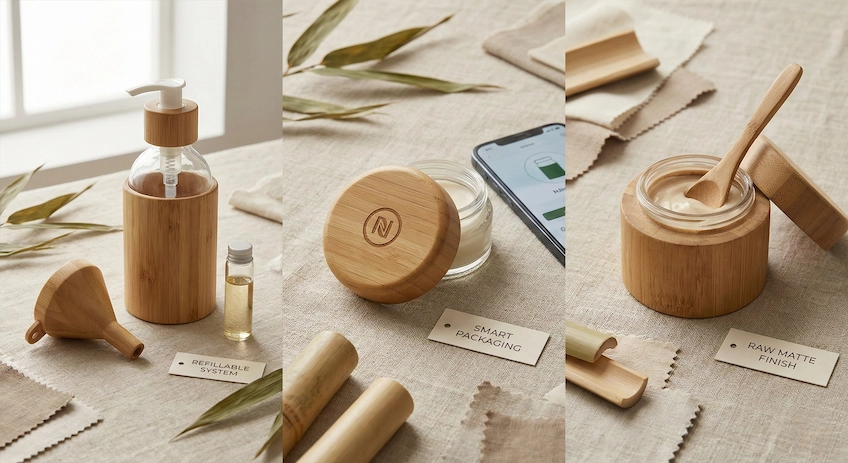
Bamboo packaging now features smart technologies like NFC chips, QR codes, and antimicrobial treatments for authentication, traceability14, and enhanced product protection.

The move toward smart packaging is undeniable. In my experience, brands are beginning to see added value from embedding digital markers for authenticity and offering consumers more information. Table 3 describes how these features work:
| Technology | Example Use | Benefit |
|---|---|---|
| NFC Chips | Authentication | Counterfeit prevention, product verification |
| QR Codes | Traceability | Transparency, source info |
| Antimicrobial Coating | Surface treatment | Hygiene, longer shelf life |
Mary keeps up with these technologies by integrating authentication chips and tracking QR codes in luxury lines. These digital features reassure buyers and align with global certification standards. Smart packaging elevates bamboo from just “eco” to “interactive,” which appeals to tech-savvy, eco-conscious consumers. Traceability and hygiene matter just as much as the renewable story.
How do bamboo-derived biopolymers7 contribute to plastic-free beauty packaging?
Many brands want to phase out plastic, but alternatives must still meet technical standards. Some wonder if bamboo-based materials can truly replace plastics in demanding applications.
Bamboo-derived biopolymers offer a compostable, renewable inner lining for packaging, helping brands attain fully plastic-free, technically sound cosmetic packs.

For bamboo packaging to be truly sustainable, the inside counts too. I am seeing growing demand for bamboo-based polymers, which act as moldable liners or closures. These biopolymers are made from bamboo fiber and waste. They decompose naturally, fitting into composting systems and furthering the “plastic-free” narrative. Table 4 highlights the main benefits:
| Material | Application | Compostability | Technical Performance |
|---|---|---|---|
| Bamboo Biopolymer | Tubes, Caps, Liners | Yes | Good seal, toughness |
| Bamboo + PLA Combination | Jars, Containers | Yes | Moldability |
| Bamboo Cellulose | Wrappers, Labels | Yes | Printable surface |
In Mary’s work, she tests these options for cosmetics requiring strong lids and leak-proof tubes. When brands commit to compostable inner layers, it is easier for them to communicate plastic-free claims and meet global standards like SGS, ROSH. Bamboo-derived biopolymers represent a turning point, merging waste reduction with high technical performance.
Conclusion
Bamboo cosmetic packaging is no longer basic—it fuses natural beauty, technical reliability, and smart innovations, opening new paths for eco-conscious brands and forward-thinking designers.
Find out what makes packaging eco-friendly and how it impacts consumer choices. ↩
Explore the advantages of bamboo cosmetic packaging, including sustainability and aesthetic appeal. ↩
Find out which material blends are most effective for creating eco-friendly packaging. ↩
Discover the latest smart technologies in packaging that enhance user experience and sustainability. ↩
Understand the significance of sustainability in modern packaging design and consumer expectations. ↩
Learn how hybrid designs combine materials for better performance and eco-friendliness. ↩
Understand how bamboo-derived biopolymers contribute to sustainable packaging solutions. ↩
Learn about PCR plastic and its importance in creating sustainable packaging solutions. ↩
Explore the trends in luxury skincare packaging and how they incorporate sustainability. ↩
Learn how the natural appeal of materials like bamboo affects consumer preferences. ↩
Explore how eco storytelling can enhance brand image and consumer engagement. ↩
Explore the challenges and innovations packaging designers encounter in the industry. ↩
Discover the importance of airtight seals in maintaining product integrity and freshness. ↩
Learn how traceability features in packaging can build consumer trust and transparency. ↩