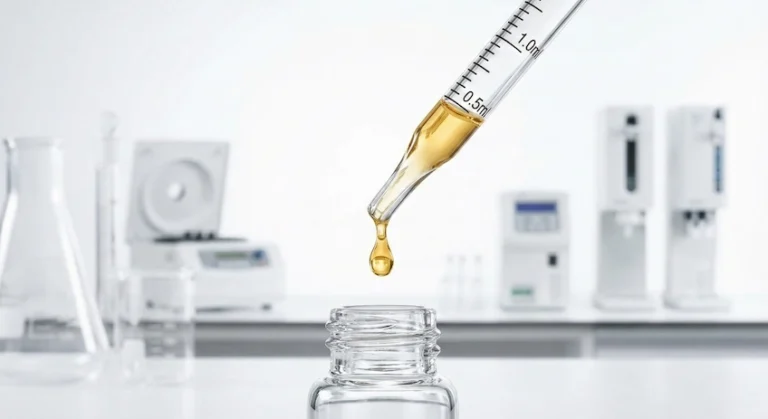

For cosmetic formulators, "Viscosity" is more than just thickness; it is the key variable that dictates the user experience. A mismatch between your formula's viscosity and the dropper's engineering can lead to uncontrolled dripping (low viscosity) or dispensing failure (high viscosity).
Understanding this relationship is critical for specifying the right packaging components. At ECO-BAMBOO, we help brands match their pipettes to their products. Here is the technical breakdown of how viscosity impacts dropper performance.

1. Low Viscosity (Water-like): The "Drip" Challenge
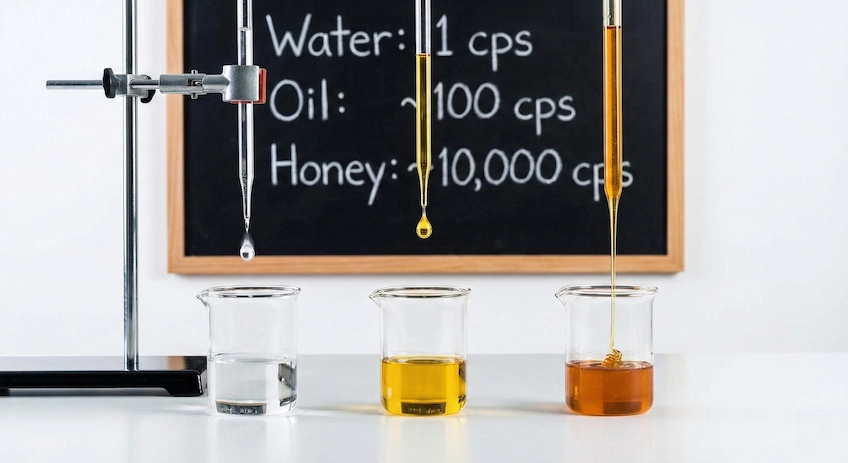
Liquids like toners, essential oils, and essences (1-100 cps) flow very freely.
- The Problem: Surface tension is low. Standard pipettes may drip spontaneously without squeezing the bulb, leading to mess and waste.
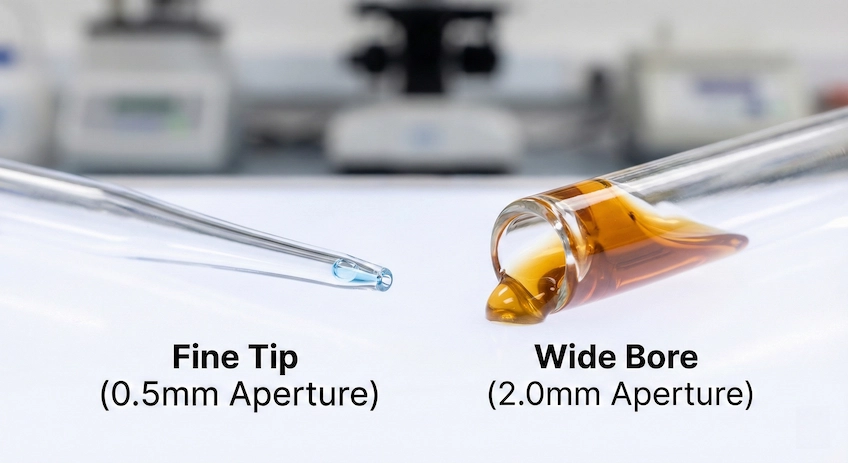
- The Solution: Use a Euro Dropper (orifice reducer) or a Fine-Tip Glass Pipette1. A smaller aperture increases capillary action, holding the liquid inside until the user intends to dispense it.
2. High Viscosity (Honey-like): The "Suction" Challenge
Liquids like rich serums, beard oils, and glycerin blends (>1000 cps) resist flow.
- The Problem: A standard bulb may not generate enough vacuum to pull the thick liquid up. Or, the liquid clings to the outside of the pipette, creating a mess.
- The Solution:
- Wide-Mouth Pipette: A larger opening reduces resistance.
- High-Elasticity Bulb: Our Silicone Bulbs2 offer stronger suction recovery than natural rubber.
- Wiper Mechanism: A custom insert that wipes the outside of the pipette as it is pulled out.
3. Viscosity & Drop Size Correlation
Viscosity directly influences the volume of a "drop."
- Thin Liquid: Forms smaller, faster drops (~0.03ml).
- Thick Liquid: Forms larger, slower drops (~0.05ml).
B2B Insight: If your product requires precise dosing (e.g., CBD oil), you must calibrate your label instructions based on the viscosity-adjusted drop size. Use our Calibrated Droppers3 to verify.
4. Selection Matrix: Matching Viscosity to Dropper Type
Use this table to specify the right component for your formula.
| Viscosity Range | Product Example | Recommended System | Tip Style |
|---|---|---|---|
| Low (1-100 cps) | Essential Oil / Toner | Euro Dropper | Orifice Reducer |
| Medium (100-1000 cps) | Face Serum / Face Oil | Standard Pipette | Ball / Straight Tip |
| High (>1000 cps) | Gel / Castor Oil | Wide-Bore Pipette | Straight Tip (Large Aperture) |
| Very High | Cream / Lotion | Pump / Airless | Dropper Not Recommended |
5. The Bamboo Factor: Grip and Control
Viscous liquids can be slippery. Our Bamboo-Shell Dropper Collars1 provide a tactile, non-slip grip that plastic or smooth metal cannot match. This ergonomic advantage is crucial for users handling oily bottles.
Conclusion
Viscosity isn't just a number; it's a design constraint. Don't settle for a "standard" dropper. To ensure a premium user experience, you must customize the Pipette Aperture and Bulb Material to your specific formula.
At ECO-BAMBOO, we offer a range of technical solutions wrapped in sustainable aesthetics.
🧪 Test Your Flow
Send us your bulk formula for a free viscosity match test. We will recommend the perfect pipette and bulb combination. 👉 Get Your Viscosity Test Kit