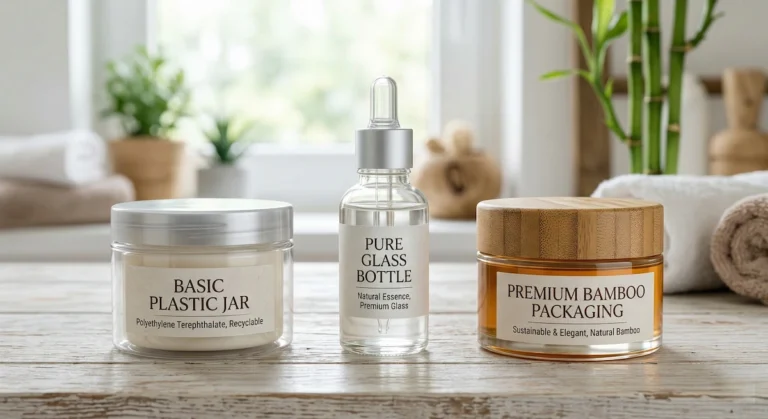

For cosmetic brands, the debate between glass and plastic is often framed as "Premium vs. Practical." But for B2B decision-makers, the choice goes deeper: it's about Product Integrity and Environmental Responsibility.
Does glass actually preserve your formula better? Is plastic always the less sustainable choice? At ECO-BAMBOO, we help brands navigate this trade-off. Here is the definitive comparison for 2026.
1. Product Preservation: Glass is the "Fortress"
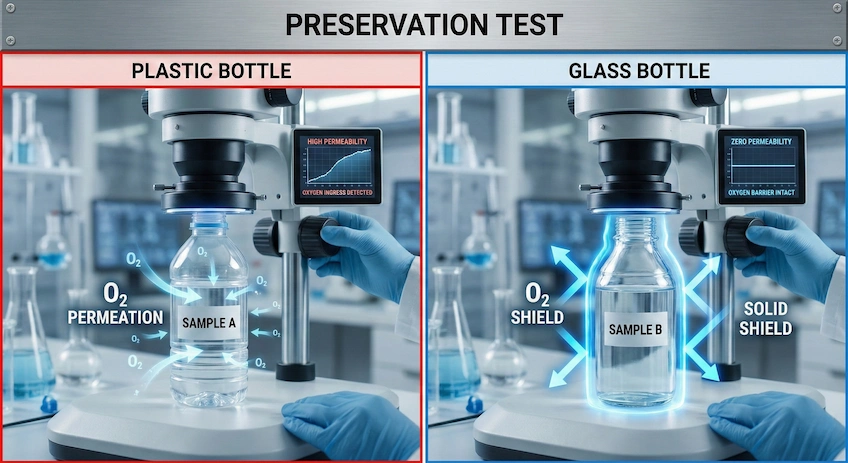
When it comes to protecting active ingredients (like Retinol, Vitamin C, or organic oils), Glass is the undisputed winner.
- Chemical Inertness: Glass is non-porous and impermeable. It creates a 100% barrier against oxygen and moisture, preventing oxidation. Unlike plastic, it will never leach chemicals (like BPA or phthalates) into your formula.
- The Plastic Risk: Standard PET/PP plastics are semi-permeable. Over time, oxygen can migrate in, and volatile compounds (fragrance) can migrate out, altering the product's scent and efficacy.
- Our Solution: For sensitive serums, we recommend Bamboo-Clad Glass Bottles1. The glass inner protects the liquid, while the bamboo shell blocks UV light.
2. Sustainability: The Complex Truth
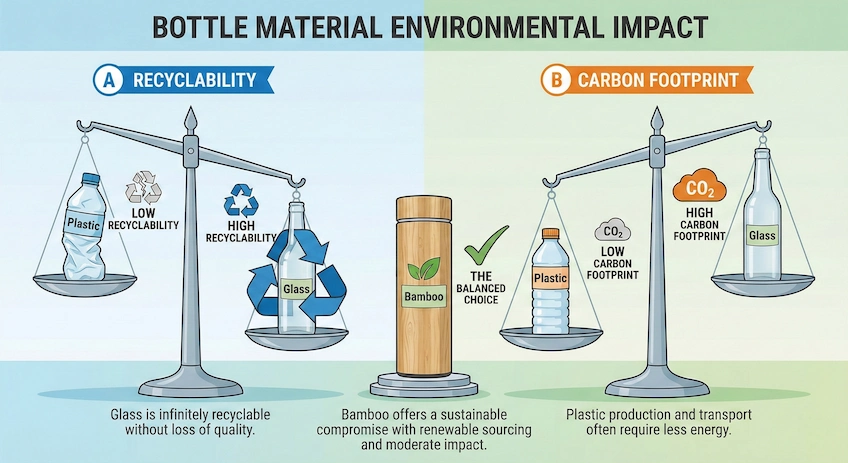
The sustainability comparison is not black and white. It depends on the Product Lifecycle.
- Glass (The Circular Hero):
- Pros: Infinitely recyclable without loss of quality.
- Cons: Heavy. Shipping glass generates higher carbon emissions than plastic.
- Plastic (The Carbon Saver):
- Pros: Lightweight. Lower transport emissions.
- Cons: Down-cycled (can only be recycled a few times). Microplastic pollution risk.
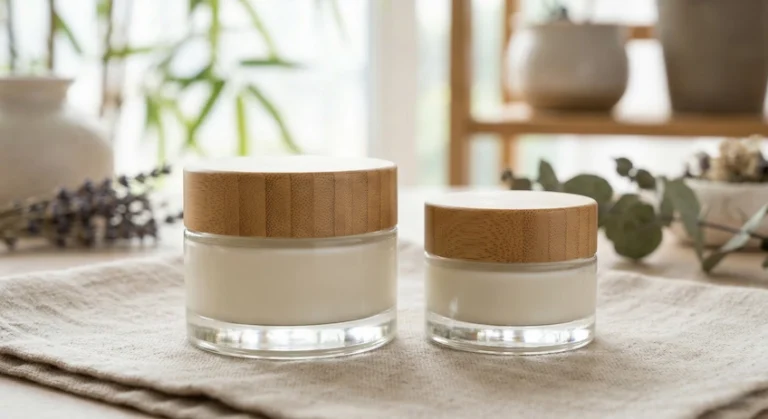
- The ECO-BAMBOO Hybrid: Our Bamboo Lotion Bottle with PET Inner2 reduces plastic use by 70% compared to a solid plastic bottle, offering a lightweight solution with renewable bamboo cladding.
3. Durability and User Experience
- Glass: Communicates Luxury and Weight. However, it is fragile. A dropped bottle means wasted product.
- Plastic: Durable and bathroom-safe. Ideal for shower products or travel sizes.
- The Best of Both: Our Bamboo Airless Bottles3 use a durable PP core protected by a bamboo shell, offering the premium feel of wood with the durability of plastic.
4. Comparison Matrix: Glass vs. Plastic
Use this table to align your packaging material with your product needs.
| Feature | Glass | Plastic (PET/PP) | Bamboo Hybrid |
|---|---|---|---|
| Preservation | Excellent (Inert) | Good | Excellent (Glass Inner) |
| Sustainability | High (Recyclable) | Low (Waste Risk) | High (Renewable Shell) |
| Transport Cost | High (Heavy) | Low (Light) | Medium |
| Breakability | High | Low | Medium (Protected) |
| Best For | Active Serums | Body Lotions | Organic Skincare |
Conclusion
So, how do they compare? Choose Glass if your priority is Preserving Potent Formulas and signaling luxury. Choose Hybrid Plastic if your priority is Durability and lowering shipping carbon footprints.
At ECO-BAMBOO, we offer both. Whether you need the inertness of glass or the utility of PCR plastic, we wrap it in sustainable bamboo to elevate your brand.
🧪 Test Your Compatibility
Not sure which material fits your formula? Request a sample kit including both Glass and PET Bamboo bottles for stability testing. 👉 Get Your Material Comparison Kit