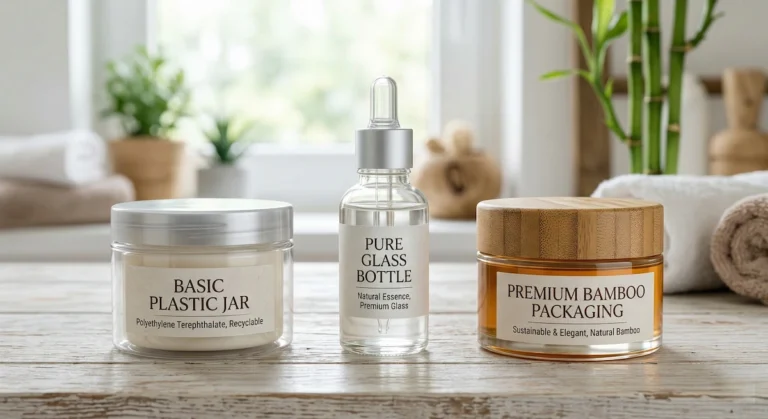

For premium brands, the "unboxing experience" includes the scent. If a packaging component absorbs and retains odors—whether from garlic in a food jar or tea tree oil in a cosmetic cream—it can compromise the product's integrity.
Bamboo is a natural, porous material. So, does it absorb odors? The answer depends on the finish. At ECO-BAMBOO, we engineer our lids to resist absorption while maintaining their natural beauty. Here is the technical breakdown.
1. The Porosity Problem: Raw Bamboo
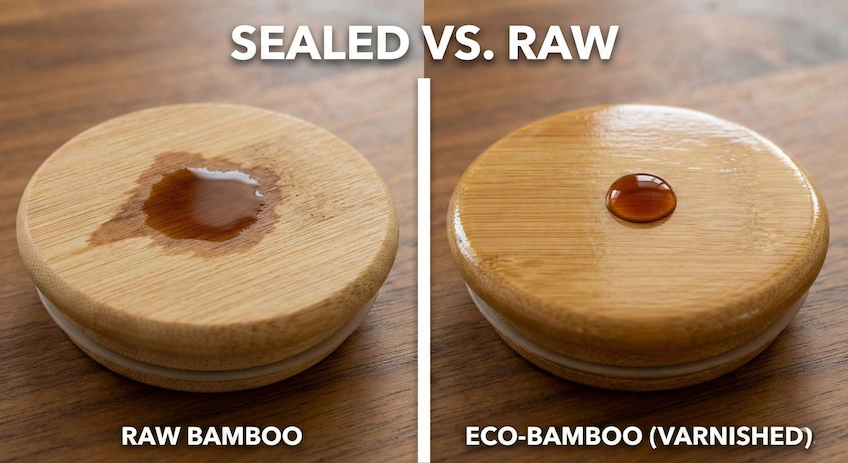
In its raw state, bamboo is a grass with microscopic vascular bundles.
- Mechanism: Like a sponge, raw bamboo can absorb liquids and volatile organic compounds (odors) into its fibers.
- Risk: If you store strong-smelling products (curry, coffee, essential oils) in a jar with an unfinished bamboo lid, the scent will penetrate the wood and be difficult to remove.
2. The Solution: Food-Grade Varnish & Liners
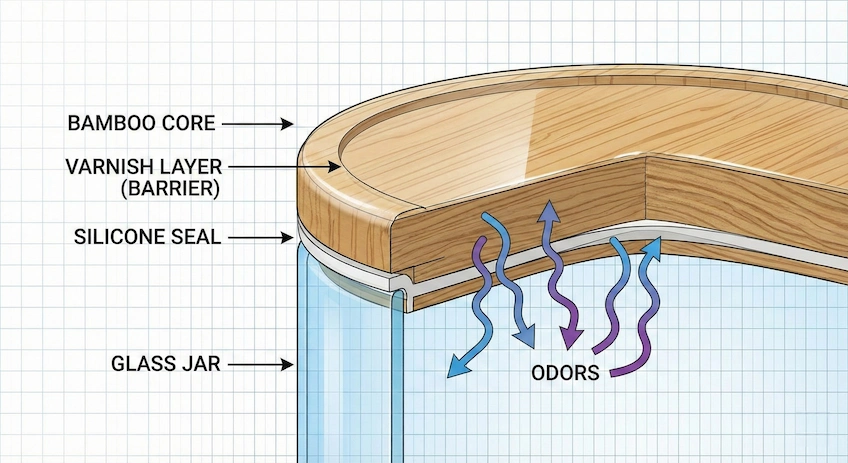
To prevent odor absorption, we treat our bamboo lids with a multi-layer protection system.
- Step 1: Food-Grade Varnish: We apply a clear, non-toxic lacquer that seals the pores of the bamboo. This creates a barrier against moisture and odors.
- Step 2: Inner Liners:
- PP / PET Liner: For cosmetic jars, a plastic inner disc often separates the product from the bamboo.
- Silicone Seal: For food jars, a silicone ring ensures airtightness. Silicone is non-porous and easy to clean.
B2B Insight: When sourcing bamboo lids, always specify "Varnished" or "Sealed". Cheaper, raw bamboo lids will absorb odors and stain over time.
3. Odor Resistance Matrix: Bamboo vs. Other Materials
How does bamboo compare to standard packaging materials?
| Material | Porosity | Odor Retention Risk | Best For |
|---|---|---|---|
| Raw Bamboo | High | High | Dry Goods (Rice, Pasta) |
| Varnished Bamboo | Low | Low | Spices, Creams, Candles |
| Plastic (PP) | Low | Medium | Standard Foods |
| Stainless Steel | None | Zero | Acidic Foods |
4. Maintenance & Deodorizing (Customer Education)
Even with high-quality lids, strong odors can sometimes linger on the silicone seal (not the wood itself). Educate your customers on how to refresh their packaging:
- The Culprit: Usually the silicone ring, not the bamboo.
- The Fix: Remove the silicone ring and soak it in a 50/50 vinegar-water solution.
- The Bamboo: Wipe with a damp cloth and let it air out in the sun. Sunlight naturally neutralizes odors.
5. Application Guide: Is Bamboo Right for Your Product?
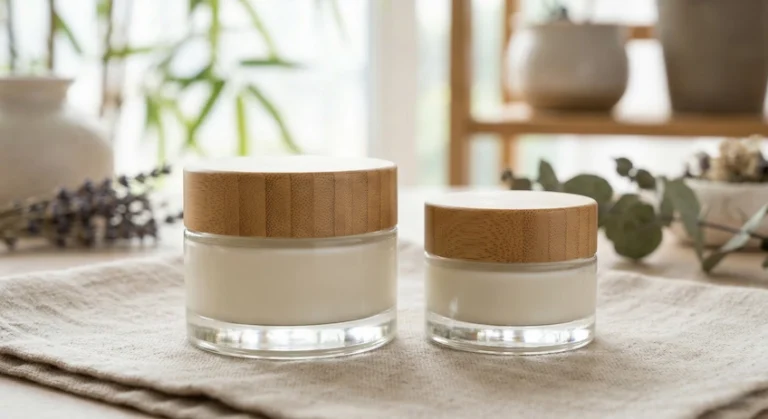
- Cosmetics: Yes. Our Bamboo Cosmetic Jars1 use inner liners, so the cream never touches the bamboo. Zero odor risk.
- Spices: Yes. Varnished lids are perfect.
- Fermented Foods (Kimchi/Pickles): No. The acidity and strong smell may eventually permeate even varnished wood. Use glass lids for these.
Conclusion
Do bamboo lids absorb odors? Not if they are high-quality and varnished. By choosing ECO-BAMBOO's Sealed Lids, you get the aesthetic warmth of wood without the functional drawback of odor retention.
For brands, this means you can confidently use bamboo for scented candles, rich creams, and aromatic spices.
🛡️ Smell the Difference
Worried about your product's scent? Request a sample of our Food-Grade Varnished Bamboo Lids to test with your strongest formula. 👉 Get Your Odor-Resistant Sample Kit
Shop Wholesale Bamboo Cosmetic Jars with Inner Liners. ↩