
For food and wellness brands, packaging safety is non-negotiable. While bamboo is a natural material, the manufacturing process—specifically adhesives, varnishes, and seals—determines its safety profile.
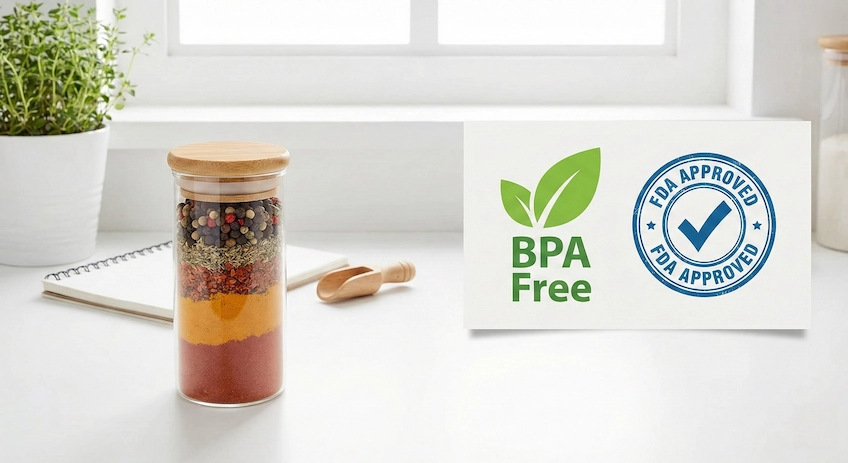
So, are bamboo lids safe? Yes, provided they are manufactured to FDA/LFGB standards. At ECO-BAMBOO, we ensure every component, from the wood to the silicone ring, is 100% Food-Grade and BPA-Free.
Here is the technical breakdown of what makes a bamboo lid compliant for global markets.
1. The Bamboo Itself: Naturally Safe
Raw bamboo is inherently safe. It is:
- Non-Toxic: Contains no harmful chemicals naturally.
- Antibacterial: Contains "Bamboo Kun," a natural bio-agent that resists bacterial growth.
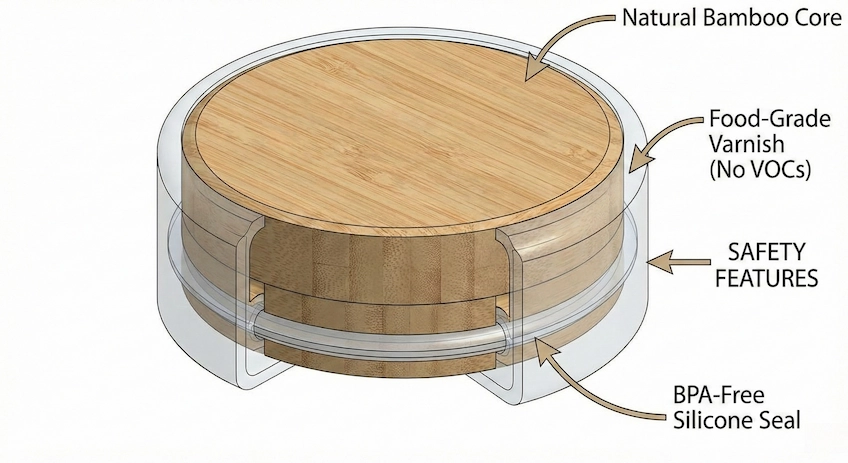
- Our Sourcing: We use FSC-Certified Moso Bamboo, ensuring no pesticides were used during growth.
2. The Critical Checkpoints: Where Safety Matters
The risk in bamboo lids usually comes from the add-ons, not the wood.
A. The Varnish (Coating)
Raw bamboo is porous and absorbs moisture. To make it durable, it must be sealed.
- The Risk: Cheap manufacturers use industrial polyurethanes containing VOCs or heavy metals.
- [cite_start]The ECO-BAMBOO Standard: We use a Vegetable-Based, Food-Grade Lacquer [cite: 1] that meets FDA 21 CFR 175.3001 standards for resinous and polymeric coatings. It is odorless, tasteless, and safe for direct food contact.
B. The Silicone Seal (The BPA Factor)
To create an airtight seal on glass jars, a silicone ring is used.
- The Risk: Low-grade plastics can contain Bisphenol A (BPA) or Phthalates.
- The ECO-BAMBOO Standard: We use exclusively Food-Grade Silicone.
- BPA-Free: Certified free from endocrine disruptors.
- Thermal Stability: Safe from -40°C to 230°C.
- Inert: Will not react with acidic foods or oils.
3. Comparison Matrix: Bamboo vs. Competitors
How does bamboo stack up against other lid materials in terms of chemical safety?
| Material | BPA Risk | Phthalate Risk | Leaching Risk | Eco-Impact |
|---|---|---|---|---|
| ECO-BAMBOO Lid | Zero (Certified) | Zero | None | Positive |
| Plastic Lid (PP) | Low (if BPA-free) | Medium | Microplastics | Negative |
| Metal Lid (Tin) | High (Lining) | Low | Corrosion | Medium |
| Raw Wood | Low | Low | Bacterial Growth | Positive |
4. Certification Standards: What to Ask Your Supplier
When sourcing bamboo packaging, demand these test reports:
- FDA (USA): Compliance for adhesives and coatings.
- LFGB (Germany/EU): The strictest standard for food contact materials. Unlike FDA, LFGB tests for sensory changes (taste/smell transfer).
- BPA-Free Test: Specific testing for the silicone seal.
B2B Insight: Selling in Europe? Ensure your supplier has LFGB certification. FDA compliance alone is often insufficient for the EU market.
5. Best Applications for Food-Grade Bamboo Lids
Our Bamboo Storage Jars2 are engineered for:
- Dry Goods: Coffee beans, loose-leaf tea, spices, pasta.
- Pantry Staples: Sugar, flour, nuts.
- Wet Foods: Only if the design includes a full plastic/glass inner liner. Direct contact with wet food (pickles, kimchi) is not recommended for wood longevity, even if safe.
Conclusion
Are bamboo lids safe and BPA-free? Absolutely—if you choose the right partner. Safety isn't just about the raw material; it's about the chemistry of the finish and the quality of the seal.
At ECO-BAMBOO, we don't guess. We test. Our packaging is designed to protect your product and your customers' health.
🛡️ Verify Your Packaging
Don't risk compliance. Request a sample kit of our FDA/LFGB compliant bamboo lids along with our safety certifications. 👉 Get Your Certified Sample Kit