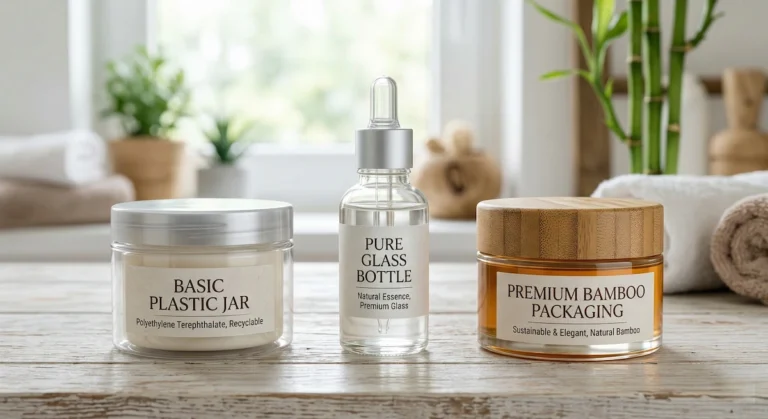

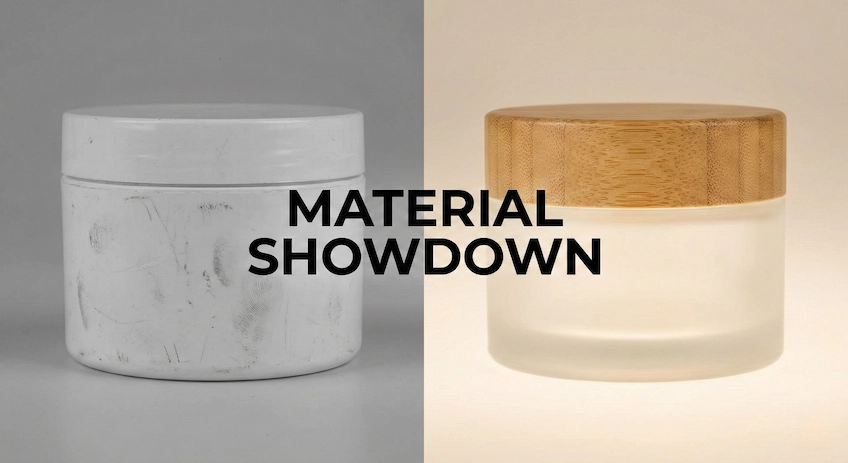
For a skincare brand, the choice between glass and plastic is not just aesthetic; it's a strategic decision that impacts Formula Stability, Shipping Costs, and Brand Perception.
While plastic (PP/PET) is lightweight and durable, glass offers superior chemical inertness. But what if you could have the best of both worlds?
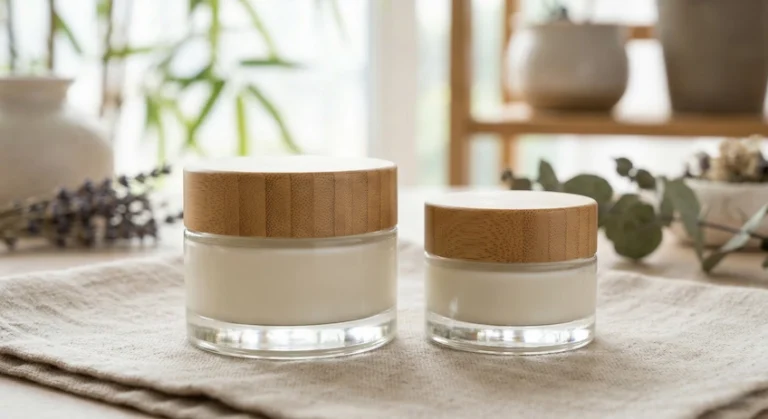
At ECO-BAMBOO, we advocate for a Hybrid Approach: using Glass Inner Jars1 protected by a durable Bamboo Shell. This combination solves the fragility of glass while eliminating the "cheap" feel of plastic.
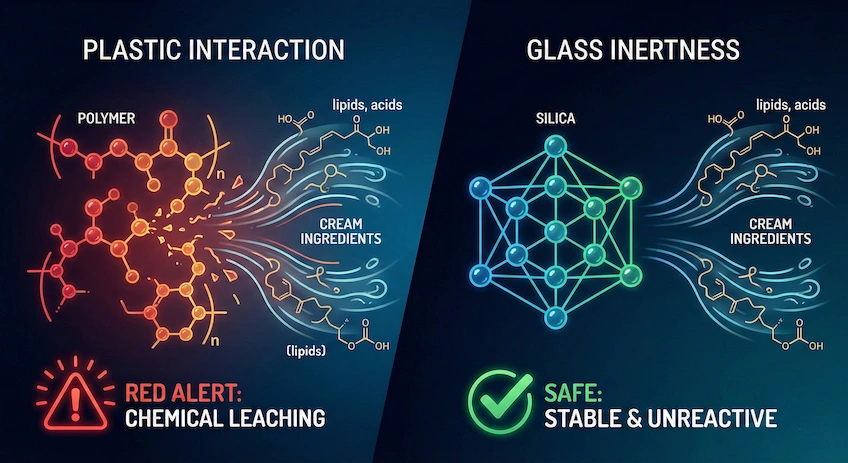
1. Chemical Compatibility: Why Glass Wins
The #1 rule in packaging is: Do No Harm. Active ingredients like Retinol, Vitamin C, and Essential Oils are potent solvents.
- Plastic Risk: Standard plastics can absorb these actives ("flavor scalping") or leach plasticizers into the cream.
- Glass Advantage: Glass is chemically inert. It is the gold standard for preserving the efficacy of high-end formulations.
B2B Insight: If your product is a "Clean Beauty" or "Organic" line, you must use Glass or Aluminum2 to maintain organic certification standards.
2. The "Fragility" Myth: How Bamboo Solves It
The main argument against glass is breakage during shipping. ECO-BAMBOO solves this with our Bamboo-Clad Design.
- Shock Absorption: The thick bamboo outer shell acts as a natural cushion.
- UV Protection: The opaque bamboo shell blocks 100% of UV light, protecting light-sensitive ingredients better than clear glass or plastic.
3. Cost & Sustainability Analysis
For a procurement manager, the decision often comes down to the bottom line.
| Feature | Plastic (PP/PET) | Standard Glass | Bamboo-Clad Glass |
|---|---|---|---|
| Material Cost | Low ($) | Medium ($$) | Medium-High ($$$) |
| Shipping Weight | Light (Low Cost) | Heavy (High Cost) | Medium (Balanced) |
| Recyclability | Low (Downcycled) | High (Infinite) | High (Separable) |
| Perceived Value | "Mass Market" | "Premium" | "Eco-Luxury" |
4. When to Use Plastic (and How to Do It Right)
Plastic isn't always the enemy. For Travel Sets, Body Butters (Large Volume), or Children's Products, safety and weight are priorities.
If you must use plastic, choose PCR (Post-Consumer Recycled) PP3 inner jars inside a bamboo shell. This significantly reduces virgin plastic use while maintaining durability.
Conclusion
Are glass or plastic jars better? Glass is better for the formula. Plastic is better for the logistics. Bamboo-Clad Glass is better for the brand.
It provides the chemical stability of glass, the durability of wood, and the sustainability story your customers are demanding.
🛡️ Upgrade Your Packaging
Stop compromising between safety and style. Request a sample of our shatter-resistant Bamboo Glass Jars. 👉 Get Your Hybrid Sample Kit