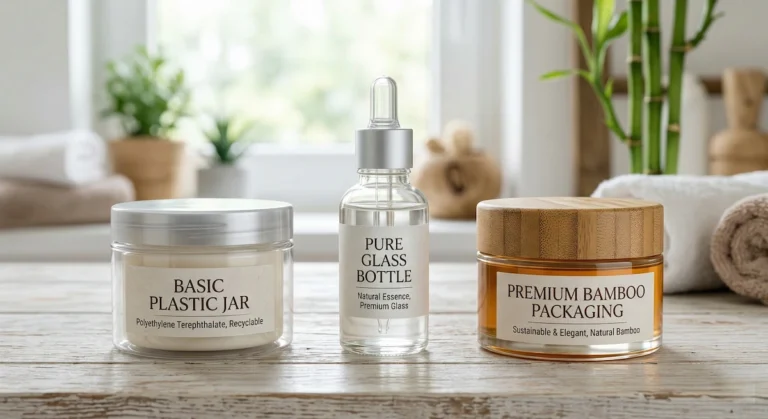

For cosmetic formulators and brand managers, the choice between glass and plastic is not just about aesthetics—it is a critical decision for Product Preservation.
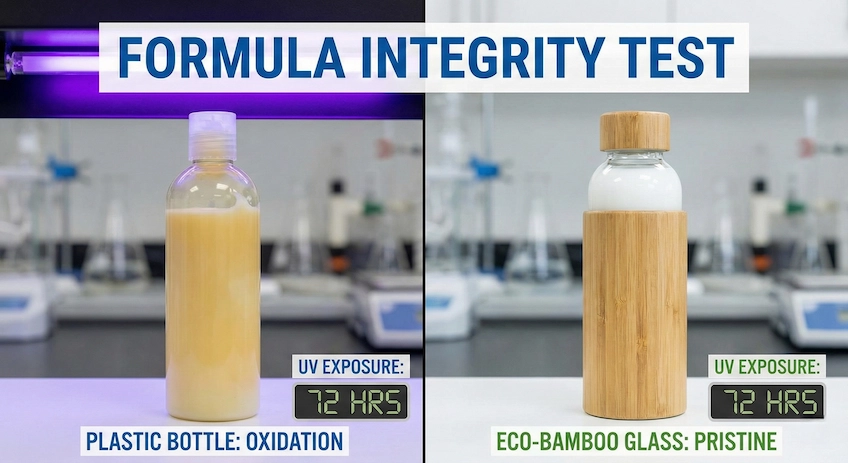
While plastic is cost-effective and durable, it has a hidden flaw: Permeability. For high-end skincare containing active ingredients (like Vitamin C, Retinol, or organic oils), standard plastic can lead to oxidation and potency loss.
So, are glass lotion bottles better? Yes. Glass is chemically inert and impermeable. However, pure glass is fragile. At ECO-BAMBOO, we offer the ultimate solution: Glass Lotion Bottles1 protected by a sustainable Bamboo Shell.
1. The Chemistry of Preservation: Inertness Matters
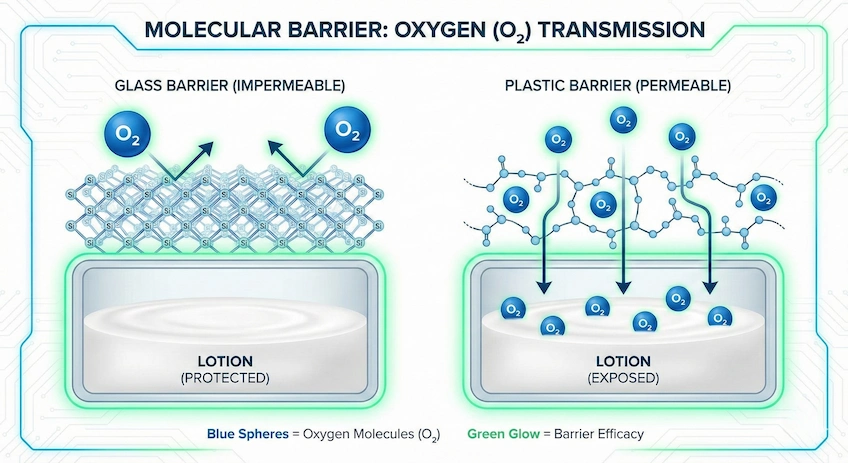
The primary reason luxury brands choose glass is Chemical Inertness. Unlike plastic, glass consists of a tightly bond network that prevents interaction with the product inside.
- Plastic Risk (Leaching): Some plastics (like PVC or low-grade PET) can leach plasticizers or react with essential oils (known as "flavor scalping").
- Glass Advantage: Glass creates a 100% Barrier against oxygen and moisture. This ensures that the fragrance, color, and efficacy of your lotion remain exactly as they were in the lab.
B2B Insight: If your formula claims "Preservative-Free" or "All-Natural," [Image of chemical structure of glass vs plastic] glass packaging is almost mandatory to prevent microbial growth and oxidation without heavy synthetic preservatives.
2. Light Protection: The "Bamboo-Clad" Advantage
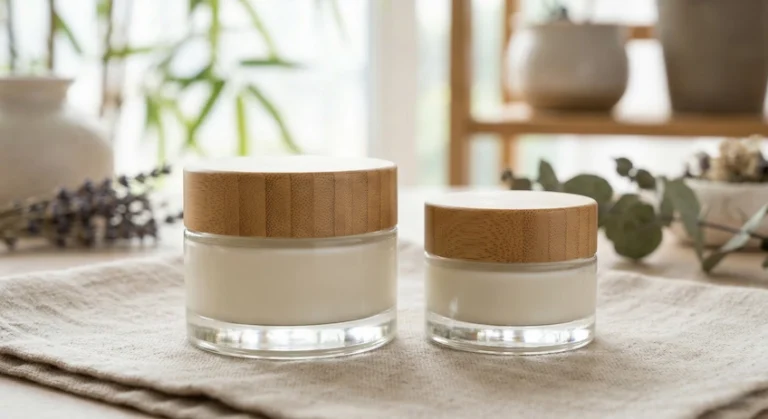
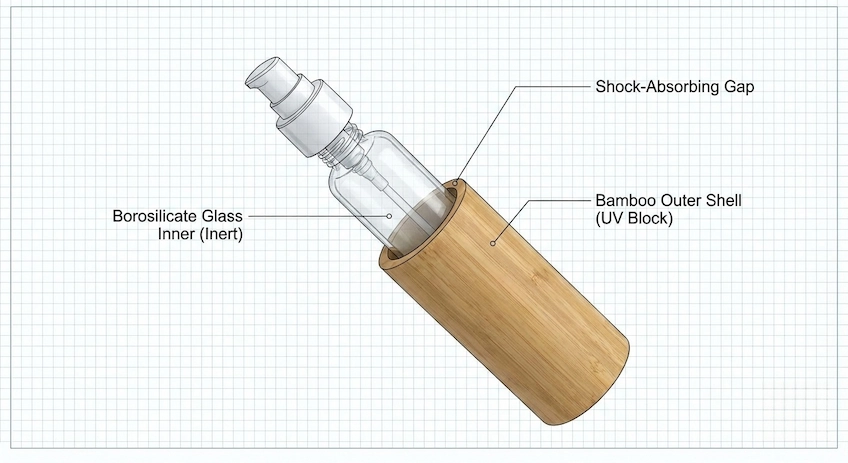
While amber glass protects against UV light, clear glass does not. This is where ECO-BAMBOO’s New Design Glass Lotion Bottles with Wood Lid2 excel.
The Bamboo Outer Shell acts as a physical shield, blocking 100% of UV light. This prevents Photo-Oxidation, which causes lotions to turn yellow or rancid. It offers the protection of an opaque bottle with the premium weight of glass.
3. Durability vs. Experience
The main argument against glass is breakage. However, in the premium market, the "weight" of glass communicates value.
- Standard Glass: High breakage risk during shipping.
- Bamboo-Clad Glass: The wood shell absorbs shock, significantly reducing breakage rates compared to naked glass.
- Plastic Alternative: For brands strictly requiring unbreakable packaging (e.g., shower products), we recommend our Bamboo Lotion Bottle with PET Inner3, which offers a similar eco-look with higher impact resistance.
4. Comparison Table: Glass vs. Plastic Performance
Which material aligns with your formula needs?
| Feature | Glass (Borosilicate/Soda-Lime) | Plastic (PET/PP) | Bamboo-Clad Glass (Hybrid) |
|---|---|---|---|
| Chemical Inertness | ⭐⭐⭐⭐⭐ (Best) | ⭐⭐⭐ | ⭐⭐⭐⭐⭐ (Best) |
| Oxygen Barrier | ⭐⭐⭐⭐⭐ (Impermeable) | ⭐⭐⭐ (Permeable) | ⭐⭐⭐⭐⭐ |
| UV Protection | ⭐ (Clear) / ⭐⭐⭐ (Amber) | ⭐⭐⭐ (Opaque) | ⭐⭐⭐⭐⭐ (Total Block) |
| Durability | ⭐ (Fragile) | ⭐⭐⭐⭐⭐ (Tough) | ⭐⭐⭐ (Shock Absorbed) |
| Sustainability | High (Infinitely Recyclable) | Low (Down-cycled) | Very High (Separable) |
5. Sustainability: The End-of-Life Story
Glass is infinitely recyclable, but plastic degrades with each cycle. According to the Glass Packaging Institute4, glass is one of the only materials that can be recycled in a closed-loop system without loss of quality.
By choosing ECO-BAMBOO’s separable design, your customers can recycle the inner glass bottle and compost the bamboo shell—a true zero-waste narrative.
Conclusion
Are glass lotion bottles better than plastic? For Product Preservation, Brand Prestige, and Environmental Integrity, the answer is a resounding Yes.
Don't let cheap packaging compromise your premium formula. Choose ECO-BAMBOO’s Hybrid Glass Solutions to protect your product and the planet.
🧪 Protect Your Formula
Worried about stability? Request a sample of our Bamboo-Clad Glass Bottles to test with your lotion. 👉 Get Your Preservation Sample Kit