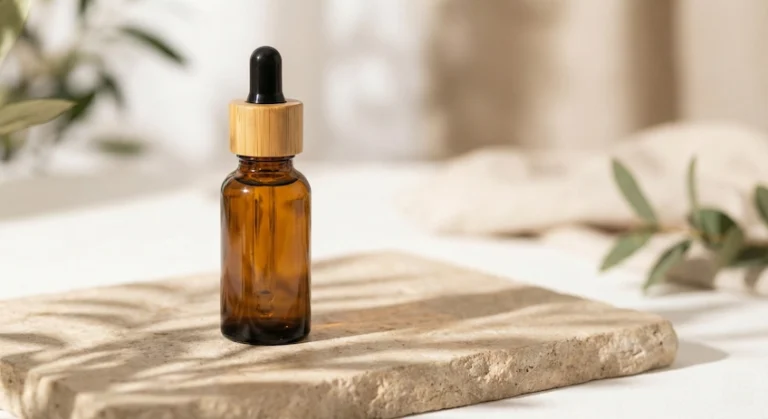


A dropper sample should answer practical questions about the package you intend to buy. Use this checklist to turn a visual selection into a documented approval for the complete bottle and closure.
For the material and light-protection questions behind the checklist, read our essential oil dropper compatibility guide.
1. Identify the Sample Configuration
Record the SKU, bottle size, glass finish, neck, pipette length, bulb and cap. Ask the supplier to distinguish the sample configuration from proposed production options.
Keep photographs and a component list with the approval record. Do not infer a bulb grade, calibrated pipette or child-resistant closure from a general dropper description.
2. Confirm Fill and Assembly
Trial the intended fill quantity and closure assembly. Check whether the pipette reaches the appropriate position without interfering with the bottle base.
Confirm the usable fill and space needed for the assembled dropper. Ask the filling team to document the process and any fit issues.
3. Evaluate Formula Contact
Plan compatibility checks using the actual formula and agreed storage conditions. Observe the bottle, pipette, bulb, seal and closure; agree with the development team which analytical or stability evaluations are needed.
Do not treat the glass body as proof that the complete assembly is suitable. Preservation and microbial safety require their own assessment.
4. Measure Dispensing Behavior
Check pickup, release, repeatability and behavior as the bottle empties. Record the method, conditions and sample count.
A generic dropper does not deliver a verified fixed 0.5 mL dose. If volumetric measurement is needed, specify the markings and verify performance rather than relying on a nominal description. See our dropper measurement guide.
5. Check Sealing and Transport
Agree on relevant leak, orientation, handling and transport checks. Record the filled configuration and acceptance criteria.
A bamboo exterior does not establish a breakage reduction rate or insulation performance. Include the final packing arrangement where it affects the evaluation.
6. Approve Decoration and Documentation
Check label fit, print position, closure marking and the acceptable grain or tone range. Keep the approved artwork and component versions together.
For our listed amber glass bamboo dropper bottle, request configuration-specific documentation before making performance or certification claims.
7. Confirm the Order Details
Send the approved version, quantity, decoration, destination and required schedule when requesting a quotation. Confirm sample costs, MOQ, production timing and packing.
Agree which component or artwork changes require renewed approval. Retain the sample results with the purchase specification.
<!--[googlesitekit-end-of-content]-->