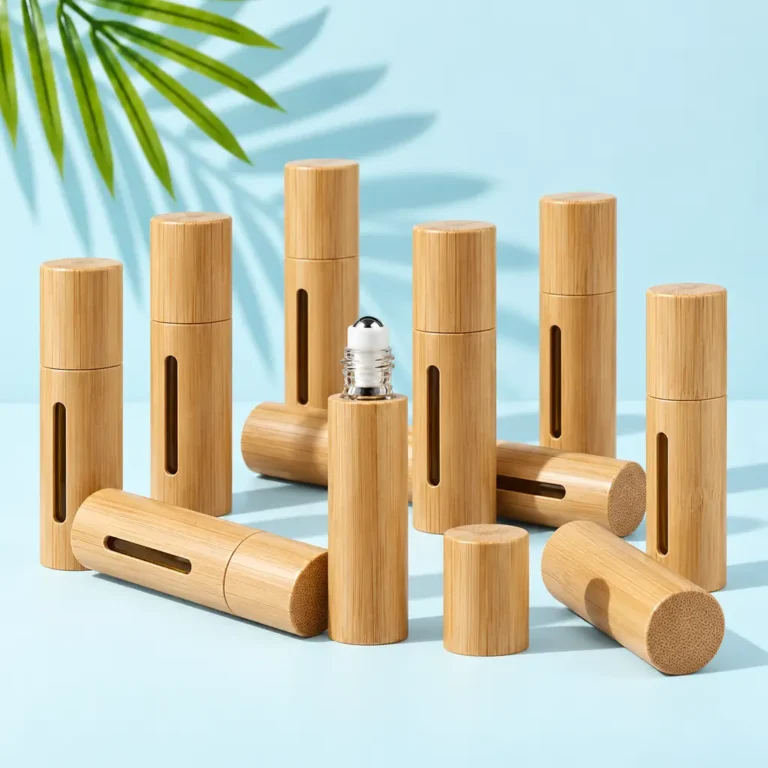


Child-resistant glass dropper systems are a sourcing category, but availability and qualification must be confirmed for the actual bottle, closure and dispensing assembly. A standard bamboo dropper is not child-resistant merely because it has a fitted cap.
This guide helps brand buyers brief a packaging project. It does not confirm that ECO-BAMBOO stocks a qualified child-resistant system or that a particular formula requires one.
Determine the requirement for the finished product
Identify the destination market, product classification, composition and intended use with the responsible reviewer. Do not label all essential oils, cosmetics or CBD products as automatically subject to the same rule.
For the United States, the CPSC’s PPPA business guidance explains that specified household substances require special packaging. Check the applicable requirements for the finished product rather than applying a broad category assumption.
Evaluate a complete assembly
Obtain the bottle-neck drawing and closure specification, including liner, pipette, bulb and any attachment or decorative exterior. Confirm critical dimensions and operation on samples.
A shared neck designation does not establish interchangeability. Ask whether the evidence covers the exact bottle and closure combination proposed, including the parts and configuration being supplied.
A push-and-turn mechanism or a tight fit is not a test result. Child resistance also differs from tamper evidence; a first-opening band does not demonstrate that children cannot open the closure.
Review the testing and certification basis
The CPSC special-packaging FAQ describes the US testing protocols and states that CPSC does not approve or endorse individual packages. Do not market an assembly as “CPSC approved.”
CPSC also explains that an ISO test is not automatically an accepted replacement for the US protocol. Have the reviewer identify the applicable route for each market, rather than treating a standard as a universal EU law or a global certificate.
Link documents to the product supplied
Request the report’s package identifiers, configuration, test protocol and relevant limitations. Check that the supplied item corresponds to that evidence and determine who must issue the finished-product conformity documentation.
Agree how component changes, substitutions and assembly instructions will be reviewed. A report for a different bottle or closure should not be presented as approval of the proposed pack.
Keep ordinary dropper samples clearly identified
An illustrative standard dropper photograph does not show a tested child-resistant mechanism. Treat any standard configuration separately until a suitable qualified system is confirmed.
Contact ECO-BAMBOO with the bottle drawing, intended use and required packaging evidence to discuss sourcing feasibility. No universal fit, child-resistance certification or leakproof guarantee is made for standard bamboo droppers.
<!--[googlesitekit-end-of-content]-->