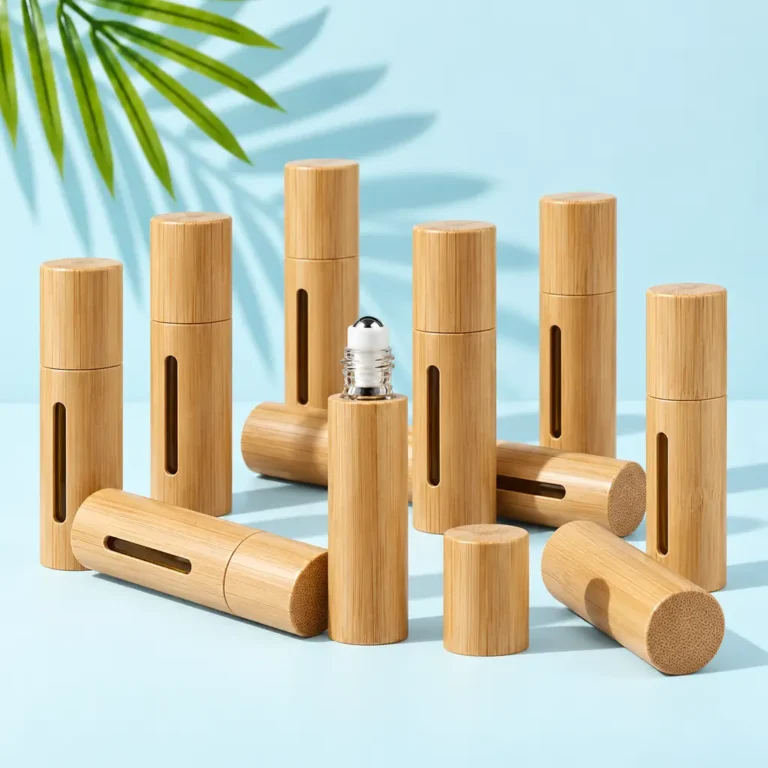


A bamboo-labelled food container needs an article-specific food-contact assessment. Buyers should identify its complete construction and the food-storage conditions before accepting a safety statement.
A square or round shape does not determine whether a container is suitable for wet foods. A glass body also does not establish the suitability of the lid, seal, coating or adhesive.
Identify the actual construction
Request a complete material description for the body, lid, liner, gasket, coating and other relevant parts. Distinguish a glass container with a bamboo exterior component from a plastic article containing bamboo filler.
The European Commission’s bamboo-plastic explanation addresses plastic food-contact articles with unauthorised bamboo or other plant additives. A natural-looking finish is not enough to determine which construction is being offered.
Define the food and storage conditions
Specify the food type, contact duration, intended temperatures and repeated-use conditions. State whether refrigeration, freezing, heating, transport or a particular cleaning method is required.
Include foreseeable contact with the lid and seals in the review. Do not assume that an upright glass jar isolates all other parts from food during use.
Request applicable documentation
The FDA component-status guidance explains the need to establish the status of constituent substances for their intended use. A reference to one coating regulation does not by itself approve the whole article.
For Europe, the Commission’s food-contact legislation overview explains the general framework and additional material-specific or national provisions. Have the responsible reviewer identify what applies to the actual assembly and market.
Review claims, reports and care instructions separately
Check sample identity, test conditions, methods, results and the connection to the item being supplied. “LFGB,” a laboratory name or a BPA statement is not a complete safety assessment.
Evaluate sealing, taste or odour effects and relevant functional requirements on the intended assembly. Do not equate a tight lid with airtight performance or shelf-life protection. Use validated care instructions rather than assigning generic soaking, washing or sterilisation routines.
Keep approval tied to the order
Retain the component specification, documents, permitted-use limits, approved sample and reviewer decision. Define how changes to coatings, seals or contact materials will be assessed before substitution.
The accompanying glass-jar photograph illustrates a container and bamboo lid, not certification or suitability for all foods. Contact ECO-BAMBOO with your food-storage application to confirm whether a suitable configuration and supporting evidence are available.
<!--[googlesitekit-end-of-content]-->