
For brands switching to sustainable packaging, the biggest fear is functionality. A bamboo lid looks premium, but if it leaks during shipping or lets air spoil your face cream, the "eco-friendly" claim becomes a liability.
So, are bamboo lids airtight? Yes, but only if engineered correctly. The secret isn't the wood; it's the Silicone Gasket System. At ECO-BAMBOO, we ensure our lids meet ASTM D3078 Leak Standards1 through precision manufacturing.
Here is the technical breakdown of how we achieve a hermetic seal with bamboo.
1. The Engineering: It's All About the Gasket
Bamboo itself is porous and breathable. It cannot form a seal on its own. The airtight performance comes entirely from the Inner Liner.
-
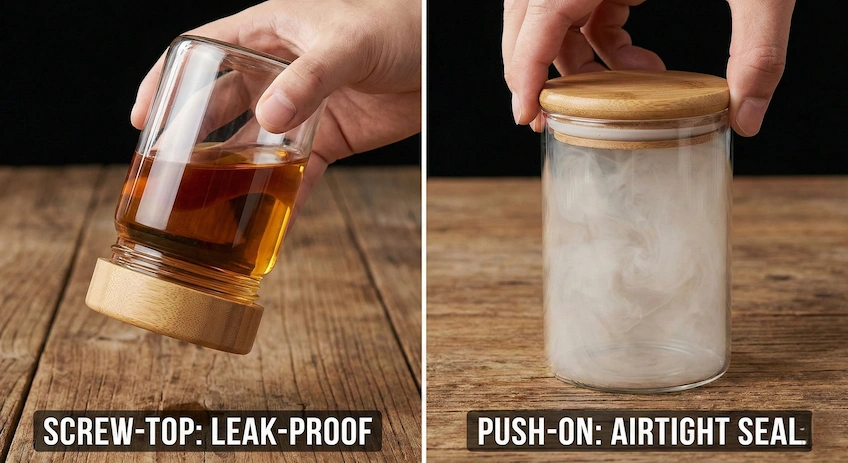
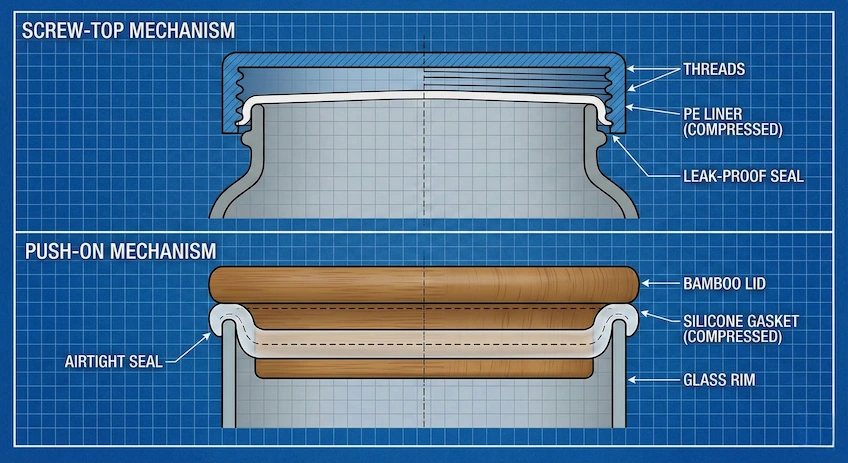
For Cosmetic Jars (Screw-Top):
- Mechanism: A PP (Polypropylene) Inner Cap is embedded inside the bamboo shell. This inner cap has threads that screw tightly onto the glass jar, often paired with a foam PE liner.
- Result: 100% Leak-Proof. Suitable for lotions, toners, and oils.
- Our Solution: Custom Frosted Glass Bamboo Jars2.
-
For Storage Jars (Push-On):
- Mechanism: A flexible Food-Grade Silicone Ring is fitted around the bamboo lid's rim.
- Result: Airtight (Hermetic) but not fully leak-proof for liquids under pressure. Perfect for dry goods (spices, tea) or thick creams.
- Our Solution: Frosted Glass Bamboo Storage Jars3.
2. Airtight vs. Leak-Proof: Know the Difference
B2B buyers often confuse these terms. Choose the right lid for your product consistency.
| Feature | Airtight (Hermetic) | Leak-Proof |
|---|---|---|
| Definition | Prevents air/moisture exchange. | Prevents liquid from escaping. |
| Mechanism | Silicone Suction Ring | Screw Thread + PE Liner |
| Best For | Dry Goods, Thick Creams, Candles | Liquids, Serums, Oils |
| Transport Risk | Low (if upright) | Zero (Safe for E-commerce) |
3. The Mold Myth: Does Moisture Ruin the Seal?
A common concern is that humidity will warp the bamboo, breaking the seal.
- The Risk: Raw bamboo absorbs water, swells, and cracks.
- The ECO-BAMBOO Fix: We apply a Food-Grade Varnish to every lid. This hydrophobic coating prevents moisture absorption, ensuring the lid maintains its shape and the seal remains tight even in humid bathrooms.
4. Quality Control: The "Shake Test"
How do you know if a supplier's lid is truly safe? At ECO-BAMBOO, every batch undergoes rigorous testing:
- Vacuum Test: Jars are placed in a vacuum chamber to check for air leakage.
- Inversion Test: Filled jars are left upside down for 24 hours to check for leaks.
- Torque Test: Ensuring the screw cap doesn't strip the threads when tightened.
B2B Insight: Cheap bamboo lids often have "loose" silicone rings that fall off after a few uses. Ensure your supplier uses Co-Molded or Deep-Groove designs to keep the ring in place.
5. Application Matrix: Choosing the Right Lid
| Product | Recommended Lid Type | Why? |
|---|---|---|
| Face Cream | Screw-Top Bamboo Lid | Must be leak-proof for travel. |
| Scented Candle | Push-On Bamboo Lid | Airtight to preserve fragrance; acts as a coaster. |
| Spice / Tea | Push-On with Silicone | Airtight to keep contents fresh and dry. |
| Bath Salts | Screw-Top or Push-On | Protects against bathroom humidity. |
Conclusion
Are bamboo lids airtight and leak-proof? Screw-Top Lids are Leak-Proof. Push-On Lids are Airtight.
By understanding this distinction, you can choose the perfect ECO-BAMBOO packaging that protects your product's integrity while delivering the sustainable aesthetic your customers demand.
🧪 Test the Seal Yourself
Don't take our word for it. Request a sample kit and perform your own leak test with our precision-fit bamboo lids. 👉 Get Your Performance Sample Kit