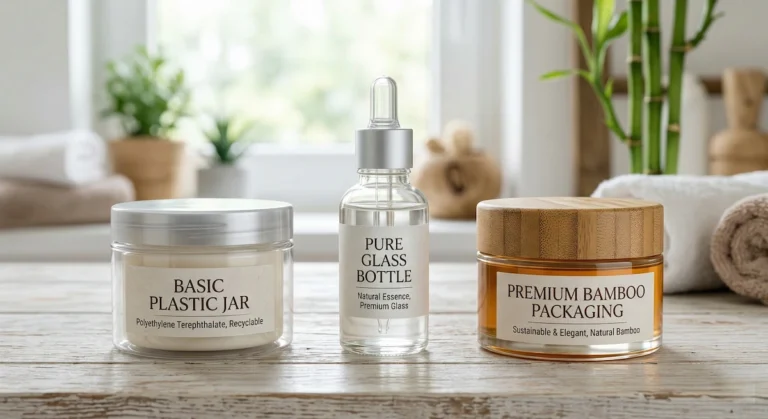

For skincare brands formulating with antioxidants, Vitamin C, or natural preservatives, Oxygen is the enemy. A common concern for B2B buyers switching to sustainable packaging is: Can a natural bamboo lid provide the same airtight seal as a plastic cap?
The technical answer is: Raw bamboo is porous, but an Engineered Bamboo Lid is 100% airtight. At ECO-BAMBOO, we don't just sell wood; we sell Sealing Systems. Here is how we ensure your premium creams pass stability testing.
1. The Anatomy of an Airtight Bamboo Lid
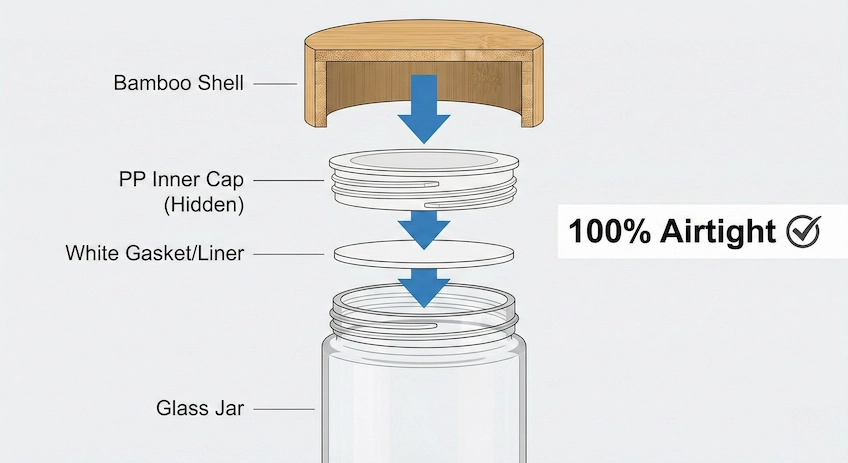
A bamboo lid is never just a piece of wood. It is a composite closure designed for performance. To achieve an airtight seal, we integrate three critical components:
- The Outer Shell: 100% Natural FSC-Certified Bamboo (for aesthetics).
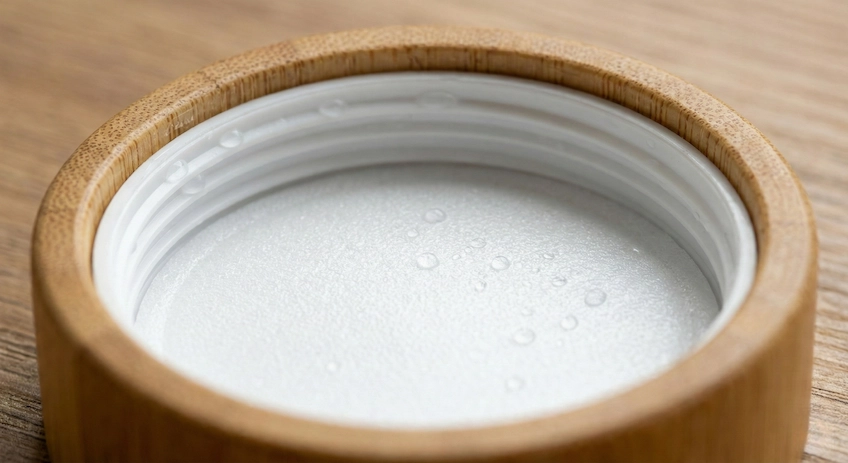
- The Inner Thread: A hidden PP (Polypropylene) Inner Cap glued securely inside the bamboo. This provides the precise threading needed to screw tightly onto the glass jar.
- The Gasket / Liner:
- PE Foam Liner: Standard for most creams. It compresses against the jar rim to block air.
- EPE Disc (Shive): A secondary plastic disc that sits on top of the cream, providing a double barrier against moisture loss.
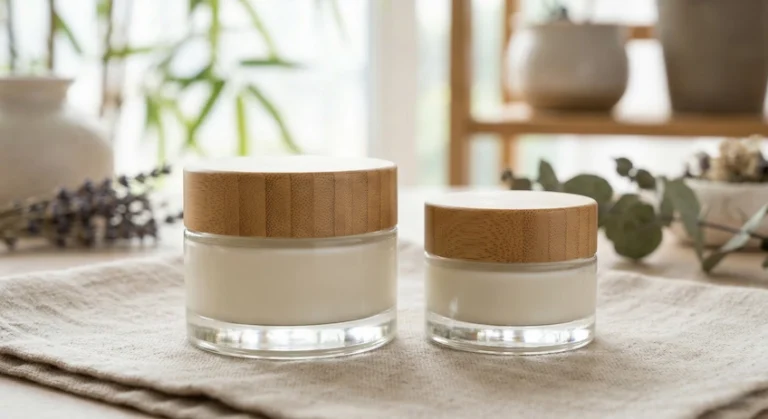
Result: Our Frosted Glass Bamboo Jars1 use this multi-layer system to match the airtight performance of standard industrial caps.
2. Material Permeability: Wood vs. Plastic Liners
Why do you need a plastic inner?
- Raw Bamboo: Has a high gas transmission rate. Air can pass through the fibers.
- PP Inner Cap: Chemically inert and impermeable.
- The Synergy: The inner PP cap creates the "Functional Seal," while the outer bamboo provides the "Eco-Luxury Look." This hybrid design ensures your product remains stable for 24+ months.
3. The "Airless" Alternative for Ultra-Sensitive Formulas
For formulas that are extremely sensitive to oxidation (e.g., Retinol, 20% Vitamin C), even a standard jar might introduce too much air during daily opening.
- The Upgrade: Switch from a jar to an Airless System.
- Recommendation: Bamboo Airless Pump Bottles2.
- Benefit: The vacuum mechanism ensures zero air contact throughout the product's life, far surpassing any jar in terms of preservation.
4. Stability Testing: Passing the Leak Test
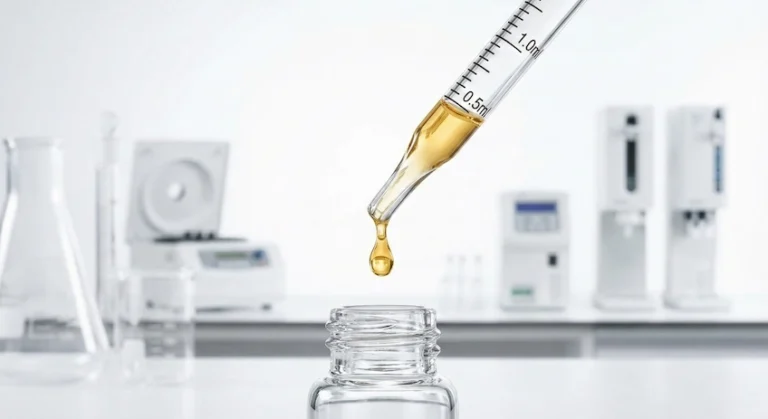
How do we verify airtightness? Before shipping, ECO-BAMBOO performs rigorous Quality Control (QC) tests:
- Vacuum Chamber Test: Jars are placed in a vacuum (-0.06 MPa) to check for leaks.
- Torque Testing: We measure the removal torque to ensure the bamboo lid stays tight during shipping but is easy for the consumer to open.
- Thermal Cycle Test: Jars are cycled between -20°C and 50°C to ensure the bamboo shell doesn't warp and break the seal.
5. Comparison Matrix: Sealing Performance
| Lid Type | Airtight Level | Best Application | ECO-BAMBOO Solution |
|---|---|---|---|
| Raw Bamboo (No Liner) | Low (Not Airtight) | Dry Powders, Salts | Not Recommended for Cream |
| Bamboo + Foil Liner | High (Until Opened) | Factory Sealed Creams | Induction Seal Options |
| Bamboo + PE Foam | High (Resealable) | Face Creams, Balms | Standard Bamboo Glass Jar3 |
| Airless Pump | Maximum (Zero Air) | Active Serums | Bamboo Airless Bottle2 |
Conclusion
Are bamboo lids airtight? Yes, when engineered correctly.
Don't settle for cheap, unlined bamboo caps that warp and leak. Choose ECO-BAMBOO's Composite Lids with integrated PP threads and high-grade liners. We protect your formula so you can protect your brand reputation.
🔒 Seal in the Quality
Worried about oxidation? Request a sample kit and perform your own vacuum leak tests. 👉 Get Your Airtight Sample Kit