
For cosmetic formulators, light is an enemy. Photo-oxidation caused by UV rays can degrade active ingredients like Vitamin C, Retinol, and Essential Oils in a matter of weeks, turning a premium product into rancid oil.
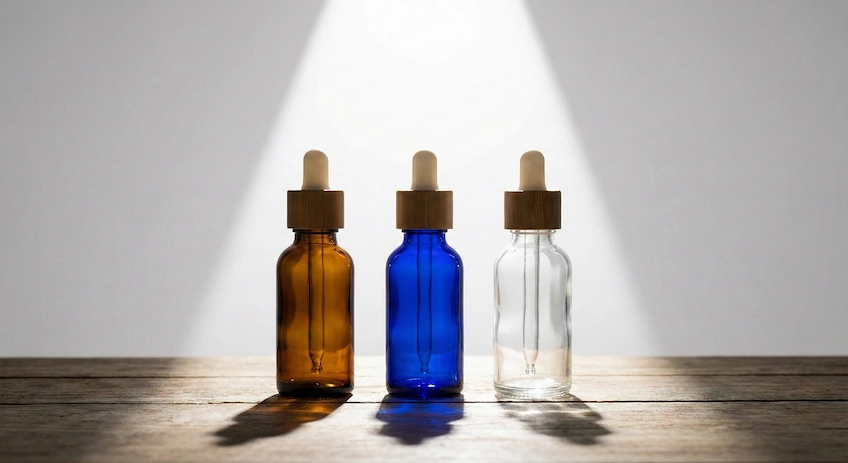
Choosing the right glass color is not just an aesthetic decision; it is a Quality Assurance necessity. While Amber Glass is the industry gold standard for protection, Cobalt Blue and Clear Glass have their specific use cases.
At ECO-BAMBOO, we help brands balance Shelf Appeal with Formula Integrity. Here is the technical breakdown of how different glass colors perform under light.
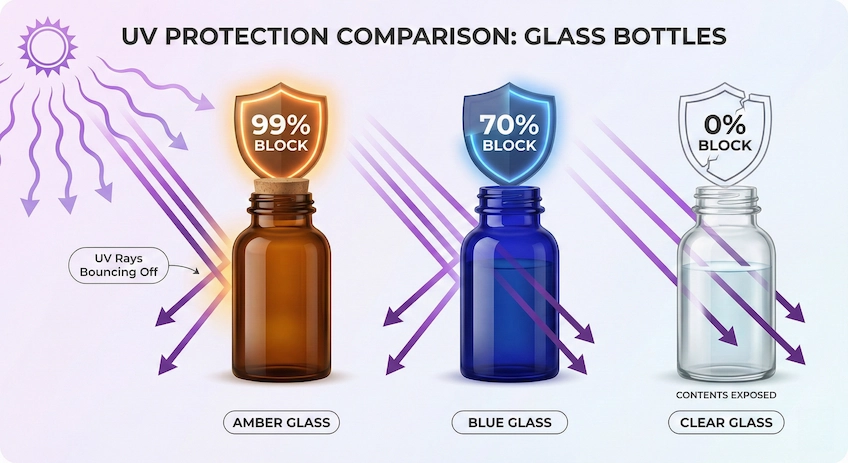
1. Amber Glass: The "Gold Standard" for Actives
If your formula contains photosensitive ingredients, Amber Glass is the only professional choice.
- UV Protection: Blocks 99% of UV rays (specifically UV-B and significant UV-A).
- The Science: The sulfur and iron oxide in the glass absorb light in the 200nm to 450nm spectrum.
- Best For: Essential Oils1, Vitamin C serums, pharmaceutical-grade blends.
- Our Recommendation: Pair our Amber Glass Bamboo Dropper2 with a solid bamboo collar for maximum protection and eco-luxury appeal.
2. Cobalt Blue Glass: The "Aesthetic Compromise"
Cobalt Blue is striking and popular for "apothecary-style" branding, but it is less protective than Amber.
- UV Protection: Blocks roughly 60-80% of UV rays. It allows more blue/violet light to pass through.
- Best For: Hydrating serums, face mists, and products with stable ingredients that still need some protection.
- Warning: Do not use for highly volatile essential oils unless stored in a dark box.
3. Clear (Flint) Glass: The "Showcase" Option
Clear glass offers Zero UV Protection.
- UV Protection: Blocks 0%.
- Best For: Colored products (toners with natural pigments), oils that don't oxidize (like mineral oil), or micellar water.
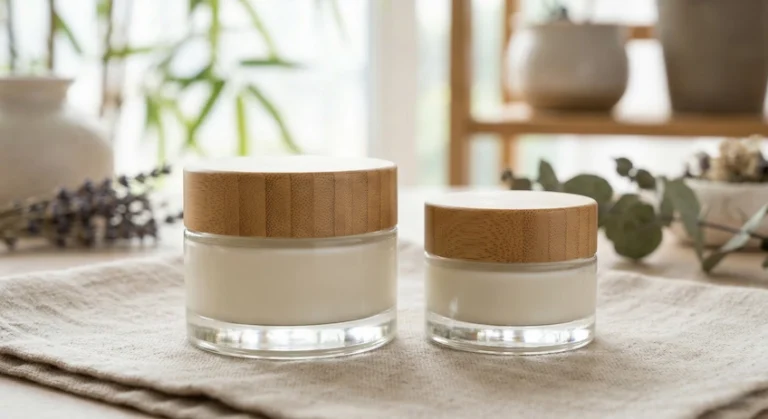
- The "Bamboo Solution": If you love the look of clear glass but need protection, use our Bamboo-Clad Glass Jars3. The solid bamboo outer shell acts as a 100% light barrier, protecting the clear glass jar inside.
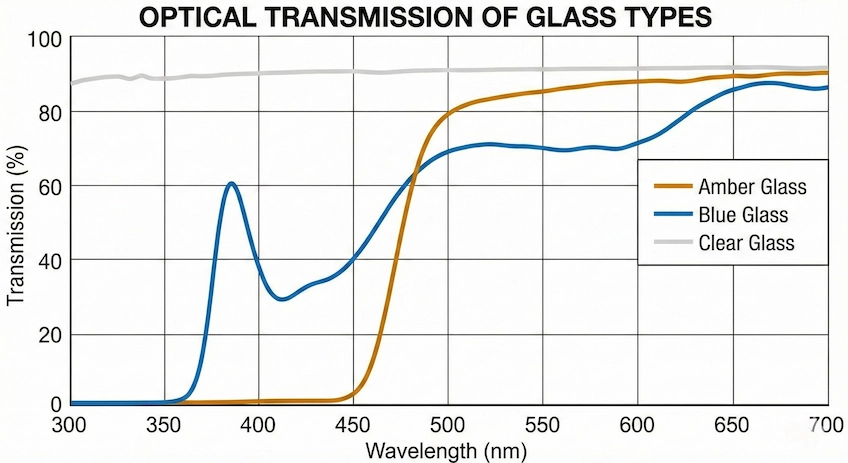
4. Comparison Matrix: Selecting the Right Glass
Match your glass choice to your formula's sensitivity.
| Glass Color | UV Block Rate | Protection Level | Best Application |
|---|---|---|---|
| Amber | 99% | High (USP Standard) | Essential Oils, Retinol, Vit C |
| Cobalt Blue | ~70% | Medium | Hydration Serums, Night Creams |
| Green | ~60% | Medium-Low | Olive Oils, Botanicals |
| Clear / Frosted | 0% | None | Cleansers, Toners, Lotions |
B2B Insight: "Frosted" glass is just treated clear glass. It diffuses light but does not block UV rays. Treat it as clear glass for stability testing.
5. The ECO-BAMBOO Hybrid Advantage
Why choose between looks and performance? Our Bamboo-Clad Glass Bottles4 offer the ultimate protection.
- Inner: High-quality Glass (Inert).
- Outer: Real Bamboo Shell (Opaque).
- Result: 100% Light Block combined with the chemical stability of glass.
Conclusion
What is the difference between Amber, Cobalt, and Clear glass? Amber protects. Blue looks good. Clear shows off.
For light-sensitive formulations, Amber Glass is non-negotiable. For everything else, let your brand aesthetic decide. At ECO-BAMBOO, we provide all three options, enhanced with sustainable bamboo components.
🛡️ Protect Your Formula
Not sure which glass your product needs? Request a sample kit including Amber, Blue, and Bamboo-Clad options to run your stability tests. 👉 Get Your UV-Protection Sample Kit