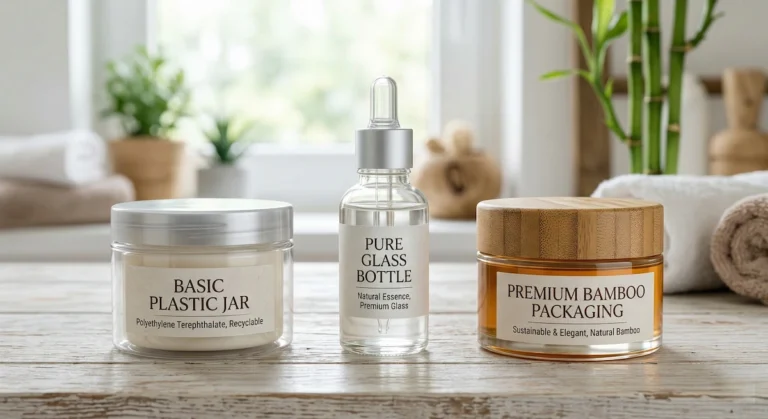

For cosmetic formulators, packaging is not just a container; it is the final ingredient. Choosing the wrong material can lead to oxidation, ingredient leaching, and failed stability tests—costing brands thousands in recalls.
So, what are the best materials for cosmetic jars to ensure product preservation?
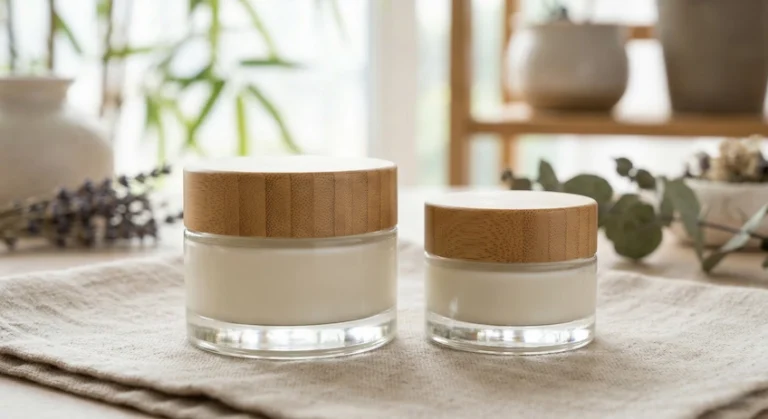
The industry gold standard is Glass (for chemical inertness) and Airless PP (for oxygen protection). However, modern brands are turning to Bamboo-Glass Hybrids1 to combine laboratory-grade preservation with eco-luxury aesthetics.
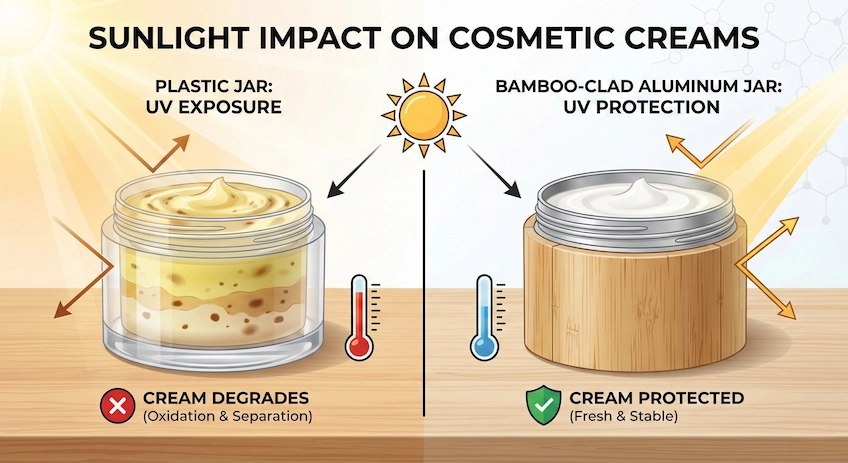
1. Glass: The Champion of Chemical Inertness
If your formula contains potent actives (Retinol, Vitamin C) or essential oils, Glass is the safest bet.
- Why: Glass is impermeable and chemically inert. It will not react with aggressive solvents or acidic pH levels.
- Light Protection: Amber or Frosted Glass2 filters out UV rays, preventing photo-degradation of light-sensitive ingredients.
B2B Insight: For high-end anti-aging creams, use a Double-Wall Structure (Glass Inner + Bamboo Outer). The outer shell adds thermal insulation, keeping the product cool.
2. Polypropylene (PP) & Airless Technology
Not all plastics are created equal. While PET is clear, PP (Polypropylene) is the preferred choice for cream jars due to its high heat resistance and moisture barrier.
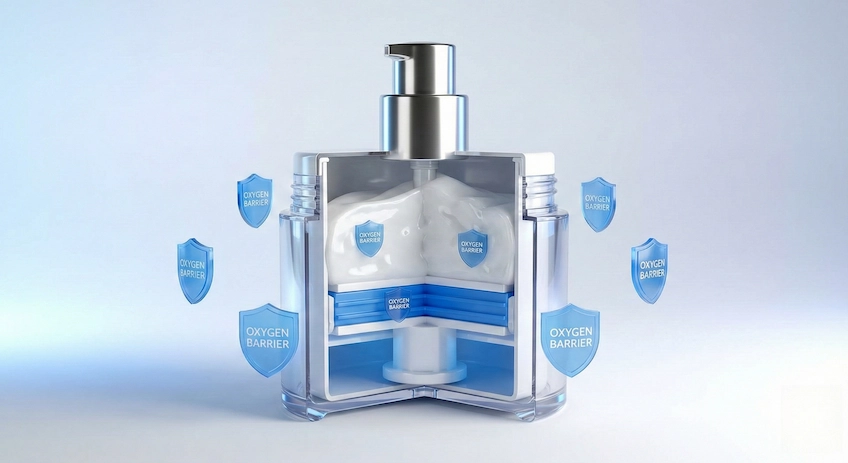
But the real game-changer is Airless Technology3.
- Mechanism: A vacuum pump rises as product is used, preventing air form entering.
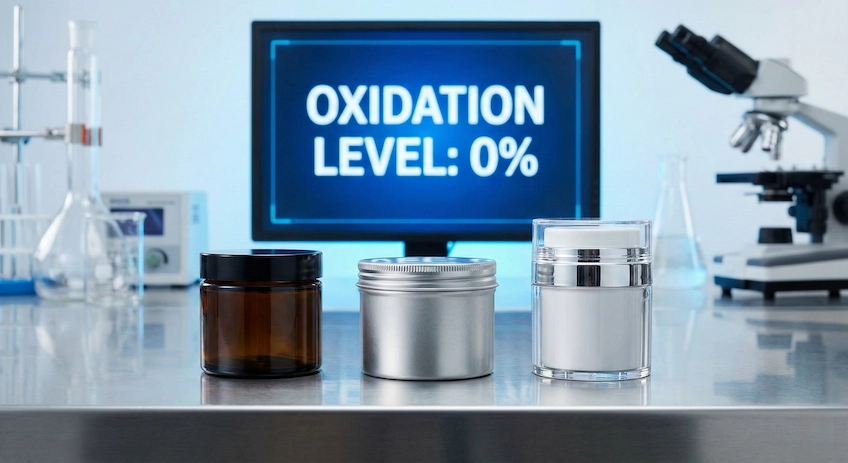
- Result: Zero oxidation. According to Cosmetics & Toiletries4, airless systems can extend shelf life by up to 15% without adding preservatives.
3. Aluminum: The Total Barrier
For maximum protection against moisture and oxygen, Aluminum is unbeatable.
- Barrier: 100% block against light, air, and moisture.
- Sustainability: Infinitely recyclable.
- Application: Our Bamboo-Aluminum Jars5 are perfect for water-free balms, waxes, and solid perfumes that are sensitive to heat.
4. Material Comparison Table: Preservation Scorecard
Which material fits your formula? Compare them by barrier properties.
| Material | Chemical Inertness | UV Protection | Oxygen Barrier | Best For |
|---|---|---|---|---|
| Clear Glass | ⭐⭐⭐⭐⭐ | ⭐ | ⭐⭐⭐⭐⭐ | Stable Hydration Creams |
| Amber/Frosted Glass | ⭐⭐⭐⭐⭐ | ⭐⭐⭐⭐⭐ | ⭐⭐⭐⭐⭐ | Retinol / Vitamin C |
| PP Plastic | ⭐⭐⭐ | ⭐⭐ | ⭐⭐⭐ | Standard Lotions |
| Airless PP/Acrylic | ⭐⭐⭐⭐ | ⭐⭐⭐ | ⭐⭐⭐⭐⭐ | Preservative-Free Formulas |
| Aluminum | ⭐⭐⭐⭐ | ⭐⭐⭐⭐⭐ | ⭐⭐⭐⭐⭐ | Balms / Waxes |
5. The Role of the Liner (Gasket)
Even the best jar will fail if the lid leaks. According to FDA Packaging Guidance6, the closure system is critical for maintaining sterility.
Ensure your supplier uses:
- PE Foam Liners: For general creams.
- Induction Heat Seals (Foil): For absolute tamper-evidence and freshness sealing.
- Disc Liners (Shives): A physical barrier against the lid.
Conclusion
The "best" material depends on your specific formula's vulnerabilities.
- Fear oxidation? Choose Airless Bamboo Jars7.
- Fear reaction? Choose Glass.
- Fear light? Choose Opaque Bamboo or Aluminum.
At ECO-BAMBOO, we don't just sell jars; we provide Preservation Solutions engineered to keep your product effective until the last drop.
🛡️ Protect Your Formula
Don't risk spoilage. Request a Compatibility Test Kit with our different material options. 👉 Get Your Preservation Sample Kit
Shop Wholesale Bamboo Glass Hybrid Jars (Best for Inertness). ↩
Explore Frosted Glass Jars for UV Protection. ↩
View Airless Bottles & Jars for Oxygen Protection. ↩
Cosmetics & Toiletries - Packaging Performance: Airless Systems. ↩
Discover 100% Barrier Aluminum Bamboo Jars. ↩
FDA - Container Closure Systems for Packaging Human Drugs. ↩
Browse Airless Cream Containers with Aluminum Inners. ↩