
Can You Put Water-Based Lotions Directly in Bamboo Jars? (The Truth About Formulation Compatibility)
For indie beauty founders and skincare brand managers, the appeal of a "100% plastic-free, pure bamboo" cosmetic jar is undeniable. It looks beautiful on the shelf and tells a perfect eco-friendly story.
But if you ask a formulation chemist whether you should pour a water-based lotion, a hyaluronic acid serum, or an active botanical cream directly into a hollowed-out piece of raw bamboo... their answer will be a resounding "No."
At ECO-BAMBOO, we engineer sustainable packaging for global beauty brands. Today, we are bridging the gap between natural aesthetics and formulation science. We will explain exactly why filling raw wood is a recipe for disaster, and reveal the "hybrid" engineering secret that top-tier clean beauty brands use to guarantee 100% safety.
Why Raw Bamboo + Water = A Skincare Disaster
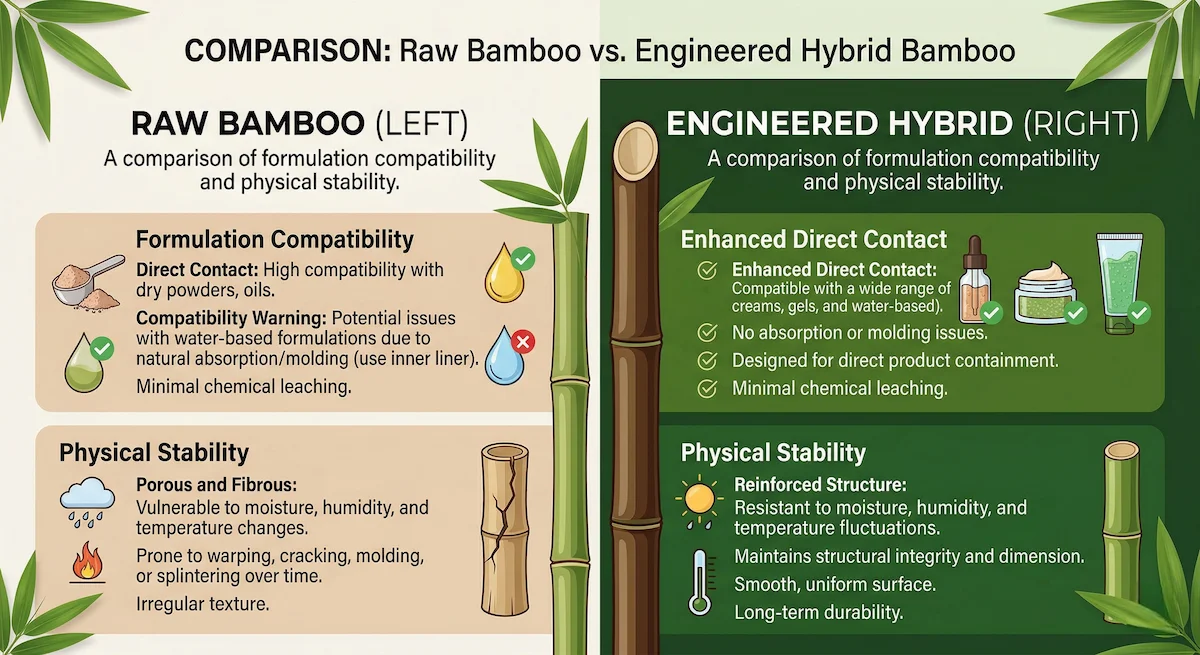
Bamboo is one of the most sustainable materials on the planet, but it is still fundamentally an organic, plant-based material. If you expose it directly to water-based or highly active formulas, three catastrophic failures will occur:
1. High Porosity & Leakage
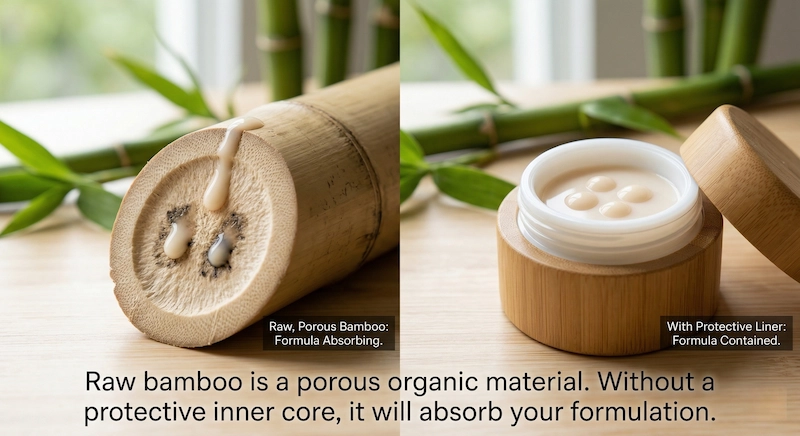
Raw bamboo is highly porous, acting much like a dense sponge. If you pour a liquid or a water-based emulsion directly into a raw bamboo cavity, the wood fibers will actively absorb the moisture. Within weeks, your expensive lotion will dry out, and the liquid may literally seep through the bottom of the jar, ruining the secondary box packaging.
2. The Mold Nightmare
Where there is moisture and organic material, there is mold. When a water-based cream is absorbed into the porous walls of a natural bamboo jar, it creates the perfect warm, humid breeding ground for bacteria and mold spores. Your premium face cream could literally start growing mold on the retail shelf or during ocean freight.
3. Dimensional Instability (Swelling & Cracking)
Wood expands when it absorbs moisture and contracts when it dries. If a raw bamboo jar absorbs the water from your lotion, the jar and its threaded neck will swell. Suddenly, the cap that fit perfectly in the factory will no longer screw on, destroying the airtight seal. As the water evaporates, the wood will shrink and crack.
What About Anhydrous (Waterless) Formulas & Essential Oils?
You might be thinking: "Okay, no water-based lotions. But what about a hot-pour solid lip balm or a pure essential oil?"
While solid, anhydrous balms carry a lower risk of mold, pure essential oils present a different chemical challenge. High-concentration essential oils and botanical acids are highly volatile. They can easily dissolve the eco-friendly glues used to assemble certain raw bamboo components, or slowly seep through the wood grain, destroying the packaging's structural integrity.
The R&D Solution: ECO-BAMBOO's "Hybrid Matrix" Packaging
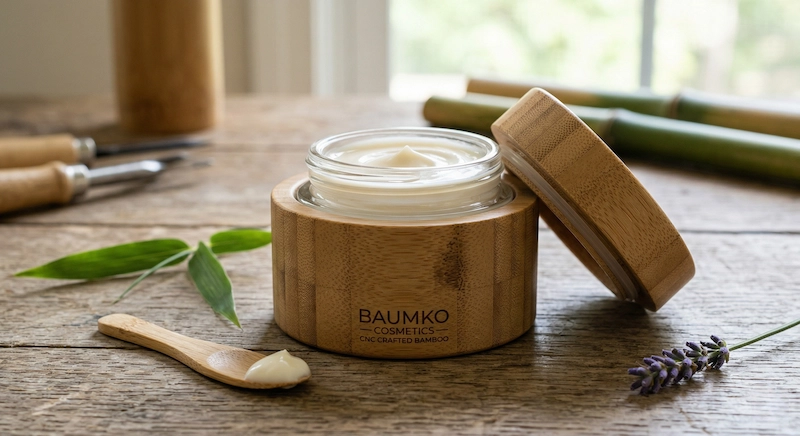
So, how do successful clean beauty brands achieve that rustic, natural bamboo look without compromising their expensive formulations?
They don't use raw bamboo cavities. They use Engineered Hybrid Packaging.
At ECO-BAMBOO, we approach manufacturing like engineers. We don't force natural materials to break the laws of physics. Instead, we combine the best properties of multiple materials to create an impenetrable, eco-luxe vessel.
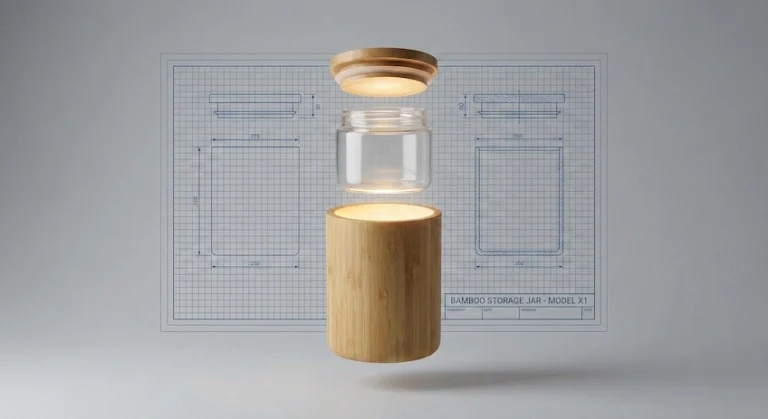
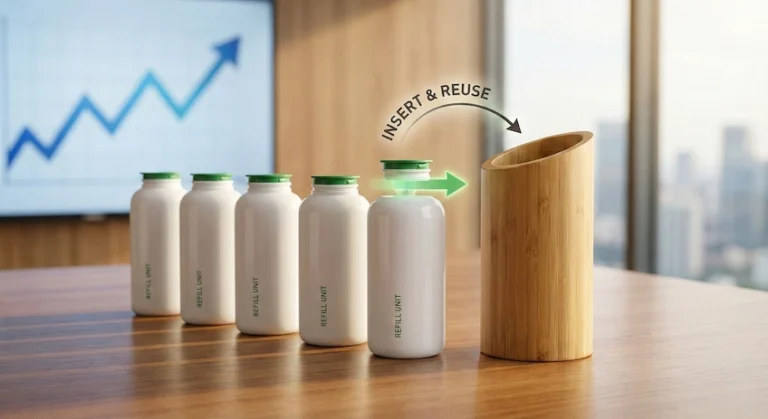
- The Chemically Inert Inner Core: We use heavy-wall Glass, Aluminum, or Post-Consumer Recycled (PCR) Plastic as the inner container. These materials are 100% chemically inert. They will never react with your Vitamin C, absorb your water, or degrade from essential oils.
- The Eco-Luxe Outer Shell: We seamlessly wrap this safe inner core in a beautiful, FSC-certified natural bamboo or walnut outer shell. The consumer sees and feels premium wood, while the formulation only ever touches safe, pharmaceutical-grade glass or plastic.
- CNC Precision Fit (No Toxic Glues): To combine these materials, we use fully automated CNC (Computer Numerical Control) turning machines. By achieving a medical-grade ±0.1mm tolerance, our bamboo shells snap onto the inner cores with a perfect friction fit, minimizing the need for industrial adhesives.
Controlling Moisture: The 8%-12% Factory Standard
Even with a safe inner core, the exterior bamboo shell must survive global shipping climates—from the humid summers of Florida to the dry winters of Canada.
To prevent the outer shell from warping or molding during ocean freight, the ECO-BAMBOO manufacturing process includes an advanced carbonization and kiln-drying phase. We strictly control the moisture content of every bamboo component to between 8% and 12%. This guarantees physical stability and protects your brand's premium image, regardless of where your products are shipped.
Conclusion: Stop Compromising Your Formulations
Your skincare formulation took months, perhaps years, of costly R&D to perfect. Do not risk your brand's reputation—or your customers' safety—by packaging it in an unstable vessel just to claim it is "100% plastic-free."
By utilizing engineered hybrid solutions, you get the best of both worlds: zero oxidation risks, zero leaks, and the luxurious, sustainable shelf-appeal your consumers demand.
Ready to Build Your Leak-Proof Packaging Strategy?
Don't guess on packaging compatibility. Let our engineering team match your specific INCI list with the perfect glass, PCR, or aluminum hybrid solution. We offer flexible 1,000 pcs MOQs for indie brands.