
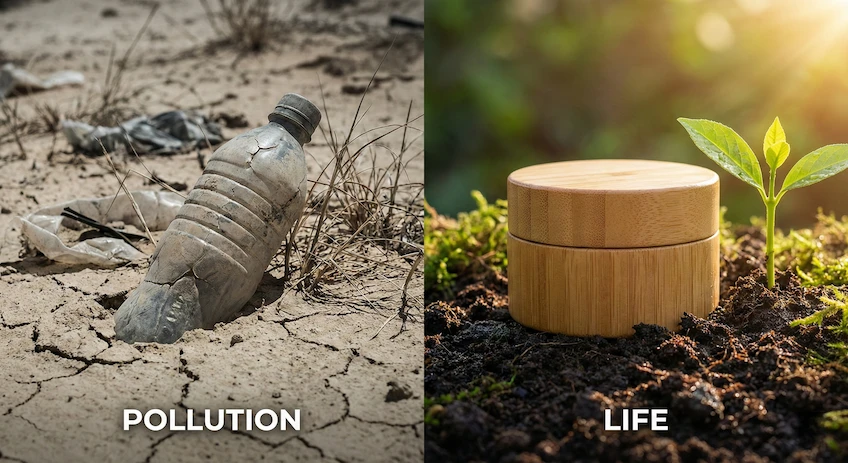
Plastic seems temporary, but its legacy is permanent. For cosmetic brands, the packaging you choose today will outlive your great-grandchildren.
How long does it take for plastic to degrade? Most standard plastic packaging takes 450 to 1,000 years to decompose in landfills. Even then, it never truly disappears—it breaks down into toxic microplastics1.
In contrast, organic alternatives like bamboo cosmetic packaging2 biodegrade in 6 months to 3 years, leaving no harmful residue. This stark difference is why leading beauty brands are switching to sustainable materials.
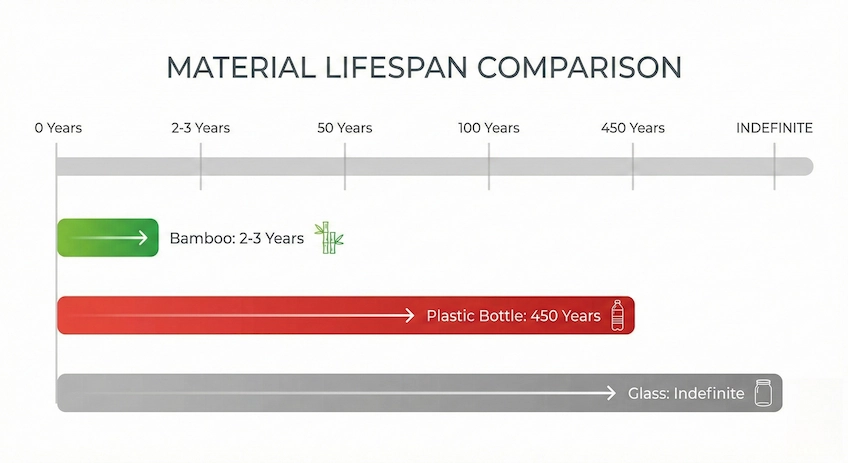
The Lifecycle Reality: Plastic vs. Bamboo
For a B2B buyer, "sustainability" isn't just a buzzword; it's a measurable metric.
Plastic bottles (PET) rely on photodegradation—sunlight breaking chemical bonds. In a landfill without light, this process stalls. Bamboo, being organic, undergoes biodegradation by microbes and enzymes.
⏳ Material Decomposition Timeline
| Material | Time to Degrade | End Result |
|---|---|---|
| Plastic Bottle (PET) | 450 - 1,000 Years | Microplastics & Toxins |
| Plastic Tube (PP) | 500+ Years | Microplastics |
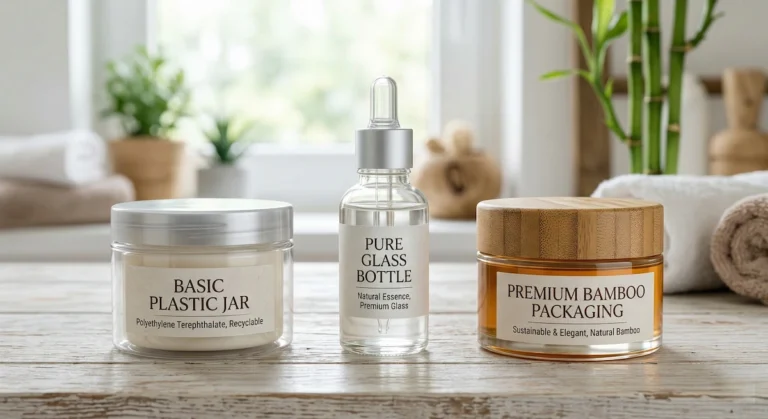
| Glass Bottle | Undetermined (1M+ Years) | Silica (Sand) - Inert/Safe |
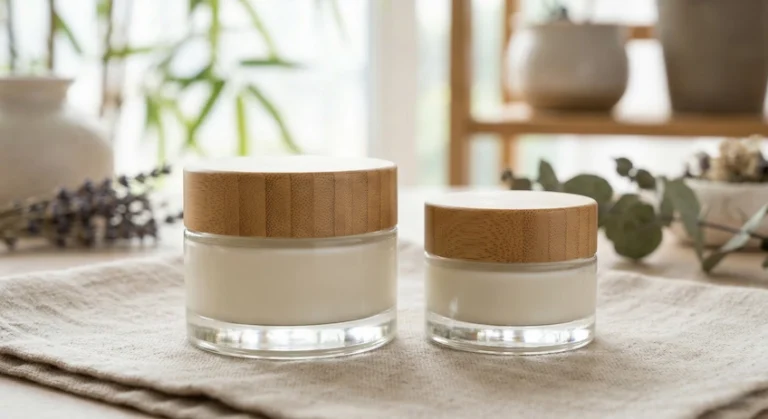
| Bamboo Jar Shell | 2 - 3 Years | Soil/Compost (Nutrients) |
The "Forever Waste" Problem: Why 100 Years Isn't Enough
The term "decompose" implies returning to nature. Plastic does not do this.
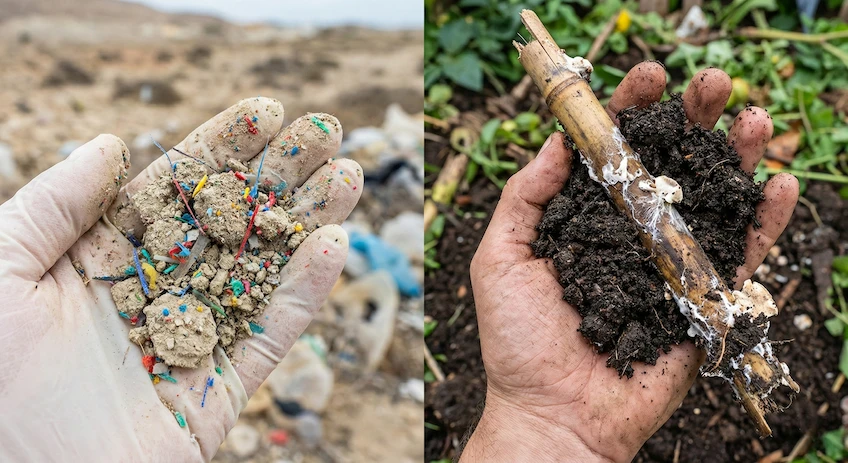
Even after 100 years, a plastic container is still plastic. It just becomes brittle and fragments into Microplastics (particles <5mm). These particles permeate our soil and water.
When we advise clients on sustainable packaging solutions3, we emphasize that using bamboo is an investment in brand legacy. Do you want your brand associated with ocean pollution centuries from now, or with a material that returns to the earth?
Marine Impact: What Happens in the Ocean?
In the ocean, the breakdown process is slower and more dangerous. The cooling effect of water prevents the heat needed for chemical breakdown.
According to the World Wildlife Fund (WWF)4, plastic packaging can last over 500 years in marine environments, releasing BPA and phthalates as it degrades.
The Bamboo Alternative: If a bamboo lotion bottle5 accidentally enters a waterway, it behaves like a fallen branch. It absorbs water, sinks, and is broken down by aquatic microorganisms within 1-2 years, posing zero threat to marine life.
Why Plastic Can't Break Down Naturally
Nature has no mechanism to digest synthetic polymers.
- Plastic: Synthetic bonds (man-made). No bacteria exist to eat them efficiently.
- Bamboo: Cellulose and Lignin (natural bonds). Earth has billions of bacteria evolved to digest these.
We helped a skincare client replace their acrylic jars with our FSC-certified bamboo jars. The marketing story shifted from "recyclable" (which puts the burden on the consumer) to "biodegradable" (which takes responsibility as a brand).
Conclusion
The difference is clear: Plastic is a geological footprint; Bamboo is a biological cycle.
For brands looking to future-proof their business against strict environmental regulations, the switch to bamboo is not just ethical—it's strategic.
🌍 Future-Proof Your Packaging
Switch to materials that don't last forever. 👉 Request a Sustainable Sample Kit