
"Do essential oils expire?" is a critical question for any skincare brand. While a pure oil might last years in a dark lab, an essential oil blend in a roller bottle has a different lifespan.
For formulators and B2B brands, understanding the science of oxidation and packaging integrity is key to preventing product returns.
Generally, an essential oil blend in a roller bottle1 lasts 1 to 3 years. However, this depends entirely on three factors: the stability of the carrier oil, the volatility of the essential oils, and the UV protection of the glass.
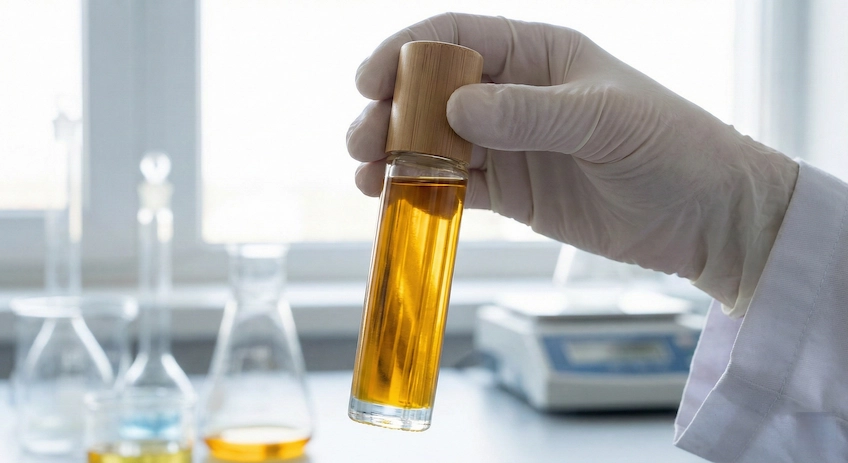
The Science of Expiry: Oxidation vs. Volatility
Essential oils don't "spoil" like food (growing mold); instead, they oxidize.
Oxygen reacts with the chemical constituents (terpenes), causing the scent to fade and the oil to become skin-sensitizing. According to AromaWeb's safety guide2, oxidized oils are a leading cause of allergic reactions.
- Citrus Oils (Lemon, Grapefruit): High in Limonene. Most prone to oxidation. Shelf life: 9–12 months.
- Resinous Oils (Frankincense, Vetiver): High in Sesquiterpenes. Very stable. Shelf life: 4–8 years.
- Blends: The shelf life is usually determined by the most fragile ingredient (often the carrier oil or citrus top note).
The Anchor: Carrier Oil Stability
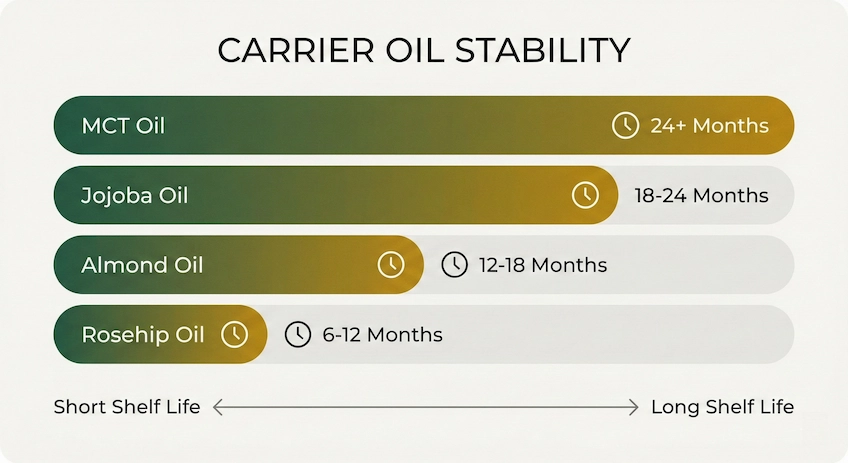
In a roller bottle, the essential oil is diluted (usually 2-5%) in a carrier oil. If the carrier oil goes rancid, the whole product is ruined.
| Carrier Oil | Stability Profile | Recommended Packaging |
|---|---|---|
| Fractionated Coconut Oil (MCT) | ⭐⭐⭐⭐⭐ (Indefinite) | Clear or Frosted Glass |
| Jojoba Oil | ⭐⭐⭐⭐⭐ (5+ Years) | Clear or Amber Glass3 |
| Sweet Almond Oil | ⭐⭐⭐ (1 Year) | Amber/Cobalt Glass Only |
| Rosehip Oil | ⭐ (6 Months) | Strictly Amber/Cobalt Glass |
Packaging's Role: Why "Amber" Matters
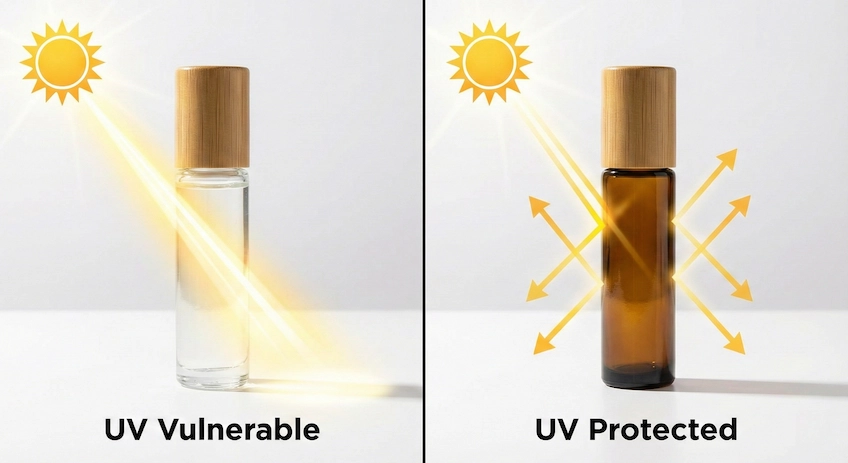
Light is the enemy of longevity. UV rays accelerate the breakdown of botanical compounds.
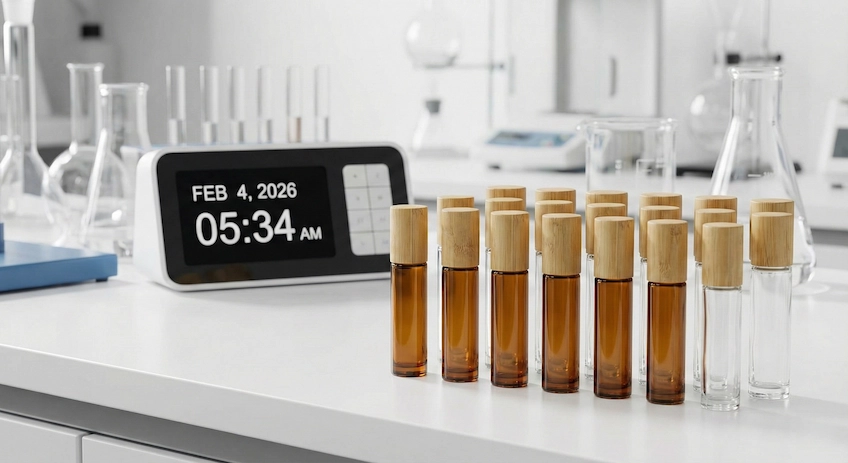
For brands using sensitive oils (like Rosehip or Citrus blends), we strongly recommend Amber or Cobalt Blue glass. These dark colors filter out harmful UV wavelengths.
- Clear/Frosted Glass: Best for stable synthetics or MCT-based blends where visual appeal (color of the oil) is a selling point.
- Amber Glass: The industry standard for natural, preservative-free formulations.
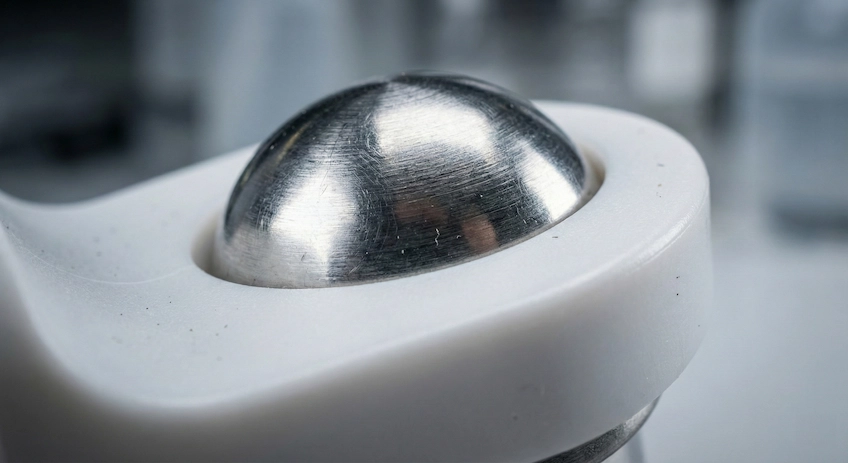
The Importance of Airtight Fitments
It's not just about the glass; the roller ball fitment plays a crucial role. A loose ball allows oxygen to enter, accelerating oxidation. Our gemstone roller bottles4 feature precision-engineered housings to minimize air exchange.
Signs Your Blend Has Expired
Educate your customers on these signs to ensure safety:
- Scent Change: The fresh "top notes" are gone, replaced by a sharp, acidic, or metallic smell.
- Cloudiness: The clear oil has become murky (sign of bacterial growth or water contamination).
- Skin Irritation: A blend that was once soothing now causes redness (due to peroxide formation from oxidation).
FAQ: B2B Questions on Shelf Life
Q: Can I extend shelf life with Vitamin E? A: Yes. Adding 0.5%–1% of Vitamin E (Tocopherol) acts as an antioxidant, delaying the rancidity of unstable carrier oils like Almond or Hemp seed oil.
Q: Does the bamboo cap help with preservation? A: Indirectly, yes. Our bamboo caps block light from entering the top of the bottle/roller mechanism, offering an extra layer of UV protection compared to clear plastic caps.
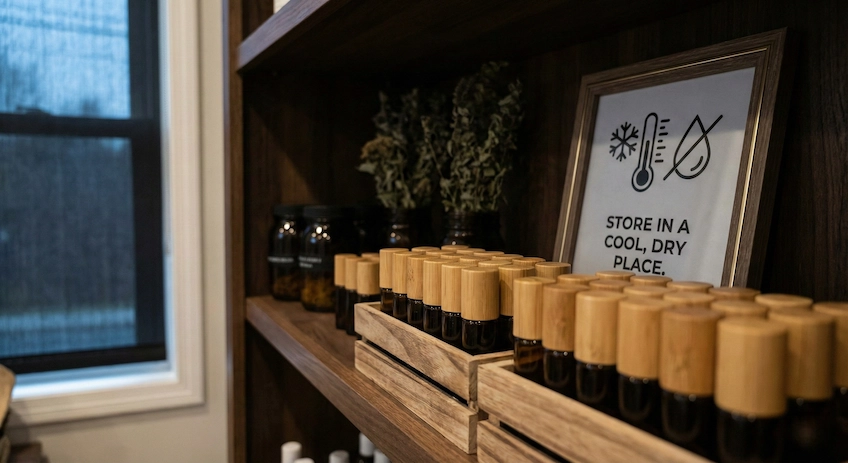
Q: How should retailers store these bottles? A: Keep them away from direct shop window sunlight and heat. Ideally, store in a cool, dark stockroom until sold to maximize their lifespan.
Conclusion
To guarantee a 2-3 year shelf life for your roller blends, the formula is simple: Use stable carrier oils (MCT/Jojoba), choose amber glass packaging3 for sensitive ingredients, and ensure a high-quality airtight roller fitment.
🛡️ Protect Your Formula
Don't let poor packaging ruin your blend. Switch to UV-protective Amber Glass Rollers. 👉 Request a Sample Kit