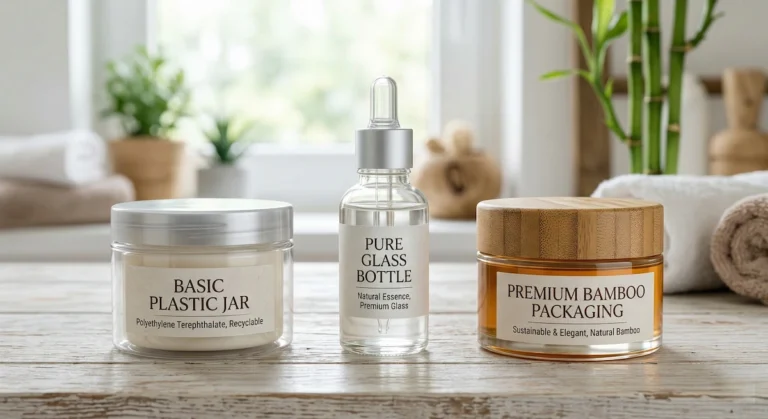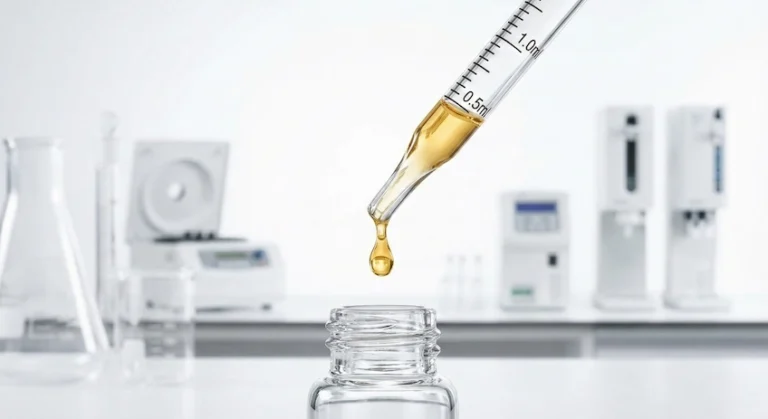

For modern skincare brands, "Refill & Reuse" is more than a trend; it's a business model. However, reusing packaging—especially for oil-based products—carries risks of contamination and rancidity. If a customer refills a dirty bottle, the bacteria inside will spoil the new product instantly.
To support your Refillable Product Line, you must educate your customers on proper sanitation. Here is the professional protocol for cleaning and sterilizing Glass Dropper Bottles1 to ensuring safety and longevity.
1. Disassembly: The First Step to Hygiene
You cannot clean a closed system.
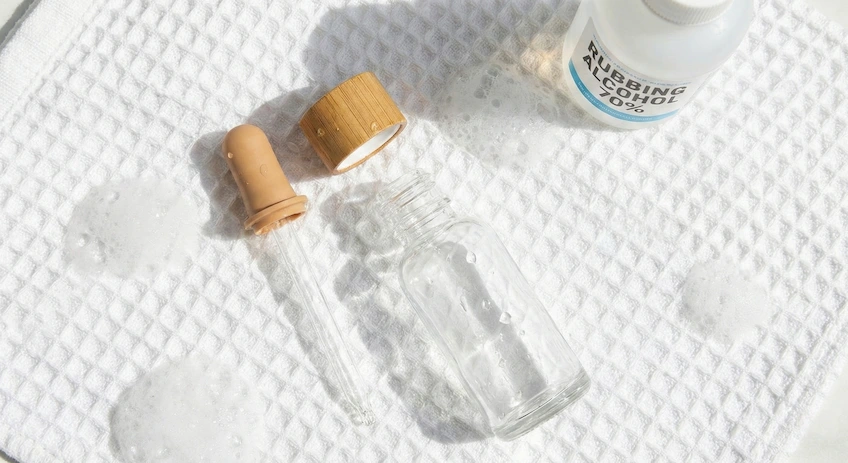
- Instruction: Fully separate the glass pipette from the bamboo collar and the rubber bulb.
- Why: Oil gets trapped inside the bulb and under the collar. If not removed, it will go rancid and smell.
- Our Design: ECO-BAMBOO's Separable Bamboo Droppers2 are engineered to be easily pulled apart for deep cleaning.
2. Removing Oil Residue: The "Double Cleanse"
Water alone won't remove essential oils. You need a degreaser.
- Step 1 (Soak): Soak all glass and plastic parts in hot, soapy water (dish soap) for 20 minutes.
- Step 2 (The Solvent): For stubborn oils or strong scents (like Patchouli), soak in 70% Isopropyl Alcohol or white vinegar. This breaks down the lipid barrier.
- The Pipette: Use a thin pipe cleaner or syringe to flush water through the glass tube.
3. Sterilization: Boiling vs. Alcohol
Once clean, the bottle must be sterilized to kill bacteria.
- Glass Bottles & Pipettes:
- Method: Boil in water for 10 minutes.
- Note: Glass is heat resistant. Place a cloth at the bottom of the pot to prevent breakage.
- Rubber Bulbs & Bamboo Collars:
- Method: DO NOT BOIL. Heat can warp plastic and crack bamboo.
- Solution: Soak in 70% Alcohol for 5 minutes, then air dry completely.
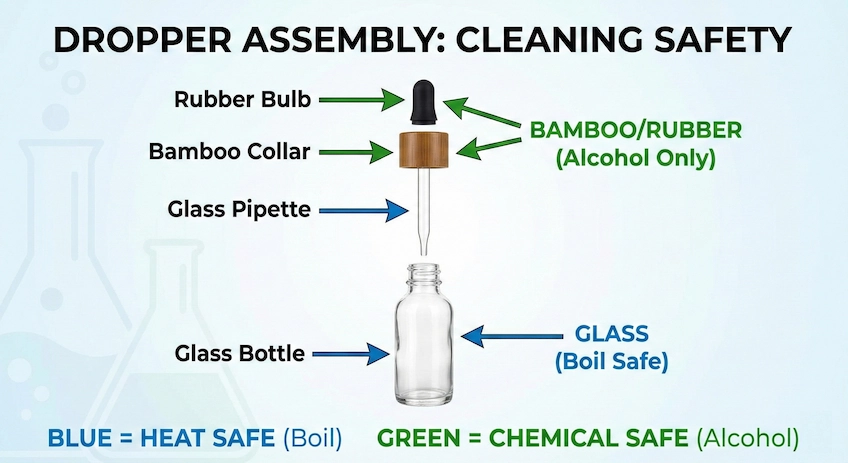
4. Reassembly and Drying
Moisture is the enemy. Any water left inside equals mold growth.
- The Rule: Allow parts to air dry on a clean towel for at least 24 hours. Shake the bulb to remove trapped water.
- The Test: If you see condensation inside the bottle after closing, it wasn't dry. Open and dry again.
5. Cleaning Protocol Table: Do's and Don'ts
Include this guide with your refill pouches.
| Component | Cleaning Method | Sterilization | Warning |
|---|---|---|---|
| Glass Bottle | Hot Soap + Brush | Boil (10 mins) | Handle carefully when hot. |
| Glass Pipette | Syringe Flush | Boil (10 mins) | Fragile tip. |
| Rubber Bulb | Hot Soap Squeeze | Alcohol Soak | No Boiling Water. |
| Bamboo Collar | Wipe with Damp Cloth | UV Light / Alcohol Wipe | Do Not Soak. Wood swells. |
Conclusion
Can you reuse glass dropper bottles? Yes, indefinitely. By providing clear cleaning instructions, you empower your customers to participate in the circular economy safely.
At ECO-BAMBOO, we design our packaging to be durable enough for multiple lifecycles, supporting your brand's zero-waste goals.
♻️ Launch Your Refill Line
Looking for packaging designed for reuse? Request a sample of our durable, easy-to-clean Bamboo Dropper Bottles. 👉 Get Your Refillable Sample Kit