
For premium skincare brands, packaging failure is not an option. A common hesitation among B2B buyers switching to sustainable materials is: "Will natural bamboo mold in my customer's humid bathroom?"
The answer is: Not if it's manufactured correctly.
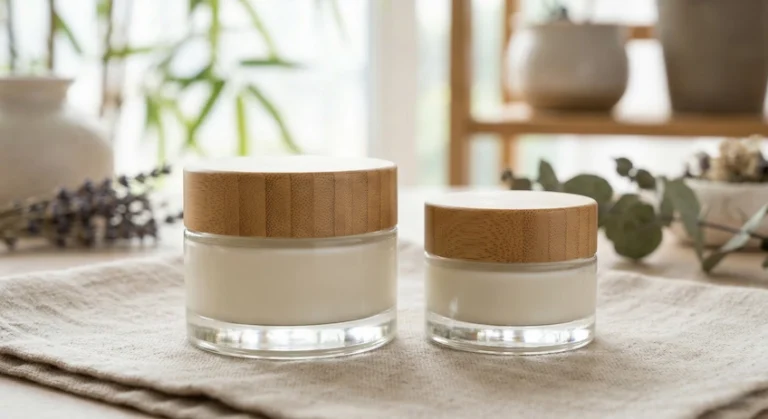
Raw bamboo is organic; without treatment, it behaves like any wood. However, ECO-BAMBOO utilizes a dual-process of Carbonization and UV-Cured Varnishing to ensure our bamboo cream jars1 meet strict cosmetic shelf-life standards.
This guide explains the industrial engineering behind our mold-resistant packaging.
1. The Root Cause: Why Cheap Bamboo Molds
Mold needs three things to grow: Moisture, Oxygen, and Food (Sugar/Starch). Cheaply made bamboo packaging often skips the "sugar removal" step, leaving the natural starch inside the fibers—a feast for mold spores when humidity hits.
2. Solution 1: The Carbonization Process (Removing the Food)
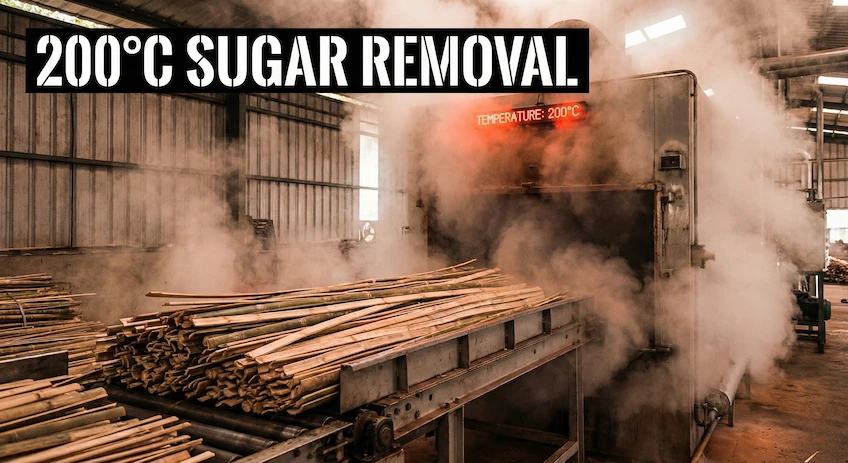
Before our bamboo is even cut into shapes, it undergoes High-Temperature Carbonization.
We steam the raw bamboo strips at 200°C. This process caramelizes the natural sugars and destroys the starch within the fibers. By removing the "food source," we make the material biologically inert and naturally resistant to fungi and pests.
According to research on Bamboo Thermal Treatment2, heat-treated bamboo shows significantly higher resistance to decay and improved dimensional stability compared to untreated samples.
3. Solution 2: The "Invisible Shield" Coating
Carbonization alone isn't enough for a steamy shower environment. The physical barrier is key.
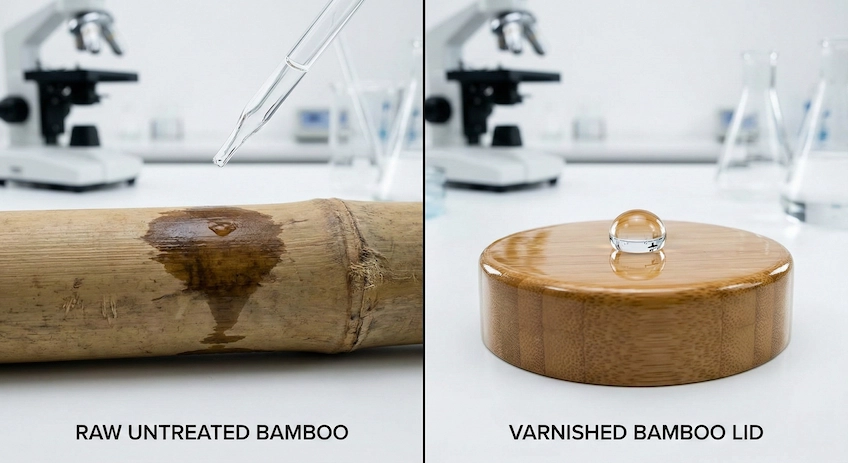
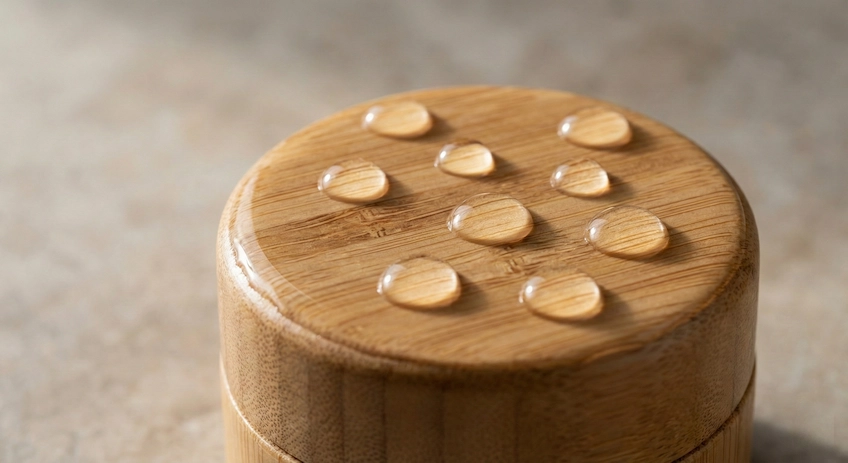
Every wholesale bamboo jar3 we produce is finished with a food-grade, matte clear varnish.
- Water Repellency: Drops of water bead up and roll off instead of soaking in.
- Humidity Barrier: Prevents steam from penetrating the wood grain.
- Wipe-Clean Surface: Allows customers to easily wipe away oil or cream spills without staining.
4. B2B Quality Control: How We Test
We don't guess; we test. Our QC protocol ensures reliability:
| Test Name | Methodology | Passing Standard |
|---|---|---|
| The "Boil Test" | Boil sample in water for 4 hours. | No coating peeling or wood cracking. |
| The Chamber Test | 7 days in 90% Relative Humidity. | Zero mold spore growth. |
| Adhesion Test | Cross-cut tape test on varnish. | < 5% coating removal. |
5. Best Practices for Brands: The "Care Insert"
Even with industrial protection, educating your end-consumer adds value. Including a small care note reinforces the "natural luxury" status of your product.
Tip for your packaging insert: "This jar is crafted from real, organic bamboo. Like a fine wooden bowl, keep it dry and wipe spills to maintain its natural beauty."
Conclusion
Mold isn't inevitable; it's a sign of poor manufacturing. By sourcing carbonized bamboo packaging4, you get the aesthetic of nature with the stability of industrial engineering.
Don't compromise your brand's reputation with raw wood. Choose engineered protection.
🛡️ Test Our Durability
Request a sample kit and perform your own "Water Beading Test." 👉 Get Mold-Resistant Samples