
For beverage brands, aesthetics cannot compromise performance. A beautiful bamboo bottle that sweats or lets coffee go cold in an hour will result in negative reviews and returns.
The truth is: Bamboo itself is an insulator, but not a high-performance one. To achieve all-day temperature retention, the bamboo must be part of a composite system.
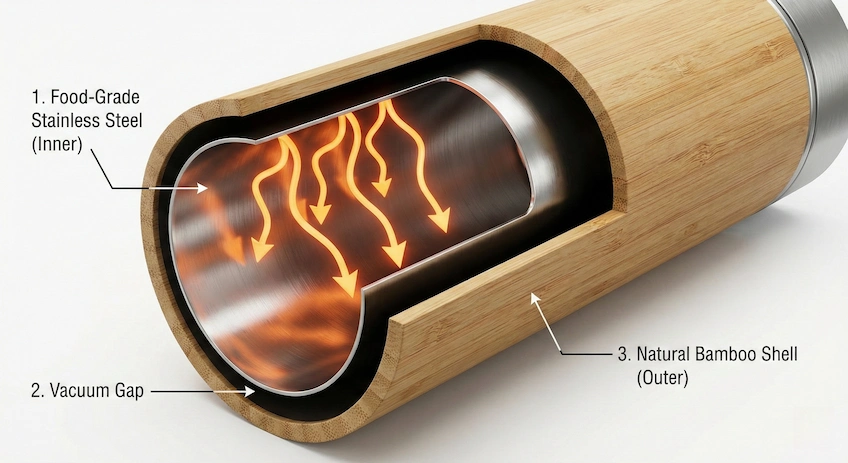
At ECO-BAMBOO, we engineer Hybrid Bottles: A Double-Wall Stainless Steel Core1 wrapped in a real bamboo shell. This combination delivers the best of both worlds: nature's touch and vacuum technology's power.
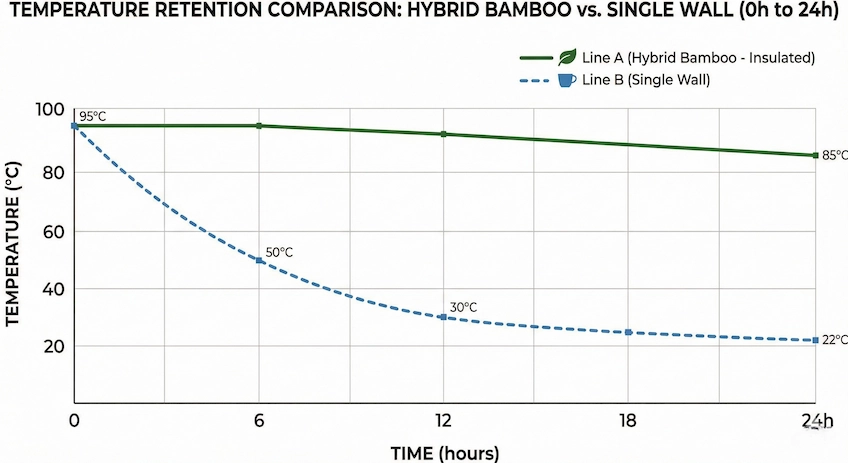
1. The Physics of Bamboo Insulation
Bamboo wood has low thermal conductivity, meaning it doesn't transfer heat easily.
- Single-Wall Bamboo: Good for short-term use (1-2 hours). Safe to hold but won't keep ice frozen.
- Hybrid Vacuum (Our Standard): The inner steel walls create a vacuum that stops heat transfer. The outer bamboo shell adds a third layer of natural insulation.
Performance Data (Based on Lab Tests):
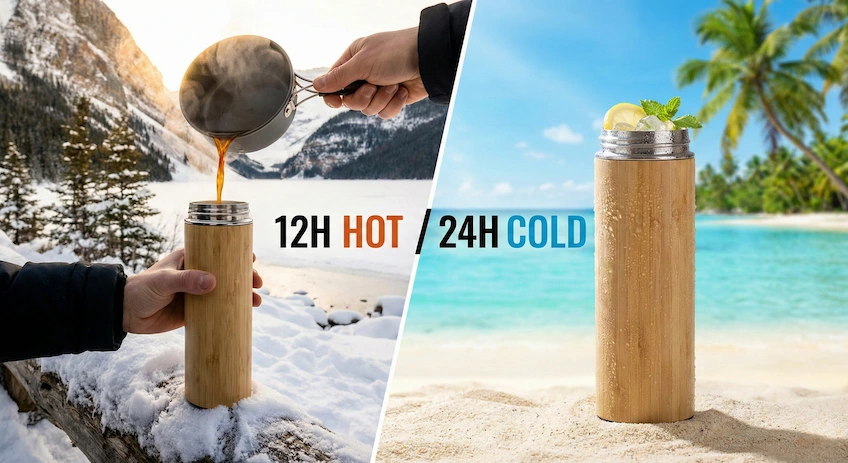
- Hot Drinks (>60°C): Retained for 12 Hours.
- Cold Drinks (<10°C): Retained for 24 Hours.
2. Condensation Control (The "No Sweat" Promise)
One major advantage of our hybrid design is Zero Condensation. In standard plastic or single-wall steel bottles, cold water causes "sweating," which can ruin documents or furniture. The bamboo outer shell acts as a barrier, keeping the exterior dry and room temperature, regardless of the icy contents.
B2B Insight: This "No Sweat" feature is a key selling point for corporate gifting and office-focused drinkware brands.
3. Hot Drink Safety: The "Cool-Touch" Exterior
Safety is paramount. Pouring boiling tea into a glass or single-wall metal bottle makes it too hot to hold. The bamboo shell serves as a Thermal Shield. Even with 95°C water inside, the exterior remains comfortable to the touch, eliminating the need for a separate silicone sleeve.
4. Care & Maintenance for Insulated Bamboo
High heat + Natural Wood = Potential for cracking if not engineered correctly. We treat our bamboo shells with a proprietary Water-Resistant Sealant to withstand the temperature fluctuations of the inner steel flask.
Usage Guidelines for Your Customers:
- Hand Wash Only: High-heat dishwashers can compromise the vacuum seal and the bamboo finish.
- Don't Soak: Prolonged submersion can cause the wood to swell.
Conclusion
Do bamboo bottles insulate well? Yes—if they are engineered correctly.
Don't settle for "looks good." Choose ECO-BAMBOO's Vacuum-Insulated Hybrid Bottles to deliver the 12h/24h performance your premium customers expect.
🔥 Test the Heat Retention
Validate our claims yourself. Request a sample bottle and put it to the 12-hour test. 👉 Get Your Performance Sample
Shop Wholesale Bamboo-Clad Vacuum Insulated Bottles. ↩