

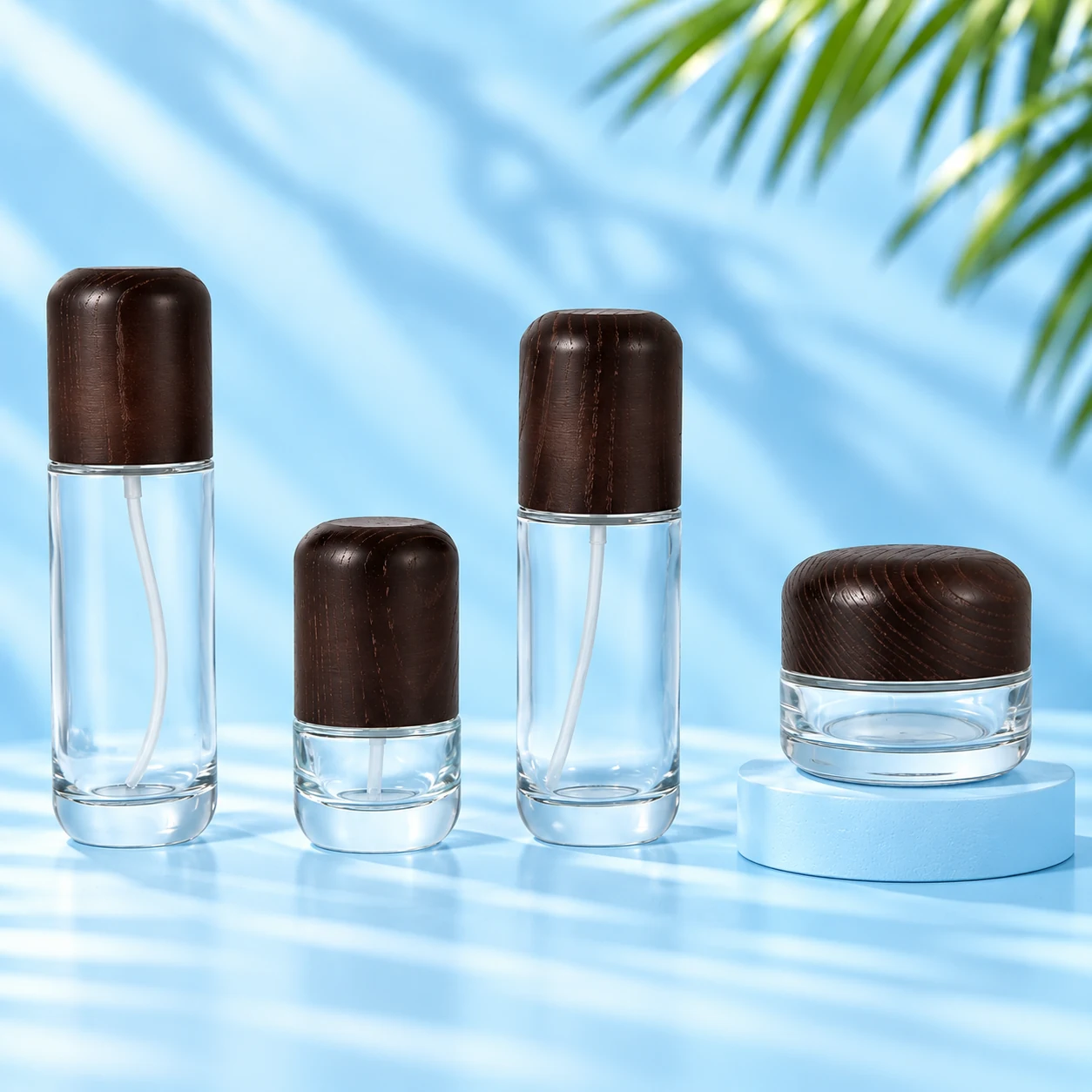
Choosing glass cosmetic packaging with wood caps starts with the complete assembly: the container, product-contact components, dispenser or inner closure, and decorative wood exterior. A matching appearance is useful, but your purchasing specification also needs to cover how each item will be filled, sealed and used.
For a skincare collection, this guide provides a practical way to compare bottles and jars before requesting samples or a wholesale quotation.
Start with the Products in Your Collection
List each formula, intended fill quantity and preferred dispensing method. Then choose a coordinated packaging family rather than selecting each container separately.
A cream jar and a lotion bottle can share a rounded wood closure profile while using different internal components. Review the complete range together so that label positions, glass finishes and closure proportions support the same visual identity.
ECO-BAMBOO lists clear glass lotion bottles with rounded wood caps and matching clear glass cream jars with wood lids. Ask for samples of the selected combination before approving the collection.
Check What the Wood Closure Actually Includes
Request a component breakdown. Which part is solid wood? Which parts are plastic, elastomer or another material? What touches the formula? How does the assembly seal?
For a pump bottle, ask about the pump, neck connection, dip tube and outer cap. For a jar, ask about the inner closure, liner and any additional sealing components. Keep these details in the approved specification rather than relying on a photograph or the general description “wood cap.”
Also request the wood species and finish information relevant to your order. Approve an acceptable range of grain and tone with physical samples, especially when bottles and jars must look consistent within one retail set.
Choose Sizes Around the Actual Fill
Do not select a jar only because its listing uses the same number as your target retail weight. Confirm its usable volume, your formula density and the intended fill level with a filling trial.
Likewise, confirm bottle dimensions, label area and space needed for the dispensing assembly. Ask for a drawing of the selected version rather than assuming all sizes share the same neck or pump.
Before approving artwork, check the filled and assembled sample alongside its carton. This helps reveal practical questions about label placement, overall height and packing fit.
Approve the Dispenser with Your Formula
For lotion bottles, include the intended formula in the sample evaluation. Ask the supplier to confirm the selected pump and proposed output, then define the checks with your filling or product development team.
Useful approval questions include:
- Does the pump prime and dispense as intended with the formula?
- Is the delivered amount appropriate for the product’s directions?
- Does the dip tube fit the selected bottle?
- Does the cap fit securely over the approved assembly?
- What compatibility, seal and transport checks are required before launch?
For jars, review opening and closing, liner fit and sealing with the intended contents. Record the test conditions and acceptance criteria; a visually approved sample does not answer every functional question.
Plan Decoration Before Asking for a Final Price
Send your artwork with the proposed label or print area, colors and wood marking location. Ask which processes are feasible for the selected components and order quantity.
Review a decorated sample for text clarity, positioning and consistency across the set. Request confirmation of setup charges, sample charges and production requirements before treating a design mockup as an approved manufacturing specification.
Avoid changing the artwork after final approval without checking whether the revision affects cost, timing or the sample approval process.
Request a Quote by SKU and Version
Prepare a separate line for every item and size. Include quantity, dispenser or liner choice, decoration, destination and required delivery date.
Ask the supplier to distinguish stock availability from production timing, and production timing from shipping. Confirm the minimum order for each selected configuration rather than applying one general website MOQ to the whole range.
For a coordinated launch, also ask whether every component can be supplied within the same schedule and what happens if one size or finish requires a different production run.
Frequently Asked Questions
Are wood caps the same as bamboo caps?
Specify the material explicitly. A wood closure and a bamboo closure should not be treated as interchangeable descriptions. Ask for the actual exterior material and the construction of the complete assembly.
Can I use the same packaging family for creams and lotions?
A family may include both jars and pump bottles. Select the format for each formula and approve its components separately, then review the appearance of the complete set.
Does a wood exterior mean the entire package is plastic-free?
Check the component list before making that claim. A wood exterior does not establish the materials used in the pump, liner or inner closure.
What should I send to request samples?
Send the product links or SKUs, selected sizes, intended formula type, closure requirements, artwork and delivery destination. Ask the supplier to confirm sample availability, costs and shipping.
Build Your Packaging Shortlist
Start with a bottle and jar combination, then confirm component specifications, sample performance and decoration before committing to bulk quantities.
Contact ECO-BAMBOO for a coordinated packaging quotation. Include your selected product links, fill sizes, quantities and artwork so the quotation can address the versions you actually need.


