
In the era of sustainable beauty, consumers often treat eco-packaging like standard plastic or glass. A common question arises: "Can I put my bamboo cream jar in the dishwasher?"
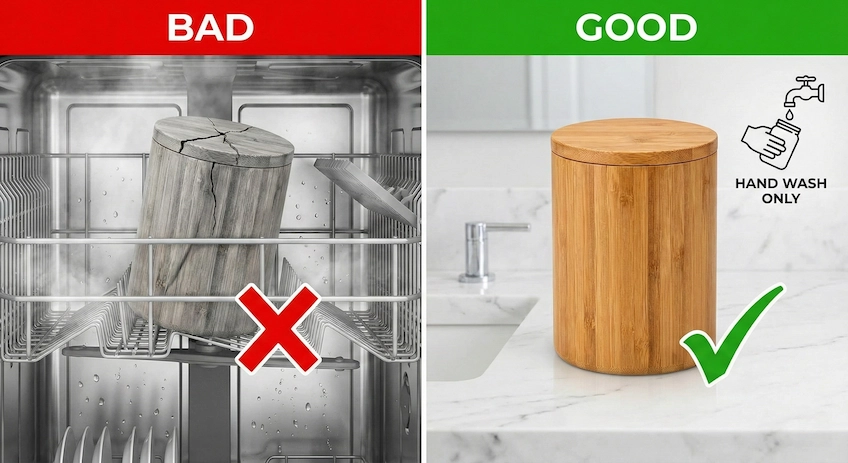
The short answer is No. While the internal glass or aluminum liner is dishwasher safe, the bamboo outer shell must be hand-washed.
For cosmetic brands, communicating this distinction is vital. High heat and harsh detergents can strip the natural protective coating of bamboo, leading to warping or cracking. However, this limitation is actually a feature of ECO-BAMBOO's clever Wholesale Frosted Glass Bamboo Jar1 design—where the eco-shell and the inner jar can be separated.
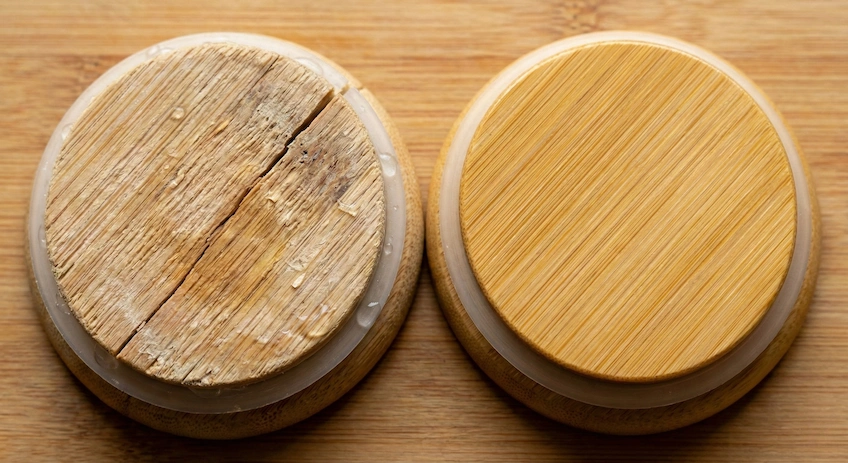
1. The Science: Why Bamboo Hates Dishwashers
Bamboo is an organic, hygroscopic material. Unlike inert plastic, it reacts to its environment. According to the USDA Forest Products Laboratory2, wood and bamboo fibers swell when they absorb moisture and shrink when dried.
A dishwasher creates a "perfect storm" for destruction:
- High Heat (60°C+): Expands the bamboo fibers rapidly.
- Prolonged Moisture: Saturates the cellular structure.
- Harsh Detergents: Alkalines strip the eco-friendly varnish, leaving the raw wood exposed to mold.
2. The Solution: Separable Component Design
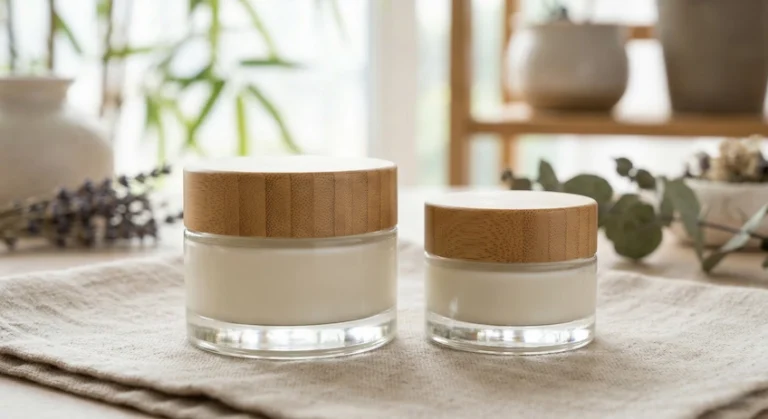
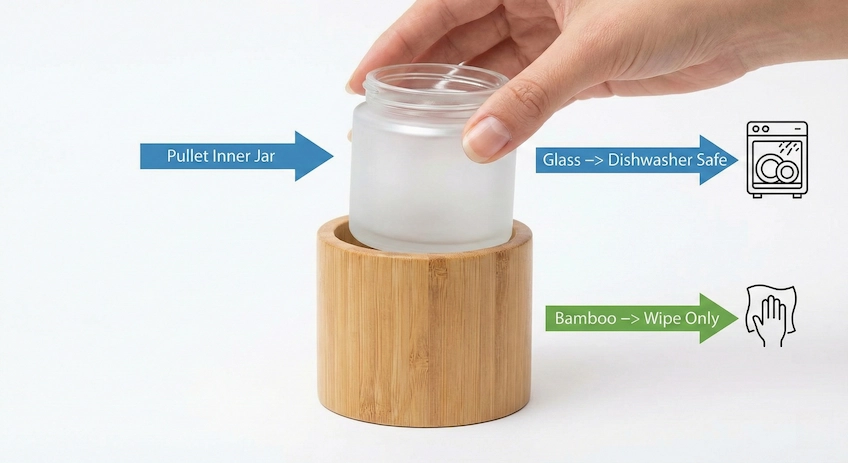
At ECO-BAMBOO, we engineer our packaging to be user-friendly without compromising the bamboo. Our Wholesale Bamboo Glass Jars3 feature a friction-fit or screw-on design where the inner glass bowl can be removed from the bamboo sleeve.
This "Hybrid Design" allows for proper cleaning:
| Component | Material | Dishwasher Safe? | Care Instruction |
|---|---|---|---|
| Inner Tank | Frosted Glass4 / Aluminum | YES ✅ | Can be sanitized in dishwasher or boiled. |
| Outer Shell | FSC Bamboo | NO ❌ | Wipe with damp cloth only. |
| Lid Liner | PP / PE Gasket | YES ✅ | Top rack dishwasher safe. |
| Bamboo Lid | Bamboo + Plastic | NO ❌ | Hand wash, dry immediately. |
3. Durability Testing: ECO-BAMBOO Standards
We don't just guess; we test. Before shipping, our Bamboo Aluminum Jars5 undergo a Humidity Resistance Test. We simulate bathroom environments to ensure our food-grade varnish withstands steam and splashes.
However, no organic varnish can withstand a 2-hour heavy dishwasher cycle.
Brand Advice: We recommend adding a simple icon or text on your secondary packaging: "Remove Bamboo Shell Before Washing" or "Hand Wash Bamboo Components."
4. How to Instruct Your Customers (After-Care)
Educating your customer adds value to your brand. It shows you care about the product's longevity. Here is a recommended protocol for reusing your bamboo jars:
- Separate: Pull the glass/aluminum inner jar out of the bamboo shell.
- Sanitize: Place the inner jar in the dishwasher or sanitize with alcohol.
- Wipe: Gently wipe the bamboo shell with a damp cloth. Do not soak.
- Air Dry: Let all parts dry completely before reassembling and refilling.
Conclusion
Can you put bamboo jars in the dishwasher? No—but that is the trade-off for using a truly natural, biodegradable material.
By choosing ECO-BAMBOO's separable hybrid jars, you offer your customers the best of both worlds: the hygiene of glass and the sustainability of bamboo.
🌿 Get Durable Samples
Test our moisture-resistant coated bamboo jars yourself. 👉 Request Durability Samples