
"Can I hot-pour my balm into bamboo packaging?" This is the #1 technical question we receive from skincare formulators.
While DIY enthusiasts ask if they can microwave bamboo (the answer is NO), professional brands need to know the thermal limits of their packaging for manufacturing.
Failure to understand heat stability can lead to cracked jars, warped lids, and wasted batches. This guide explains how to safely use bamboo cosmetic containers1 for hot-fill formulations.
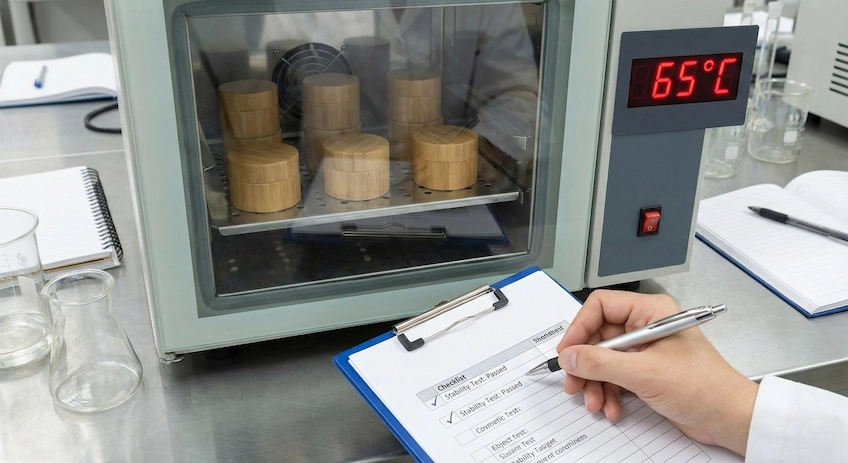
The "Microwave Myth" vs. Manufacturing Reality
Let's clear the air: Never microwave bamboo packaging. Bamboo contains 8-12% natural moisture. Microwaving turns this internal moisture into steam instantly, causing the wood fibers to explode or crack.
For B2B Production:
- Autoclaving (Steam Sterilization): ❌ Avoid. The high humidity will warp the bamboo shell.
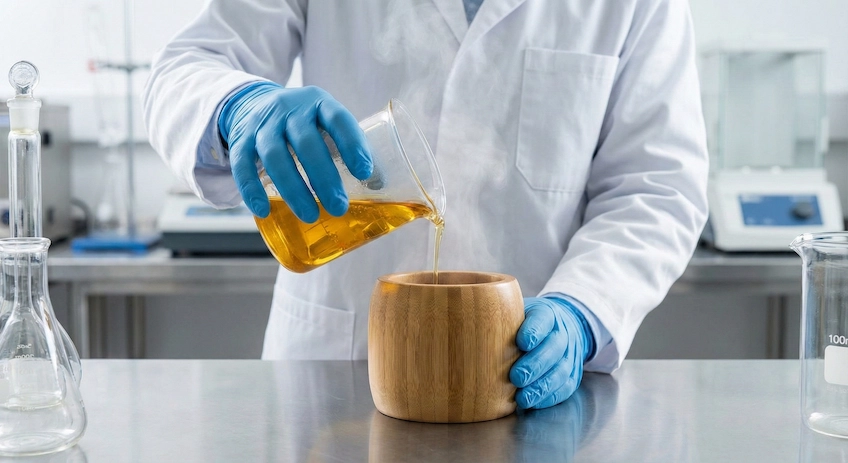
- Hot Filling (60°C - 85°C): ✅ Safe, if you use the right Double-Wall vessel.
The Solution: Double-Wall Technology for Hot Pours
You can package hot balms, body butters, and solid perfumes in bamboo, but the structure matters.
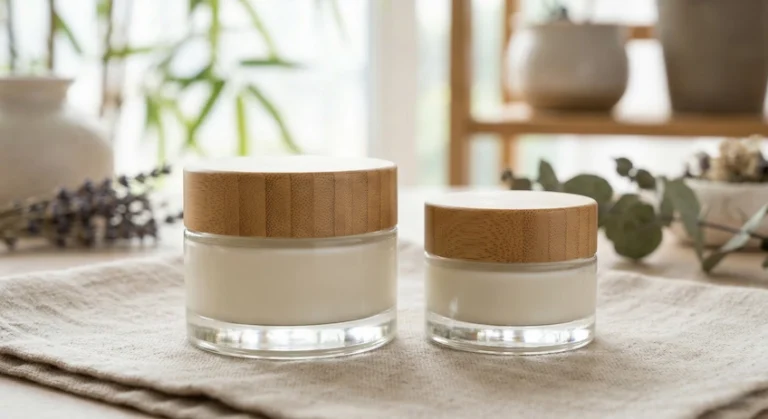
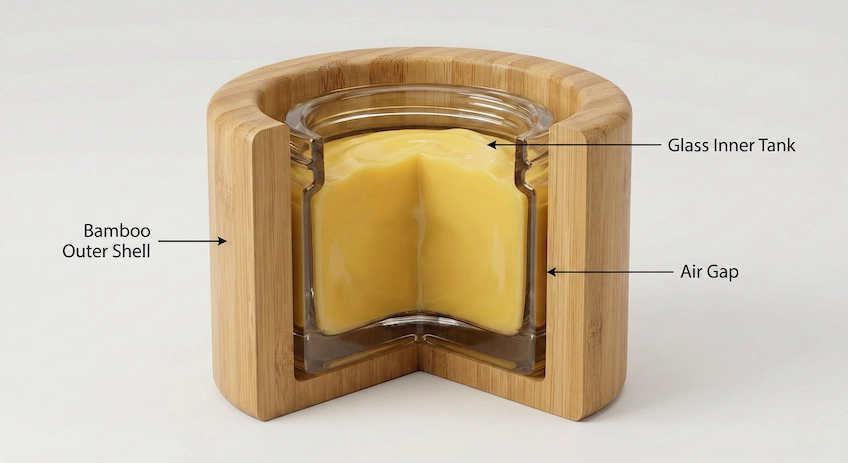
Our frosted glass bamboo jars2 feature a Double-Wall Design:
- Inner Tank (Glass/PP): Chemically inert and heat-resistant up to 90°C. It holds the hot formula.
- Outer Bamboo Shell: Acts as a thermal insulator. It never touches the hot liquid directly.
GMP Tip: Pour the hot liquid into the inner tank. The air gap between the glass and bamboo dissipates the heat, preventing thermal shock to the organic outer shell.
Safe Sterilization Protocols (No Heat Required)
Since heat sterilization (autoclave/microwave) is off the table, how do you meet ISO 22716 hygiene standards?
According to the FDA's sanitation guidelines3, effective sterilization can be achieved without heat. For organic materials like bamboo, we recommend:
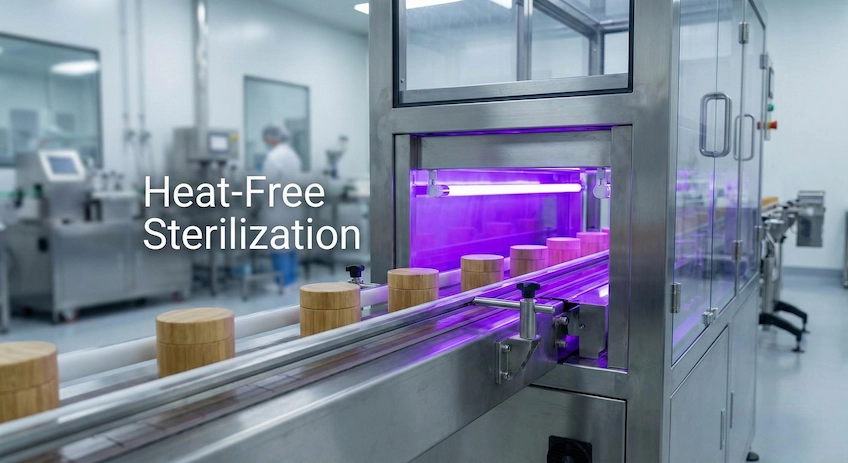
- UV-C Sterilization: The industry standard. Passes the packaging through a UV tunnel to kill surface bacteria without raising the temperature.
- Gamma Irradiation: Highly effective for bulk sterilization of finished goods.
| Method | Bamboo Safe? | Effectiveness |
|---|---|---|
| Microwave | ❌ Danger | Destroys Packaging |
| Autoclave | ❌ No | Warps Wood |
| UV-C Light | ✅ Yes | High (Surface) |
| Gamma Ray | ✅ Yes | High (Penetrating) |
Conclusion
You don't need plastic to handle hot formulations. By understanding the thermal properties of bamboo and utilizing double-wall technology, you can maintain a premium, eco-friendly aesthetic without compromising manufacturing safety.
Treat bamboo like the luxury material it is: Keep it out of the microwave, but feel free to fill it hot.
🧪 Validate Your Formula
Request a sample kit to perform your own heat stability and compatibility tests. 👉 Get Heat-Stable Samples