Bamboo looks great and promises eco-friendly storage1, but does it really keep liquids inside, or does it let water seep out?
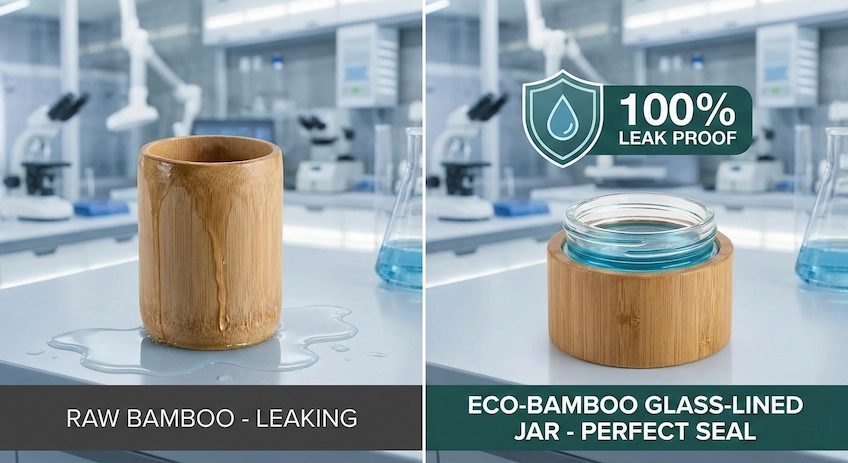
Bamboo containers cannot reliably hold liquids without leaking unless they are lined with a food-safe barrier2 and sealed tightly with engineered closures.

I often explain to clients that bamboo’s natural beauty3 comes from its porous structure4—a plus for dry goods, but a real challenge for storing any liquid. At ECO-BAMBOO, our standard bamboo jars5 and lunch boxes are ideal for grains, snacks, and teas. If a client needs to store liquids, we recommend special models with inner linings and strong seals. Without these, even the best bamboo container will slowly absorb water or allow it to escape. The best results come when brands and buyers are clear on which products work for which jobs.
Can bamboo containers6 hold water?
Bamboo containers can hold water only if they have a high-quality, food-safe liner or barrier inside; otherwise, water will eventually leak through the bamboo’s porous surface.

My experience shows that pure, unlined bamboo always lets water seep through over time. The bamboo fibers swell with moisture and, after enough exposure, water finds its way out. When brands want bamboo to hold liquids—like for tea or soup—I suggest they invest in advanced liners7, often bio-based or silicone, to stop leaks. Properly engineered, these work well for a range of needs. But for most daily use, bamboo’s best for foods that won’t challenge its natural absorbency.
Water Storage Table
| Bamboo Type | Water Holding Ability | Notes |
|---|---|---|
| Unlined bamboo | Poor | Not suitable for liquids |
| Lined bamboo | Good | Only with food-safe inner lining |
| Plastic/glass | Excellent | Nearly always leak-proof8 |
Are bamboo lunch boxes9 leak-proof8?
Standard bamboo lunch boxes9 are not truly leak-proof8 unless they include inner linings and use tight, tested closures—otherwise, sauces or dressings will seep or spill.

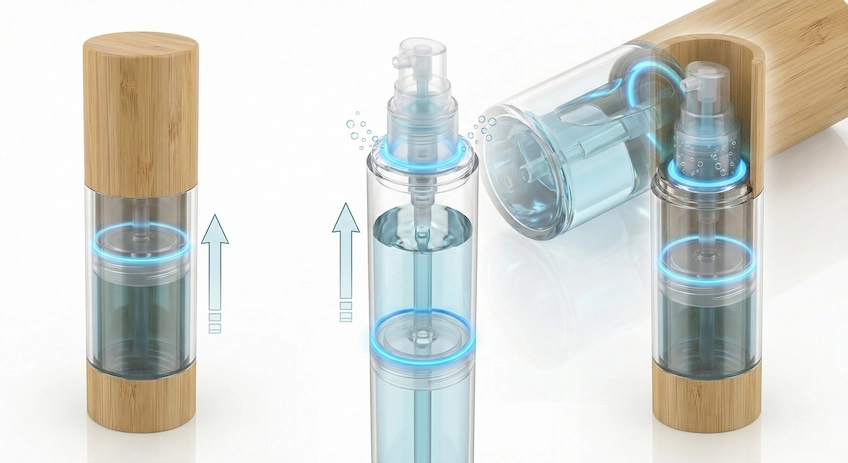
I always stress to new buyers that traditional bamboo lunch boxes9—no matter how well made—won’t keep liquids safely inside without modern engineering advances. At ECO-BAMBOO, we’ve added silicone rings10 and food-grade liners for clients with these needs. But the norm for retail bamboo lunch boxes9 is still best for sandwiches, salads, or dry meals. If your meal is on the runny side, either use a lined product or pack the liquid separately. This approach builds trust and reduces unwanted surprises.
Lunch Box Leak-Proof Table
| Lunch Box Type | Leak-Proof Level | Solution for Liquids |
|---|---|---|
| Standard bamboo | Low | Do not use for soups/sauces |
| Lined bamboo | High | Choose silicone or resin-lined |
| Plastic/metal | High | Traditional choice for liquids |
Can I store liquids in bamboo jars5?
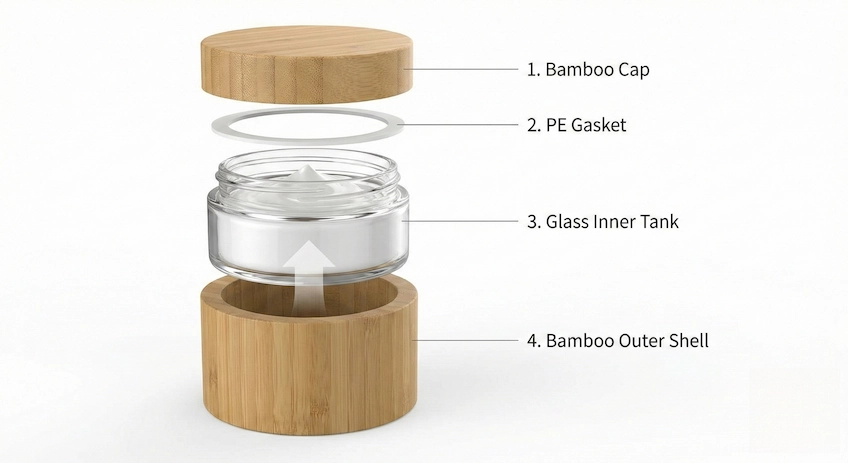
Storing liquids in bamboo jars5 is only safe when the jar is fully lined with a food-safe barrier2 and fitted with a secure closure; pure bamboo jars5 will leak over time.

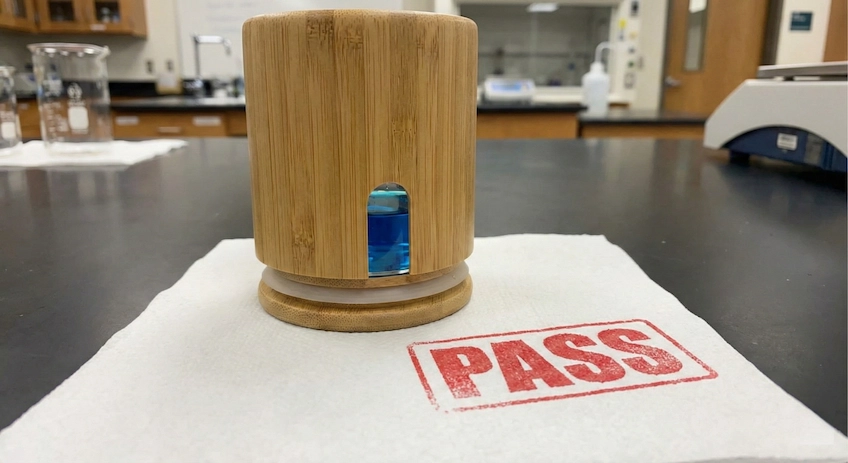
Once, we worked with a global tea brand that wanted the aroma and green appeal of bamboo, but also needed to keep moisture and flavor in. Our solution: lined bamboo jars5 with silicone gaskets, which performed beautifully in tests and won high praise from users for freshness and leak resistance. For customers wanting to store honey, syrup, or dressings, these are the only safe bamboo jars5 I recommend. If in doubt, always ask your supplier about certified linings11 before filling any jar with liquid—it’s better safe than soggy.
Bamboo Jar Liquid Storage Table
| Jar Build Type | Safe for Liquids? | Best Use | Comment |
|---|---|---|---|
| Plain bamboo | No | Dry/semi-dry goods | Risk of leakage |
| Lined bamboo | Yes | Liquids, sauces | Require testing/cert. |
| Glass/plastic jars | Yes | Any liquid | Traditional solution |
What are the benefits of bamboo lids12 for sealing?
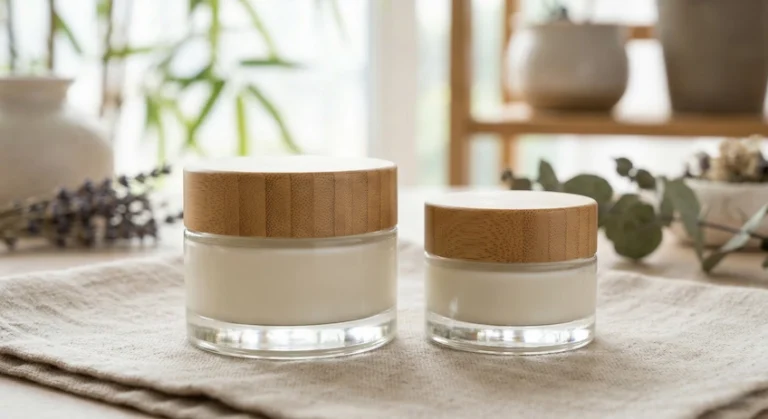
Bamboo lids offer a natural, resilient, and snug fit—especially when paired with silicone or cork rings—helping keep food fresh and secure without plastic.
I love recommending bamboo lids12 for jars and canisters because they combine sustainability and great function. Bamboo is light but strong, and its natural springiness means it presses gently but firmly against the rim. Modern bamboo lids12 often feature an added silicone or cork seal. This combo locks out air and keeps the contents tasting great for longer. Customers appreciate the natural feel and easy handling, and brands appreciate reducing reliance on synthetic closures. Even when the container itself is glass or steel, adding a bamboo lid gives the product a unique, elevated eco-style.
Bamboo Lid Sealing Table
| Lid Type | Sealing Ability | Best For | Eco Benefit |
|---|---|---|---|
| Plain bamboo lid | Good, dry goods | Grains, tea, snacks | Renewable material |
| Bamboo + silicone ring | Excellent | Freshness, leak-proof8 | Biobased, plastic-free |
| Metal/plastic lid | Excellent | Versatile | Not as sustainable |
Conclusion
Bamboo containers hold liquids only when lined and tightly sealed; for dry or semi-dry storage, pure bamboo is perfect—always choose lined, lab-tested options for anything wet.
Discover the advantages of using eco-friendly storage options like bamboo. ↩
Learn about food-safe barriers and their significance in ensuring safe food storage. ↩
Understand the aesthetic and functional appeal of bamboo in storage solutions. ↩
Understand how bamboo's porous nature impacts its ability to store liquids and dry goods. ↩
Discover the best practices for using bamboo jars for liquid storage and their limitations. ↩
Explore the versatility of bamboo containers and how they can be used for various storage needs. ↩
Investigate the types of advanced liners available for bamboo containers and their benefits. ↩
Explore the features that contribute to a container's leak-proof capabilities. ↩
Learn about the suitability of bamboo lunch boxes for liquid storage and alternatives. ↩
Find out how silicone rings improve the functionality of bamboo containers for liquid storage. ↩
Learn about the importance of certified linings in ensuring safe liquid storage. ↩
Explore how bamboo lids enhance the functionality and sustainability of storage jars. ↩