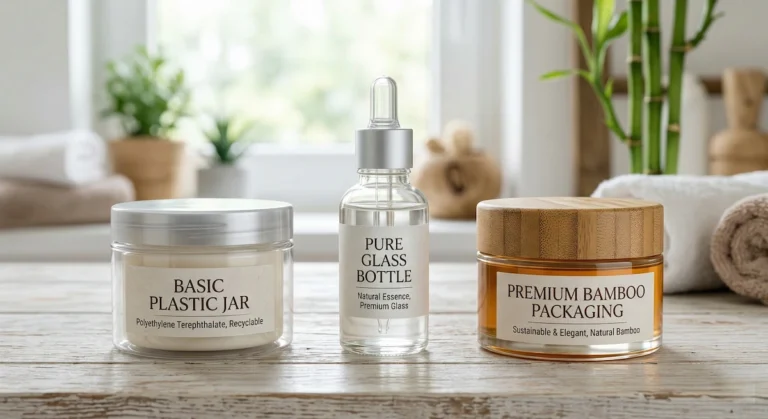

For essential oil brands, the debate between glass and plastic is not just about aesthetics; it is about product safety. Using the wrong material can lead to chemical leaching, product degradation, and costly recalls.
So, are glass or plastic roller bottles better for storing essential oils?
The definitive industry answer is Glass. Pure essential oils are potent solvents that can dissolve standard plastics. However, glass has one weakness: fragility.
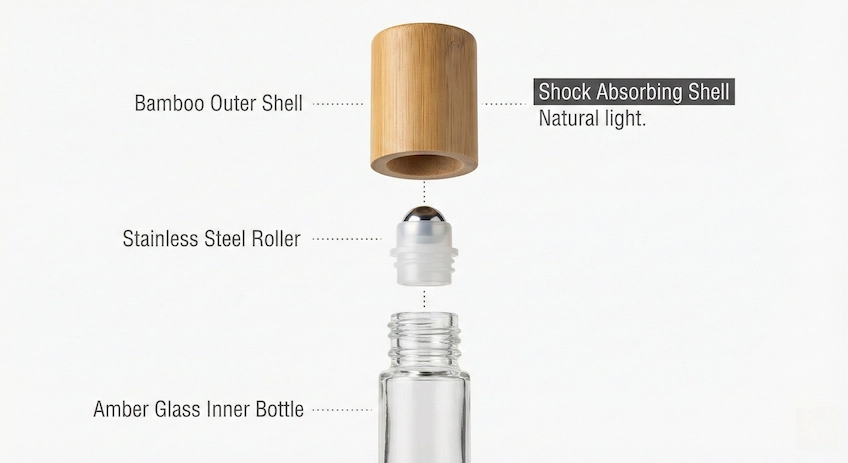
At ECO-BAMBOO, we solve this with our Bamboo-Clad Glass Roller Bottles1—combining the chemical inertness of an amber glass inner tank with the shock-absorbing protection of a bamboo outer shell.
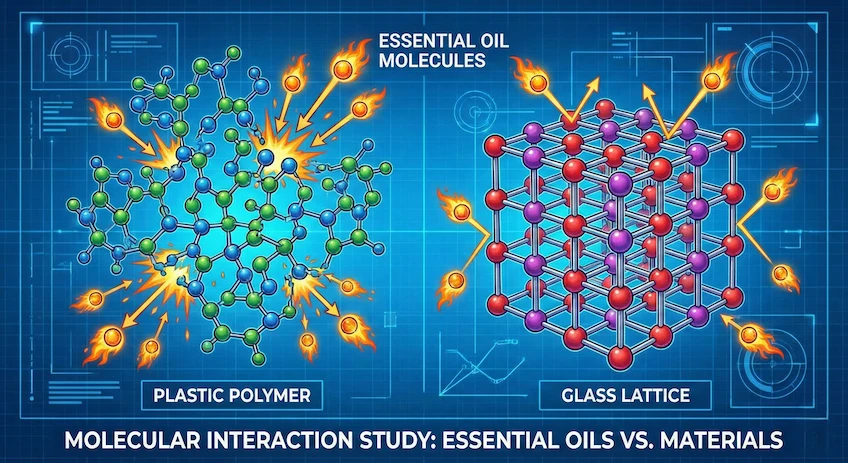
1. The Science: Why Essential Oils "Eat" Plastic
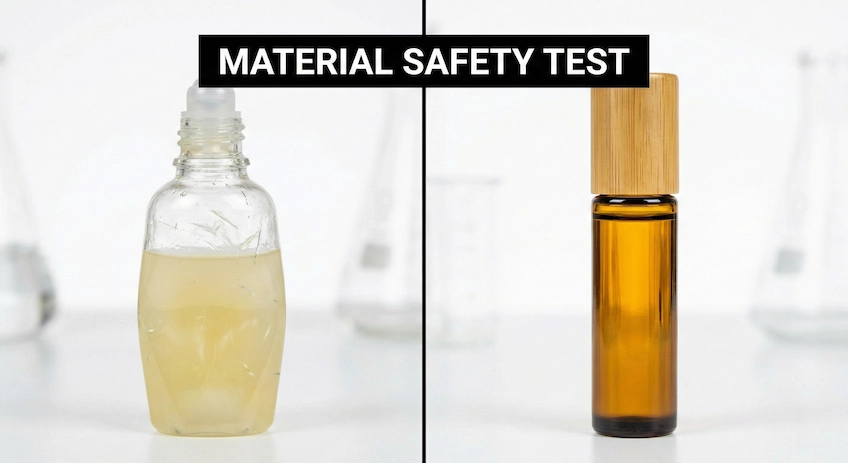
Essential oils contain volatile compounds like terpenes and phenols. According to AromaWeb2, pure essential oils are highly concentrated and can deteriorate plastic containers over time. While some high-grade plastics (like PET) are resistant to certain oils, they are not impervious.
The Risks of Plastic Packaging:
- Leaching: Plasticizers (like phthalates) migrate into your pure organic oil.
- Warping: The bottle neck deforms, causing leaks.
- Scent Alteration: The plastic absorbs the oil's aroma, ruining the profile.
B2B Insight: Even "oil-resistant" plastics are only suitable for diluted blends ( <2% concentration). For therapeutic-grade oils, Glass is non-negotiable.
2. Glass: The Gold Standard for Purity
Glass is impermeable and chemically inert. It ensures that the oil inside remains exactly as formulated, whether stored for 1 month or 2 years.
Types of Glass We Offer:
- Amber Glass: Offers superior UV protection for light-sensitive oils (e.g., Citrus, Blue Tansy).
- Clear/Frosted Glass: Ideal for synthetic blends or products stored in secondary boxes.
Explore our Amber & Frosted Glass Roller Collection1.
3. The "Fragility" Problem Solved: Bamboo Armor
The main argument against glass is breakage. ECO-BAMBOO addresses this with our Hybrid Design:
- Inner Core: High-quality Amber Glass3 holds the oil.
- Outer Shield: A thick, CNC-machined Bamboo Shell wraps the glass.
This structure acts as a natural shock absorber. If dropped, the bamboo takes the impact, protecting the glass inside. It is the perfect marriage of safety and sustainability.
4. Material Comparison Table: Buyer's Guide
Compare the three main options to make the right sourcing decision for your brand.
| Feature | Plastic (PET) | Standard Glass | Bamboo-Clad Glass |
|---|---|---|---|
| Chemical Resistance | Low (Leaching risk) | High (Inert) | High (Inert) |
| Durability (Drop Test) | High | Low (Shatters) | Medium-High (Protected) |
| UV Protection | Low | Varies by Color | 100% (Opaque Shell) |
| Eco-Perception | "Cheap/Wasteful" | "Premium" | "Sustainable Luxury" |
| Best Application | Samples / Diluted | Serums | Pure Essential Oils |
Conclusion
Are glass or plastic roller bottles better? Glass is better for the oil, but Bamboo-Clad Glass is better for the business.
It provides the chemical stability your formula needs, with the durability and eco-story your customers demand.
🛡️ Protect Your Brand
Don't risk plastic leaching. Upgrade to our shatter-resistant Bamboo Glass Rollers. 👉 Request a Safety Sample Kit