
For essential oil brands, packaging is not just a container; it is the first line of defense. Potent liquids like pure essential oils, serums, and CBD tinctures are chemically volatile. They can dissolve standard plastics, leading to Chemical Leaching1 and product contamination.
So, are glass dropper bottles safe? Yes, they are the industry gold standard. But not all glass is created equal. To ensure maximum shelf life and potency, you need the right combination of Inert Glass and UV Protection.
At ECO-BAMBOO, we engineer Bamboo-Clad Glass Dropper Bottles2 that offer superior protection against light, air, and chemical interaction.
1. Why Glass is the Only Safe Choice for Potent Liquids
The primary safety concern with essential oils is "Container Interaction."
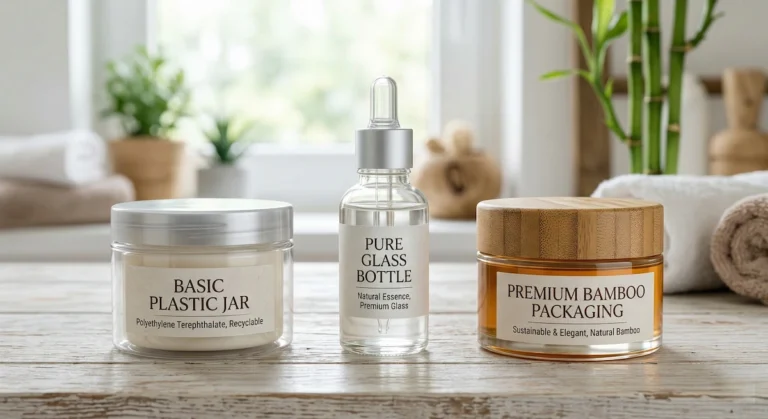
- Plastic (PET/HDPE): Essential oils (especially Citrus and Pine) can eat through plastic over time, causing the bottle to warp and micro-plastics to leach into your oil.
- Glass (Type III): Glass is non-porous and chemically inert. It creates an impermeable barrier that ensures your Lavender oil smells exactly like Lavender, even after 2 years.
B2B Insight: For high-value concentrates, using plastic is a liability. Glass packaging is a visual signal of Quality Assurance to your customers.
2. UV Protection: Amber vs. Clear Glass
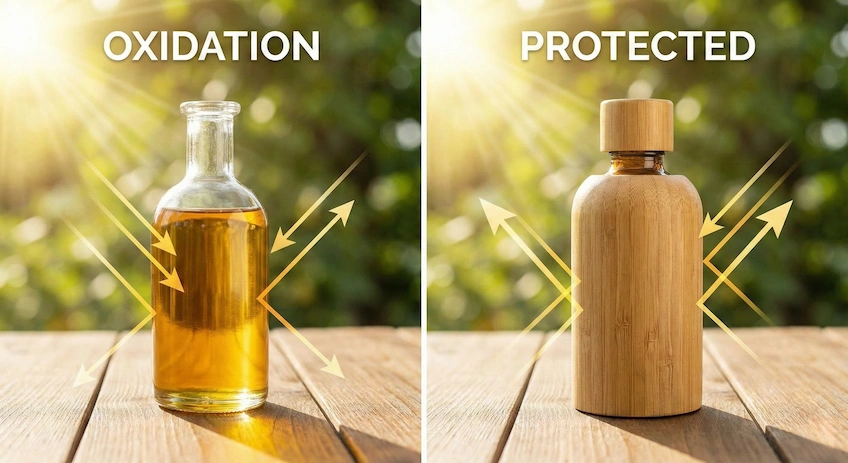
Light is the enemy of potency. UV rays accelerate oxidation, turning therapeutic oils into rancid liquids.
- Clear Glass: Offers zero protection. Only use for stable, non-active liquids.
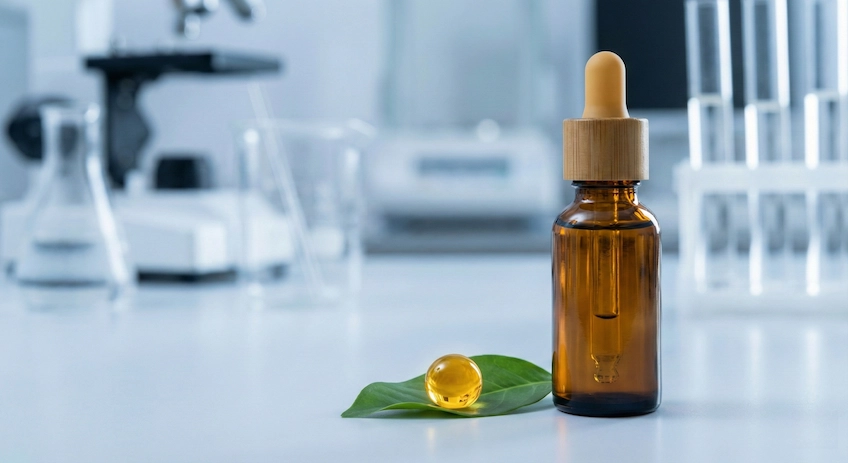
- Amber Glass: Blocks 99% of UV rays. This is why our Wholesale Amber Glass Bamboo Dropper Bottles3 are the top choice for light-sensitive essential oils.
- The Bamboo Advantage: Our bamboo outer shell provides an additional 100% Opaque Shield, offering better protection than glass alone.
3. The Dropper Assembly: Don't Forget the Bulb
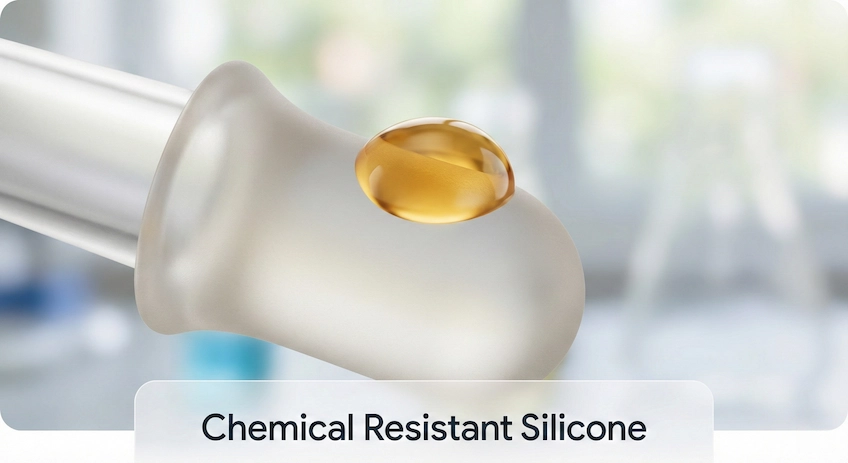
While the bottle is glass, the bulb is rubber. This is a common failure point. If your oil touches the bulb, it can cause swelling or disintegration.
- Our Solution: ECO-BAMBOO uses high-grade Nitrile or Silicone Bulbs that are resistant to chemical attack, unlike standard natural rubber.
- Best Practice: Advise customers to store bottles upright to prevent prolonged contact between the oil and the bulb.
4. Comparison Table: Glass vs. Plastic for Storage
Which material is right for your product line?
| Feature | Glass Dropper | Plastic Bottle | Bamboo-Clad Glass |
|---|---|---|---|
| Chemical Inertness | Excellent | Poor (Leaches) | Excellent |
| UV Protection | Good (if Amber) | Varies | Superior (Opaque Shell) |
| Durability | Low (Fragile) | High | Medium (Shock Absorbed) |
| Sustainability | High (Recyclable) | Low | Very High (Renewable) |
| Best For | Essential Oils, Serums | Shampoo, Lotion | Premium Oils, CBD |
5. Eco-Friendly & Safe: The Bamboo Upgrade
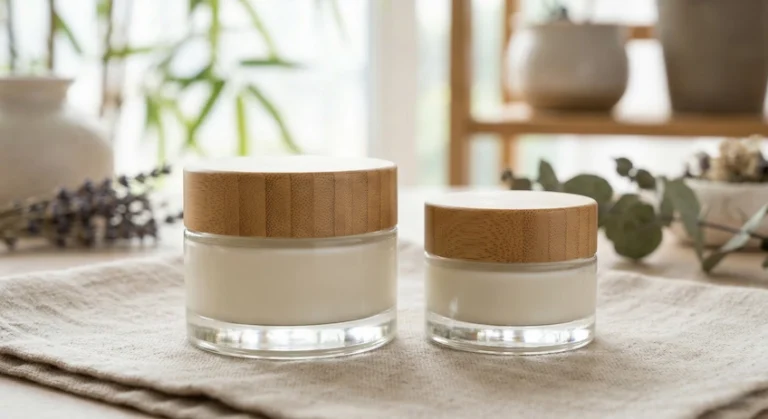
Safety doesn't have to look boring. Our Flat Shoulder Glass Bottles with Bamboo Droppers4 combine the clinical safety of a glass inner with the natural beauty of a bamboo shell.
- Shock Protection: The bamboo shell acts as a cushion, reducing breakage rates during shipping.
- Temperature Stability: Bamboo insulates the glass, protecting volatile oils from heat spikes.
Conclusion
Are glass dropper bottles safe for storing essential oils? Absolutely. They are the safest option available.
By choosing ECO-BAMBOO's Amber and Bamboo-Clad solutions, you are not just packaging a product; you are preserving its potency, purity, and value.
🛡️ Protect Your Purity
Ready to upgrade your essential oil packaging? Request a sample kit of our chemically resistant Bamboo Glass Droppers. 👉 Get Your Safety Sample Kit