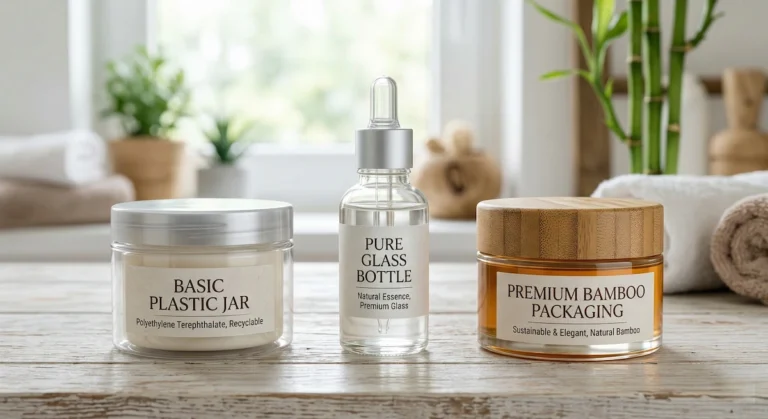

In the global push against single-use plastics, brands are rushing to sustainable alternatives. But for skincare and personal care products, Safety is just as important as sustainability. Is a bamboo bottle actually safer than a plastic one?
The answer depends on the Inner Contact Material. At ECO-BAMBOO, we design "Bamboo-Clad" packaging where the formula touches only Glass, Aluminum, or Certified Food-Grade PP/PET. This ensures the non-toxic benefits of nature without the risk of contamination.

1. The Hidden Toxicity of Standard Plastic
Why are brands switching away from virgin plastic?
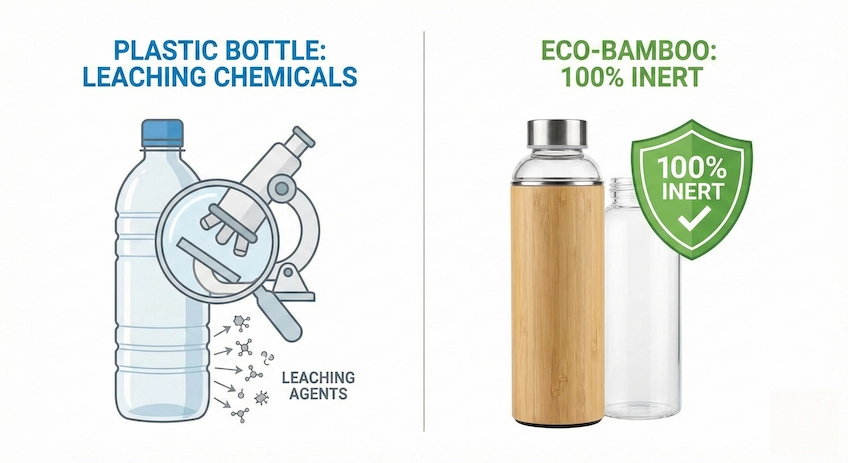
- Leaching: Standard plastics can release BPA (Bisphenol A) and Phthalates into liquid formulas, especially under heat or UV light.
- Microplastics: Degraded plastic particles can contaminate the product over time.
B2B Insight: "Clean Beauty" brands cannot afford to package their organic formulas in leaching plastics. It contradicts the brand promise.
2. Bamboo: The Non-Toxic Outer Shell
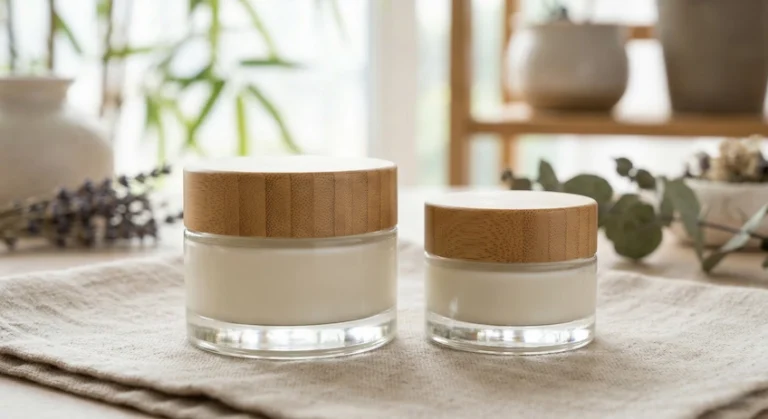
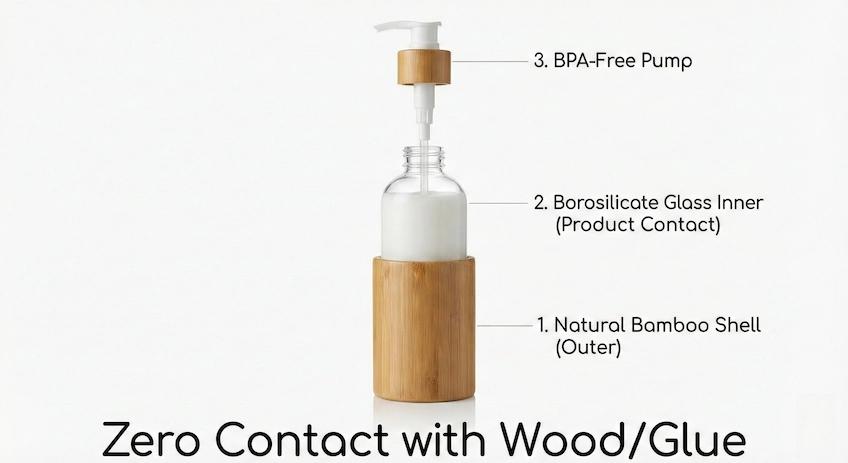
Bamboo itself is inherently safe, but it is porous. To ensure it is suitable for liquid cosmetics, we treat it as a Structural Shell, not a liquid container.
ECO-BAMBOO Safety Structure:
- Outer Layer: 100% Natural Bamboo (FSC Certified).
- Inner Layer (Contact Surface):
- Glass: For serums and creams (Zero interaction).
- PP/PET/AS: For airless pumps (BPA-Free, Recyclable).
- Aluminum: For balms (Non-reactive).
This hybrid design guarantees that No Glue or Varnish ever touches your product.
3. Recommended Safe Bamboo Packaging Options
Which bamboo bottle is right for your non-toxic product line?
A. For Sensitive Skincare (Serums/Oils)
Best Choice: Bamboo Glass Lotion Bottle1.
- Safety Profile: Glass is chemically inert. It is the gold standard for active ingredients like Vitamin C or Retinol.
B. For High-Viscosity Creams
Best Choice: Bamboo Airless Bottle (PP/AS)2.
- Safety Profile: Our airless pumps use BPA-Free PP, protecting the formula from oxidation and external bacteria without preservatives.
C. For Balms and Salves
Best Choice: Bamboo Aluminum Jar3.
- Safety Profile: Aluminum offers a 100% barrier against light and air, preventing rancidity in natural oils.
4. Certification Checklist for B2B Buyers
When sourcing bamboo packaging, ask your supplier for these 3 reports to ensure safety compliance:
| Certification | What It Tests | Why You Need It |
|---|---|---|
| FDA 21 CFR | Food Contact Safety | Required for US Market export. |
| BPA-Free Test | Bisphenol A absence | Critical for "Non-Toxic" claims. |
| Heavy Metals | Lead/Cadmium in varnish | Ensures coating safety. |
Conclusion
Are bamboo bottles safe and non-toxic? Yes, when engineered correctly. By using a bamboo shell over a safe inner liner (Glass/PP/Aluminum), ECO-BAMBOO provides a packaging solution that is 100% Free of Harmful Chemicals.
Don't compromise your formula's purity. Choose certified safe packaging.
🧪 Verify Our Safety
Need proof? Request our FDA & BPA-Free test reports along with your sample kit. 👉 Get Your Certified Safe Sample Kit